
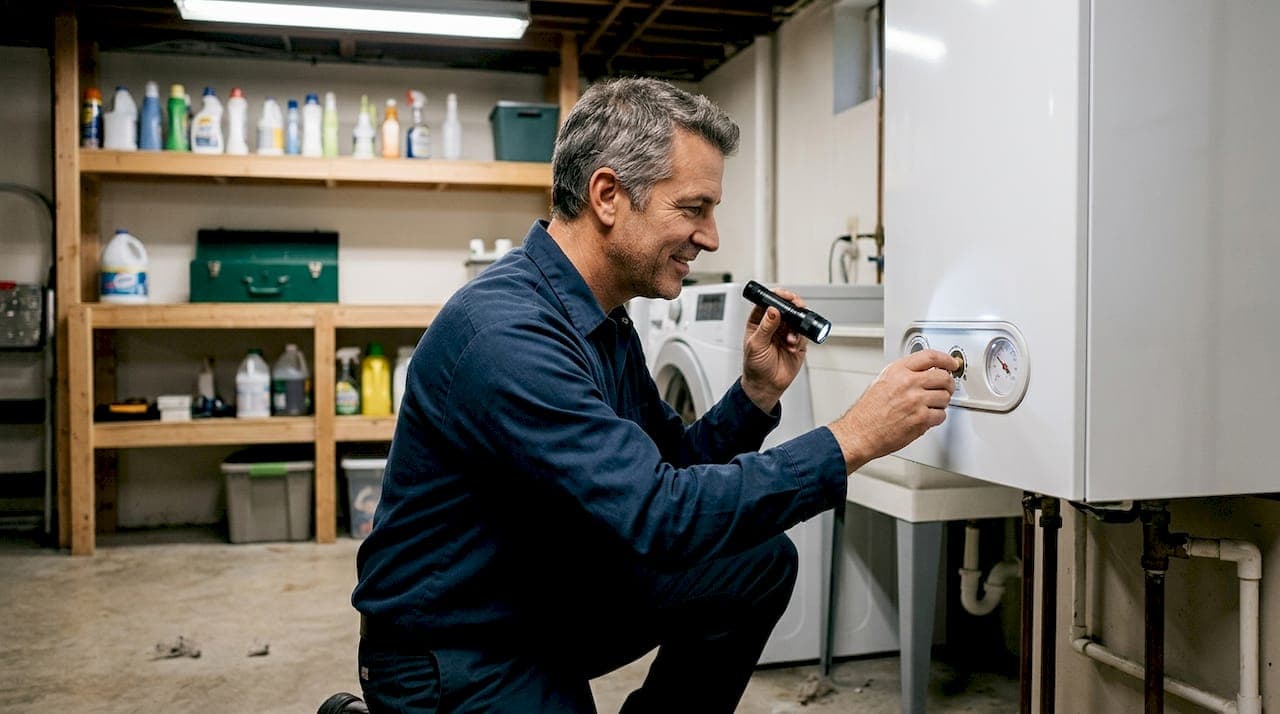
A boiler breakdown never picks a convenient moment. It tends to strike on the coldest night of the year, leaving you without heating or hot water and facing an emergency call-out bill that could run into hundreds of pounds. What makes this worse is that most breakdowns are preventable. Routine maintenance catches small faults before they become expensive failures, keeps your energy bills lower, and gives you confidence that your home is safe. This checklist walks you through every key step, from basic monthly checks you can do yourself to the annual professional service that keeps your boiler running at its best.
Table of Contents
- Why regular boiler maintenance matters
- The essential boiler maintenance checklist
- Common boiler problems and warning signs
- How to prepare for and book professional boiler servicing
- Our experience: Why checklists work and what most guides leave out
- Professional help when you need it
- Frequently asked questions
Key Takeaways
| Point | Details |
|---|---|
| Prevention saves money | Regular boiler maintenance helps avoid costly emergency repairs. |
| Safety is crucial | Annual checks reduce the risk of carbon monoxide leaks and dangerous faults. |
| DIY basics are simple | Homeowners can handle basic tasks but should always book professionals for in-depth servicing. |
| Know the warning signs | Prompt action on leaks or noises prevents further damage. |
| Legal obligations exist | Landlords are legally required to arrange annual boiler servicing. |
Why regular boiler maintenance matters
Now that you know what to expect from this checklist, let's see why these routine checks truly matter. A boiler is one of the hardest-working appliances in your home, running for months on end through autumn and winter. Like any mechanical system, it needs attention to stay safe and efficient.
The safety case is straightforward. A poorly maintained boiler can develop gas leaks, carbon monoxide (CO) emissions, or pressure faults. Carbon monoxide is colourless and odourless, so without a working CO alarm and a well-serviced boiler, there is no warning before it becomes dangerous. Regular checks keep those risks firmly under control.
Efficiency is the other major reason. Routine maintenance improves boiler efficiency by up to 15%, according to HSE guidance. That figure translates directly into lower gas bills every month. A boiler working harder than it should to compensate for scale build-up, low pressure, or blocked components burns more fuel for the same heat output.
There are also longer-term financial benefits. Boilers that receive consistent care last significantly longer than neglected ones. Replacing a boiler can cost anywhere from £1,500 to £3,500 or more. Spending a modest amount on annual servicing and carrying out simple monthly checks is a straightforward way to protect that investment. For guidance on what can go wrong and how to address it, our boiler repair advice covers the most common scenarios.
Here is a summary of the core benefits:
- Improved safety: Identifies gas leaks, CO risks, and pressure faults early
- Lower energy bills: An efficient boiler uses less fuel for the same warmth
- Fewer emergency repairs: Small faults caught early rarely become costly breakdowns
- Longer system lifespan: Consistent care extends the working life of your boiler
- Valid warranty: Many manufacturers require annual servicing to keep the warranty active
If your central heating system as a whole needs attention, our central heating repairs service covers everything from radiators to pipework.
Pro Tip: Write your annual service date on your calendar the moment you book it, and set a reminder two weeks before so you have time to rearrange if needed. Consistency matters more than perfection.
The essential boiler maintenance checklist
With the benefits in mind, let's explore the specific steps you should take. Some of these you can do yourself on a monthly basis. Others require a qualified engineer once a year.
- Check the pressure gauge. Your boiler pressure should sit between 1 and 1.5 bar when the system is cold. If it drops below 1 bar, you can top it up using the filling loop (a small valve, usually beneath the boiler). If pressure drops repeatedly, there may be a leak elsewhere in the system.
- Inspect for visible leaks or corrosion. Look around the boiler casing, pipework, and joints. Brown staining or damp patches near the unit are warning signs. Do not attempt to fix a gas-related leak yourself.
- Listen for unusual noises. Banging, kettling (a rumbling sound like a boiling kettle), or whistling can indicate limescale build-up, air in the system, or a failing pump.
- Test your radiators. Turn the heating on and check that every radiator heats evenly from top to bottom. Cold patches at the top usually mean trapped air, which you can release by bleeding the radiator with a radiator key.
- Test your CO alarm and smoke detector. Press the test button monthly. Replace batteries annually or install a mains-wired unit for reliability.
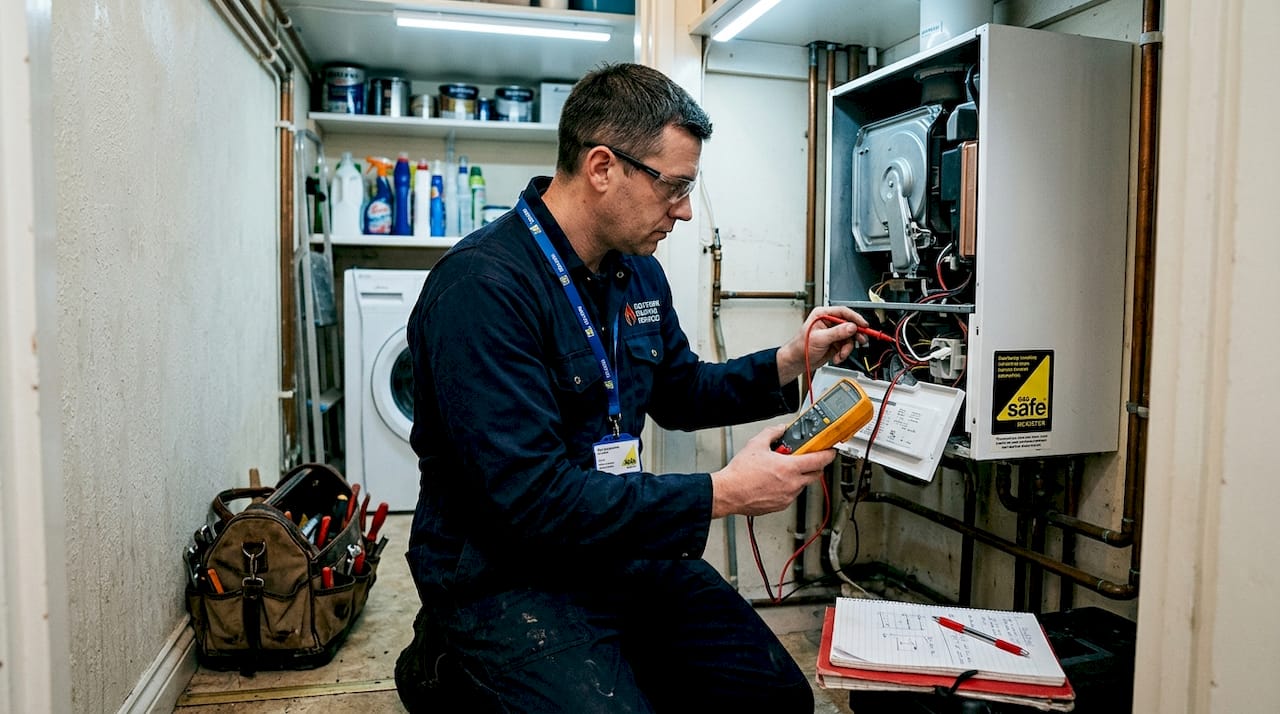
- Book an annual service. Annual inspections by a qualified heating engineer are required for safety. Only use a Gas Safe registered engineer for any repair or service work. You can find repairing boilers specialists who are fully registered and ready to help.
Pro Tip: Always use a Gas Safe registered engineer for repairs or annual servicing. Ask to see their Gas Safe ID card before any work begins. Every registered engineer carries one.
| Task | Frequency | Who does it |
|---|---|---|
| Check boiler pressure | Monthly | Homeowner |
| Inspect for leaks or corrosion | Monthly | Homeowner |
| Listen for unusual noises | Monthly | Homeowner |
| Bleed radiators | As needed (autumn) | Homeowner |
| Test CO alarm | Monthly | Homeowner |
| Full annual boiler service | Yearly | Gas Safe engineer |
| Flue and ventilation inspection | Yearly | Gas Safe engineer |
Common boiler problems and warning signs
Following routine checks helps, but recognising the warning signs for faults is just as important. Even with good maintenance habits, problems can develop between services. Knowing what to look for means you can act quickly rather than waiting until the system fails entirely.
The most common issues homeowners encounter include:
- Low pressure: The boiler cuts out or fails to fire up. Check the gauge and re-pressurise if needed.
- Pilot light keeps going out: Often caused by a faulty thermocouple or a draught. This needs an engineer.
- No hot water or heating: Could be a thermostat issue, a broken diverter valve, or an airlock in the system.
- Water leaking from the boiler: Usually a sign of a failed seal, corrosion, or a loose joint. Turn off the boiler and call an engineer.
- Kettling noises: Caused by limescale build-up on the heat exchanger, common in hard water areas.
"Never ignore persistent unusual boiler noise. It could signal component failure."
Ignoring strange noises or pressure loss may lead to serious faults, according to Which? research on common boiler issues.
| Problem | DIY step | Call an engineer if... |
|---|---|---|
| Low pressure | Re-pressurise via filling loop | Pressure drops again within days |
| Cold radiator patches | Bleed the radiator | All radiators are cold or heating fails |
| Boiler keeps switching off | Check thermostat settings | No obvious cause found |
| Unusual noises | Check for air in system | Noise is persistent or worsening |
| Water leak | Turn off boiler | Any visible leak from the unit |
For situations that cannot wait, our emergency boiler repairs team is available around the clock. If you are unsure whether your situation is urgent, our boiler breakdown support page can help you decide. You can also review your boiler service options to find the right level of cover.
How to prepare for and book professional boiler servicing
If you suspect a problem or it's time for annual maintenance, a professional service is essential. Choosing the right engineer and preparing your home properly makes the whole process quicker and more effective.
Why only Gas Safe engineers should touch your boiler
Only engineers registered with Gas Safe may legally service boilers in the UK. Working on a gas appliance without registration is illegal and extremely dangerous. Always find a Gas Safe engineer through the official register before booking.
What a full service includes:
- Visual inspection of the boiler and all visible components
- Flue integrity check to ensure combustion gases are safely expelled
- Burner and heat exchanger inspection and cleaning
- Gas pressure and flow rate testing
- Safety device checks, including the pressure relief valve
- Combustion analysis to confirm safe and efficient burning
- Written report of findings and any recommended work
How to prepare your home:
- Clear the area around the boiler so the engineer has easy access.
- Make sure the boiler is switched on and running when they arrive, so they can observe it in operation.
- Write down any issues you have noticed, such as noises, pressure drops, or cold spots, so you can give a clear account.
- Have your previous service records to hand. Engineers find it helpful to see the history of the appliance.
Questions to ask after the visit:
- Was everything within safe operating limits?
- Are there any components likely to need replacement soon?
- Is the boiler running at its best efficiency?
For professional boiler repairs alongside your service, we can handle both in a single visit where possible.
Our experience: Why checklists work and what most guides leave out
Building on your new knowledge, here's an inside look at what truly makes preventative maintenance effective. After attending countless boiler callouts, a pattern becomes very clear: the homeowners who call in a panic are almost never the ones who kept a written checklist. They are the ones who meant to book a service, assumed everything was fine, and then found themselves without heating in January.
The checks most often skipped are not the complicated ones. They are the simple ones that feel unnecessary until they are not. Carbon monoxide alarms with flat batteries. Vents blocked by furniture moved during a redecoration. Pressure gauges nobody has looked at since the boiler was installed.
A written checklist removes the reliance on memory. When you are stressed and cold, you do not have to think about what to check first. You just follow the list.
Pro Tip: Keep all your boiler documentation together in one folder: service records, the manufacturer's manual, your engineer's contact details, and your Gas Safe certificates. In an emergency, having everything in one place saves valuable time.
For a clearer picture of what can go wrong and how we handle it, take a look at our real repair experiences from jobs across the region.
Professional help when you need it
If you prefer the reassurance of expert support, here's where you can get help. Working through this checklist gives you a strong foundation, but there are times when a qualified engineer is the only right answer.

Same Day Plumber offers fast, reliable boiler and plumbing support with no call-out charge and a no fix, no fee guarantee. Whether you need an emergency response or a planned annual service, we are available 24/7 and aim to get the job done properly the first time. Our Same Day Plumber in Reading team covers both urgent and routine work, and our emergency plumber services are ready whenever you need them most.
Frequently asked questions
How often should a boiler be serviced?
You should have your boiler serviced once a year by a Gas Safe registered engineer. Annual servicing keeps the system safe, efficient, and covered under most manufacturer warranties.
Can I do boiler maintenance myself?
Homeowners can check pressure, bleed radiators, and test CO alarms, but only a Gas Safe engineer may legally service boilers in the UK. Never attempt gas-related repairs yourself.
What are the signs my boiler needs urgent repair?
Warning signs include water leaking from the unit, persistent pressure loss, loud banging or kettling noises, and a complete loss of heating or hot water. Strange noises or pressure loss should never be ignored.
Is boiler maintenance required by law?
Annual servicing is a legal requirement for landlords and is strongly advised for all homeowners. Annual inspections by a qualified engineer are the minimum standard for safe operation.