
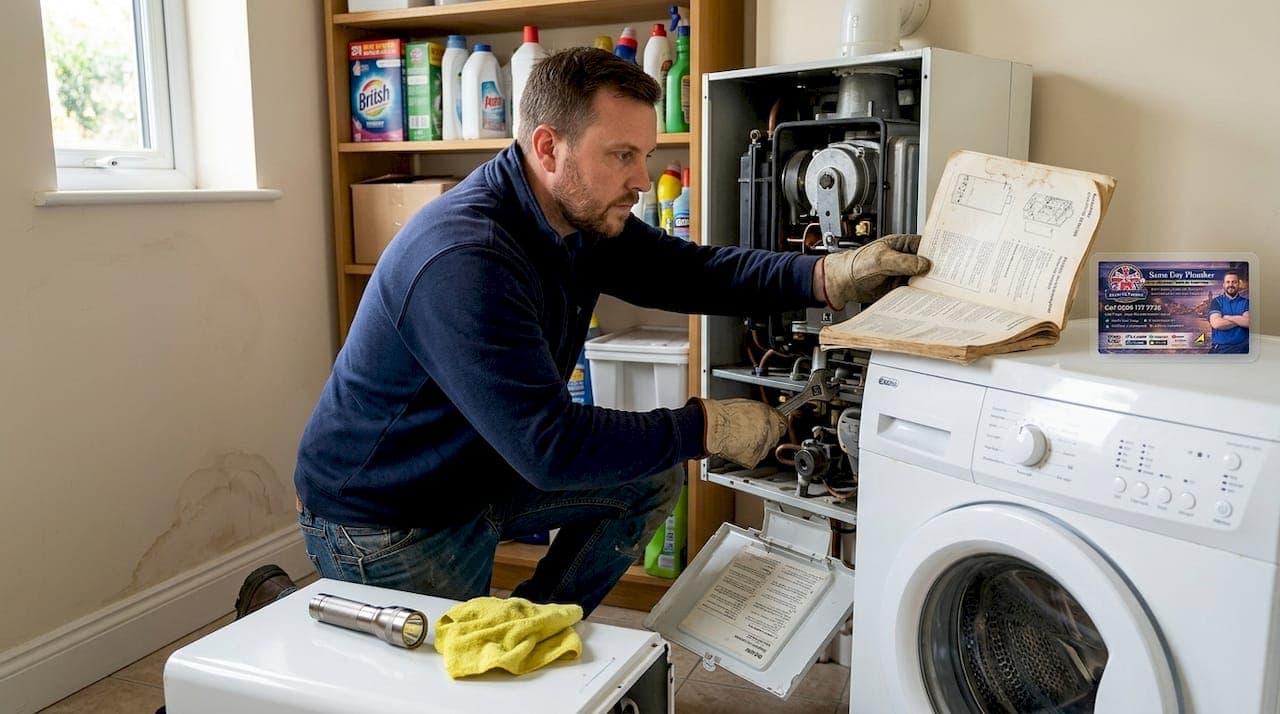
Your boiler cuts out on a freezing January morning, the house drops to single digits, and the engineer can't come until tomorrow. That sinking feeling is one most UK homeowners know all too well. The good news is that a surprising number of common boiler problems can be investigated and sorted at home, without waiting for a callout. This guide walks you through everything: getting prepared, following a clear repair sequence, spotting where things go wrong, and recognising the handful of situations where you genuinely must hand it over to a professional. Follow it step by step and you'll approach your boiler with confidence rather than dread.
Table of Contents
- What to know before you start boiler repairs
- Step-by-step boiler repair instructions
- Troubleshooting tips and common mistakes
- How to know if you should call a professional plumber
- Why methodical DIY really matters for boiler repairs
- Get professional boiler support when you need it
- Frequently asked questions
Key Takeaways
| Point | Details |
|---|---|
| Safety is essential | Always isolate power and gas before inspection and never attempt advanced repairs yourself. |
| Follow clear steps | Diagnose issues with a calm, logical process for the best chance of a successful repair. |
| Know your limits | For gas leaks, complex faults, or persisting problems, a certified engineer is your safest option. |
| Preparation saves time | Having the right tools, safety knowledge, and boiler information helps avoid costly mistakes. |
What to know before you start boiler repairs
Before jumping into repairs, it's critical to understand what you're working with and set yourself up for safe troubleshooting. Rushing straight to the boiler without preparation is one of the most common reasons DIY attempts make things worse rather than better.
First, know your boiler type. The three most common domestic boilers in the UK are combi boilers (which heat water on demand and supply central heating from one unit), system boilers (which work alongside a hot water cylinder), and regular or heat-only boilers (which need both a cylinder and a cold water tank in the loft). Why does this matter? Because each type has different pressure systems, components, and fault patterns. A pressure drop that's normal behaviour in one type can signal a serious leak in another. Check your boiler casing or manual if you're unsure which you have.
Safety always comes first. Before touching anything:
- Switch off the boiler at the programmer or thermostat
- Turn off the electricity supply at the fuse box
- Close the gas isolator valve on the supply pipe to the boiler
- Open windows in the room to ensure ventilation
- Put on safety gloves and eye protection before removing any panels
Improper repairs are dangerous; always ensure power and gas are off before working on a boiler.
Safety warning: Never attempt to work on a boiler if you can smell gas or suspect a carbon monoxide leak. Leave the property immediately, call the National Gas Emergency line on 0800 111 999, and do not return until the property has been declared safe.
Pro Tip: Find your boiler's make, model number, and installation date before you do anything else. This information is usually on a sticker on the front or side of the unit. Having it ready means you can cross-reference your boiler maintenance checklist and pull up the correct manual within minutes.
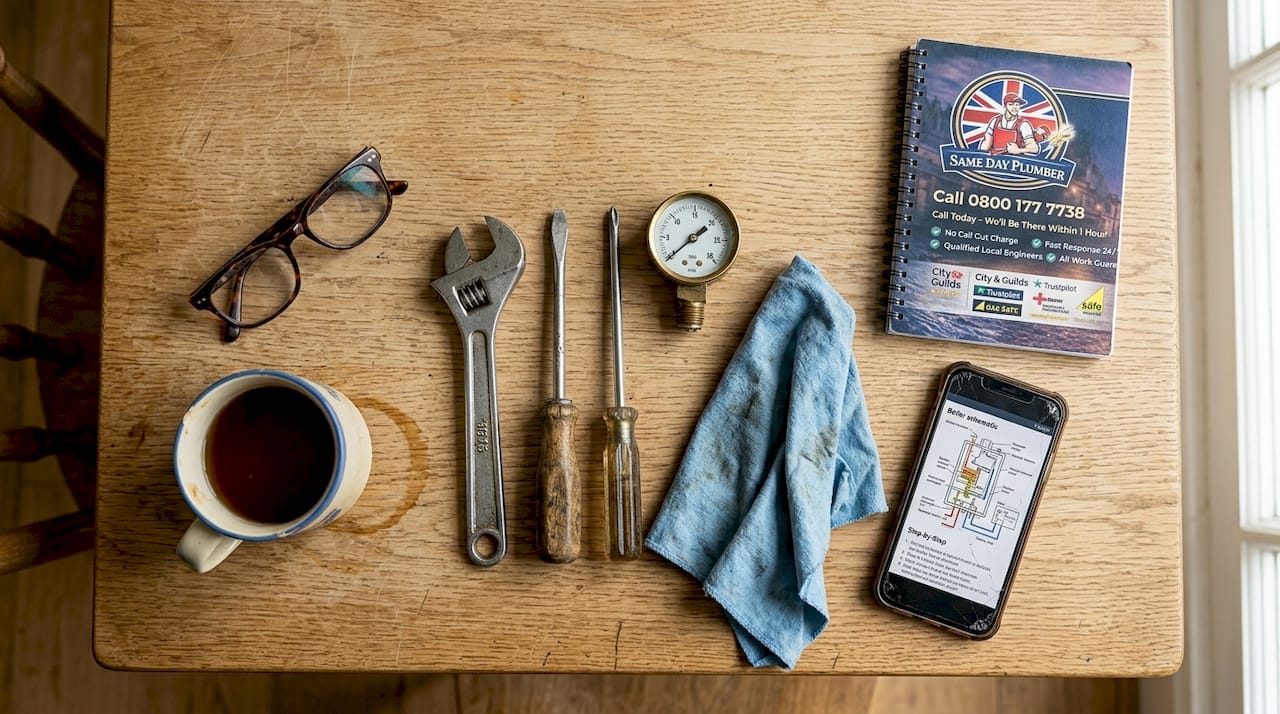
Here's a quick reference for what to have ready:
| Tool or material | Purpose |
|---|---|
| Flat and cross-head screwdrivers | Removing boiler casing panels |
| Adjustable wrench | Tightening or loosening fittings |
| Pressure gauge | Checking system pressure |
| Filling loop key or lever | Re-pressurising the system |
| Torch or head lamp | Seeing inside dark spaces |
| Clean cloths and bucket | Catching any drips |
| Boiler manual | Step-by-step fault reference |
For a broader look at common boiler problems and how they're classified, it's worth reviewing the fault categories before you begin. You'll also find useful heating repair advice that can help you narrow down what you're dealing with.
Step-by-step boiler repair instructions
Once you're safe and prepared, follow these clear steps to diagnose and repair the most common boiler faults. Correct diagnosis and stepwise repair reduces the risk of further damage, so don't skip stages.
- Shut down and isolate. Turn off the boiler, isolate gas and electricity. Wait five minutes for any residual heat to dissipate before proceeding.
- Check the pressure gauge. Most combi and system boilers should read between 1 and 1.5 bar when cold. Below 0.8 bar means low pressure; above 2.5 bar means overpressure. Note the exact reading.
- Re-pressurise if needed. Locate the filling loop (usually a braided silver hose beneath the boiler). Slowly open both valves until pressure reaches 1 to 1.5 bar, then close them firmly. Never leave valves partially open.
- Inspect the pilot light or ignition. On older boilers with a pilot light, check it hasn't gone out. Modern boilers use electronic ignition; if the igniter clicks but fails to fire, the electrode or flame sensor may need cleaning or replacing. Check the installation and components guide for your model.
- Check the thermostat settings. Confirm the room thermostat is set above the current room temperature and that timer programmes are correct. A surprisingly large number of 'faults' are simply scheduling errors.
- Reseat any accessible components. If you've removed a panel, check that all wiring connectors are firmly seated. Vibration can work connectors loose over time.
- Restart and observe. Restore power and gas, then press the reset button as directed in the manual. Listen for ignition, watch the pressure gauge, and check that radiators begin to warm within ten minutes.
- Stop immediately if uncertain. If you see water pooling, smell burning, or the boiler trips repeatedly, switch everything off and contact a professional. Review boiler repair basics to decide your next step.
Pro Tip: Take a photo with your phone at every stage. If something goes wrong or you need to call an engineer, those photos become an invaluable record of exactly what you found and what you changed.
| Approach | Best for | Risk level |
|---|---|---|
| Restart sequence | Lockouts, low pressure, scheduling faults | Low |
| Part replacement | Faulty sensors, worn seals, broken electrodes | Medium to high |
Troubleshooting tips and common mistakes
With the basics covered, let's address what homeowners often miss and how to tackle those lingering problems. Even careful DIYers fall into predictable traps.
The most common errors include:
- Skipping power and gas isolation before opening the casing
- Over-tightening compression joints, which causes hairline cracks and slow leaks
- Failing to bleed radiators before re-pressurising, leaving airlocks that block heat circulation
- Resetting the boiler without actually fixing the underlying fault, leading to repeated lockouts
- Adjusting the gas valve or burner assembly without Gas Safe registration, which is illegal
Incorrect re-pressurising and misadjusted thermostats account for over 40% of unresolved DIY boiler faults, which shows how easy it is to overlook the simple stuff.
Use this checklist when your boiler won't deliver heat, makes noises, leaks, or shows fluctuating pressure:
- No heat or hot water: Check pressure, thermostat settings, programmer, and pilot or ignition.
- Banging or kettling sounds: Usually caused by limescale build-up on the heat exchanger. A powerflush may be needed.
- Dripping or leaking: Identify whether the leak is from a fitting, pump seal, or pressure relief valve. A weeping PRV often means overpressure.
- Fluctuating pressure: Check for visible leaks first. If none, the expansion vessel may need recharging.
Important: Never bypass or disable a pressure relief valve, safety thermostat, or gas interlock. These components exist to prevent fires, explosions, and carbon monoxide exposure. Disabling them voids your insurance and puts lives at risk.
Pro Tip: Most boiler manufacturers offer free telephone support lines, and many have detailed fault code guides on their websites. Search your boiler brand alongside the fault code shown on the display for a manufacturer-specific fix. For ongoing support on complex faults, predictive boiler care strategies can help you spot patterns before problems become serious.
If you're repeatedly hitting the same fault, it's time to consider when to call a professional rather than continuing to reset. Expert guidance for repairs is always close at hand if you need it.
How to know if you should call a professional plumber
Even with the best preparation, some problems are best left to qualified professionals for your safety and peace of mind. The line between a sensible DIY fix and a dangerous job is worth knowing clearly.
Call a professional immediately if you notice any of the following:
- You can smell gas anywhere in or around the property
- Your carbon monoxide alarm has triggered
- There is significant water damage or pooling around pipework
- The boiler sparks, trips the electrics, or makes a loud bang
- Any fault involves the gas valve, burner, or heat exchanger
Gas-related repairs must be performed by Gas Safe registered engineers. This is not optional guidance; it's a legal requirement under the Gas Safety (Installation and Use) Regulations 1998. Working on gas appliances without registration carries unlimited fines and criminal liability.
| Fault type | Action |
|---|---|
| Low system pressure | DIY likely |
| Thermostat or timer fault | DIY likely |
| Bleeding radiators | DIY likely |
| Faulty pressure relief valve | Both possible |
| Pump replacement | Both possible |
| Gas valve or burner fault | Professional required |
| Heat exchanger failure | Professional required |
| Carbon monoxide or gas smell | Professional required |
For non-emergency faults that sit in the middle ground, local boiler services can often offer a same-day diagnostic without charging a callout fee. If things deteriorate quickly, emergency boiler repairs are available around the clock.
Why methodical DIY really matters for boiler repairs
Here's something most boiler guides won't tell you: the biggest risk in DIY repair isn't usually the repair itself. It's the impatience. Homeowners who rush through steps, skip documentation, and press the reset button repeatedly without understanding the fault are the ones who end up with a boiler that deteriorates from a minor issue into a major replacement job.
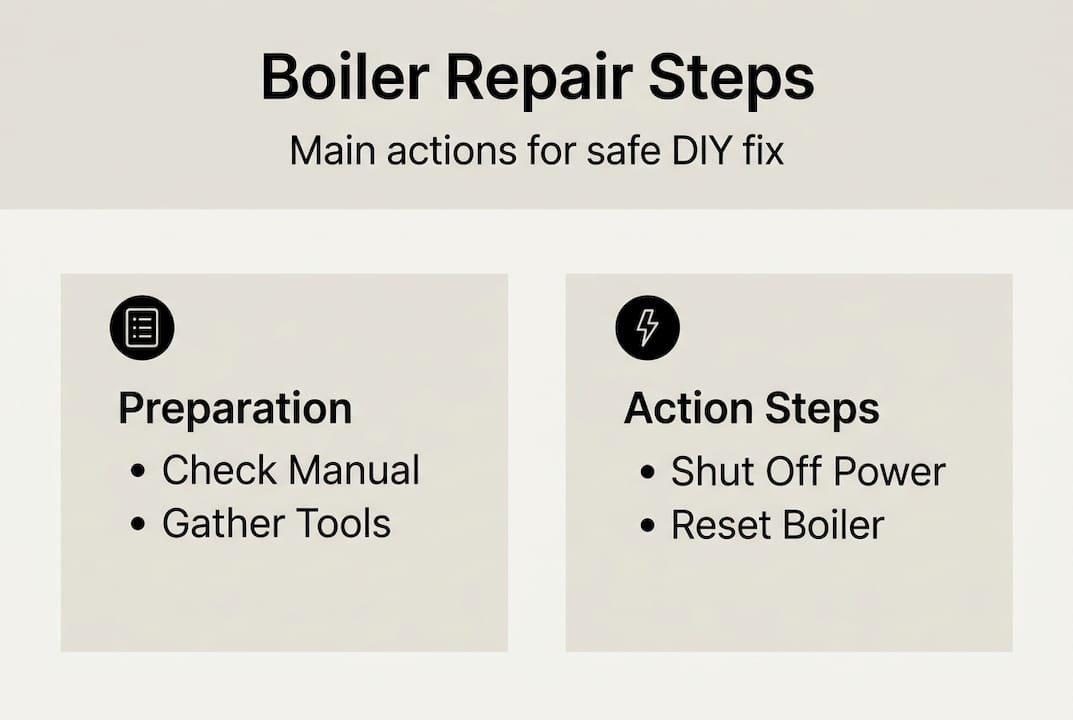
There's a real satisfaction in sorting a boiler fault yourself. It saves money, builds genuine understanding of your home, and means you can describe the problem precisely if you do eventually need an engineer. But that benefit only arrives when you're methodical. Note what you found, what you changed, and what happened next.
The contrarian truth is this: knowing when not to continue is actually the most skilled move in DIY. Stopping at the right moment and calling experienced engineers protects your warranty, keeps your insurance valid, and keeps your household safe. Patience and humility, not confidence alone, are what separate a good DIY outcome from an expensive one.
Get professional boiler support when you need it
If at any point you're unsure or the issue is outside of your comfort zone, there's expert help close at hand.
Same Day Plumber provides fast, reliable support for boiler faults of every kind, from a quick re-pressurise to a full component replacement. Our Gas Safe registered engineers are available 24/7, with no call out charge and a no fix, no fee promise. Whether it's a planned repair or a middle-of-the-night emergency, we aim to be with you quickly and get things sorted properly the first time. Speak to our trusted local plumbers or go straight to our boiler repair specialists to book support or get advice on your specific fault.
Frequently asked questions
Is it safe to repair a boiler yourself?
It's safe to attempt minor checks and resets following guidance, but gas or electrical issues should always be handled by qualified professionals and are a legal requirement under UK regulations.
What tools do I need for basic boiler repairs?
You'll need a screwdriver set, adjustable wrench, cloth, pressure gauge, and your boiler manual. A basic toolkit and correct identification of the boiler model are essential for effective repairs.
How do I reset my boiler after a fault?
Most boilers have a reset button; press it according to the manual's instructions, but ensure the fault cause is addressed first. A proper reset should only be done after confirming the issue is resolved.
When should I call an emergency plumber for my boiler?
Call immediately if you smell gas, notice water leaks, hear loud noises, or can't restore heating after basic steps. Red-flag faults always warrant a professional call-out without delay.