
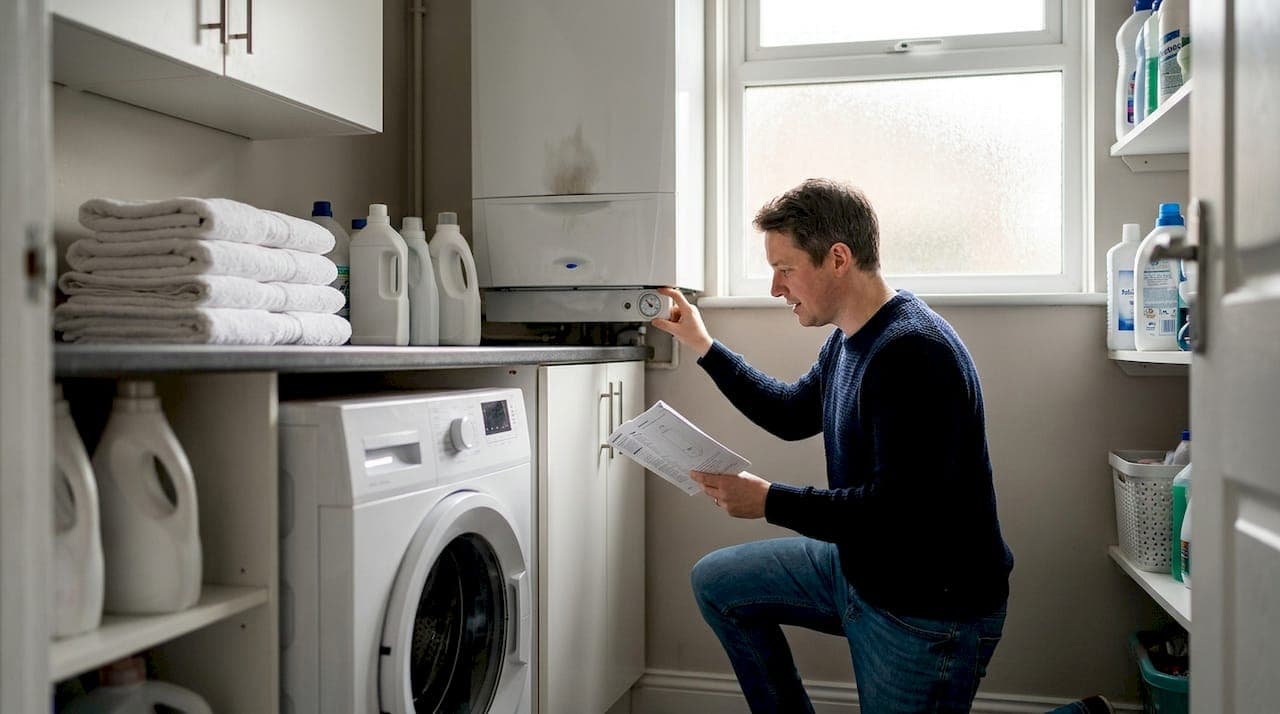
Your boiler quietly keeps your home warm and your water hot, yet most homeowners never give it a second thought until something goes wrong. That oversight can be genuinely dangerous. Faulty or poorly maintained boilers are a leading source of carbon monoxide poisoning, pressure-related incidents, and costly breakdowns, many of which are entirely preventable. Annual professional servicing is one of the most important steps you can take to protect your household. This guide walks you through the practical safety measures every homeowner should have in place, from routine checks to emergency responses.
Table of Contents
- Why annual boiler servicing matters
- Essential safety devices and how to check them
- Spotting and preventing common boiler hazards
- Emergency response and what never to ignore
- What most homeowners get wrong about boiler safety
- Stay safe with expert local support
- Frequently asked questions
Key Takeaways
| Point | Details |
|---|---|
| Annual boiler service | Servicing your boiler yearly by a certified professional is vital for safety and efficiency. |
| Test safety devices regularly | Homeowners should test pressure valves and CO alarms monthly to catch issues early. |
| Watch for key hazards | Low water, scale build-up, and blocked vents are leading causes of boiler failures. |
| Act fast in emergencies | If you smell gas or a leak, evacuate at once and call for emergency help—do not try to fix it yourself. |
Why annual boiler servicing matters
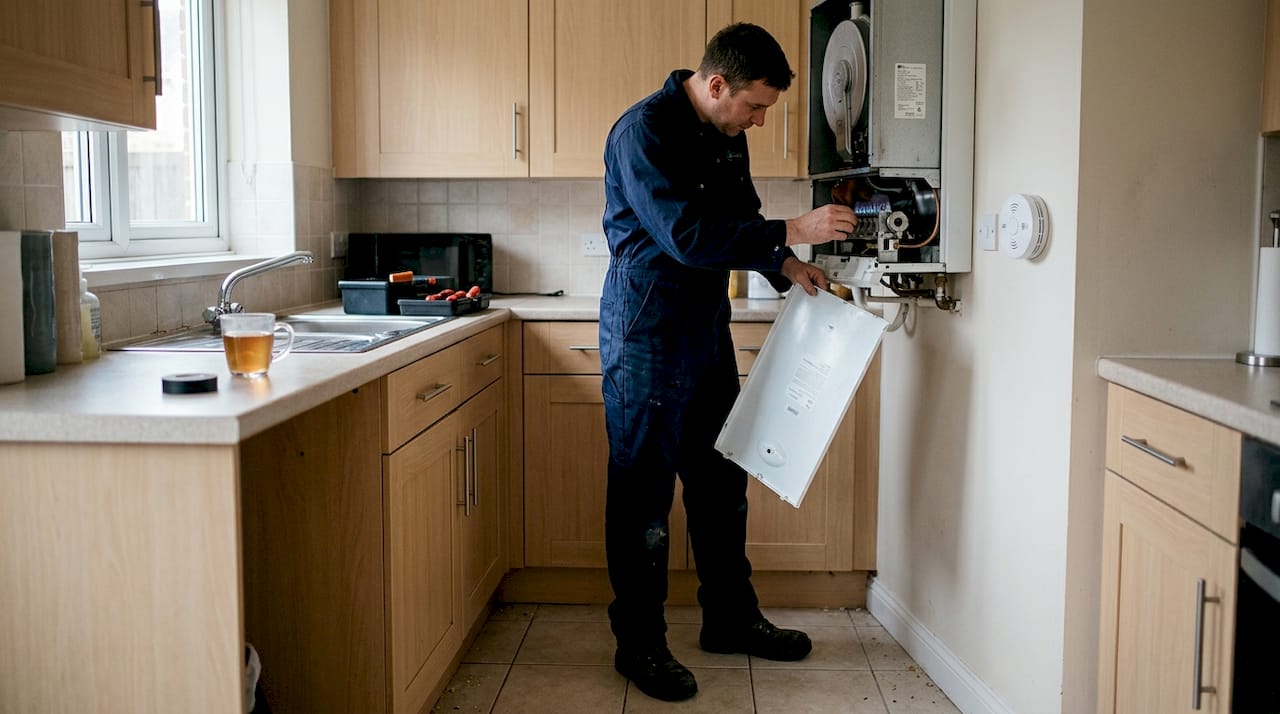
Think of an annual boiler service the way you think about an MOT for your car. It is not just a legal formality or a box-ticking exercise. It is a structured inspection that catches problems before they become serious hazards. A certified Gas Safe engineer will examine every critical component, and the difference between a serviced and an unserviced boiler can be the difference between a safe winter and a dangerous one.
During a standard service, an engineer will typically:
- Inspect and clean the burner and heat exchanger
- Test the flue for carbon monoxide leaks and blockages
- Check the pressure relief valve (PRV) and expansion vessel
- Verify water levels and inspect for corrosion
- Test all safety cut-off devices
- Assess the overall efficiency of the system
The best time to book your service is late summer or early autumn, before the heating season begins. Boilers work hardest in winter, and that is exactly when a hidden fault becomes a real emergency. Pre-season servicing ensures safety devices are checked and functioning before you rely on them daily.
It is also worth understanding that modern boilers have multiple safety features that older models simply do not. Older boilers may lack automatic shut-off systems, pressure sensors, or sealed flue designs. If your boiler is more than 15 years old, the safety conversation with your engineer becomes even more important.
"A boiler that has not been serviced in over a year is not just inefficient. It is a potential hazard that no homeowner should accept."
Pro Tip: Book your annual service with an engineer who is registered on the Gas Safe Register. This is a legal requirement in the UK for anyone working on gas appliances, and it guarantees a minimum standard of competence. You can explore boiler servicing steps to understand what a full service involves, or get in touch if you are dealing with boiler issues in Reading and need a local specialist.
Research consistently shows that 85% of boiler failures result from neglected maintenance. That is an extraordinary statistic, and it means the vast majority of breakdowns, emergency call-outs, and safety incidents are avoidable with consistent, scheduled care.
Essential safety devices and how to check them
Annual servicing is essential, but weekly or monthly checks add another layer of safety that no homeowner should skip. The good news is that most of these checks take only a few minutes and require no specialist tools.
Pressure relief valve (PRV): This valve releases pressure if your boiler exceeds safe operating limits. To test it, carefully lift the lever slightly and check that water discharges from the outlet pipe. If nothing comes out, or if the valve drips constantly afterwards, call an engineer. A faulty PRV is a serious overpressure risk.
Low-water cut-off: This device shuts down the boiler if water levels drop too low, preventing dangerous overheating. Test it by slowly draining water from the system until the cut-off activates. If the boiler does not shut down, the device may be faulty and needs immediate attention.
Carbon monoxide alarms: These are non-negotiable. Install CO alarms on every level of your home, outside sleeping areas, and away from the boiler itself or any vents. Test them monthly by pressing the test button. Replace batteries annually and replace the entire unit every 5 to 7 years.
Flame colour: Take a moment to look at your boiler's burner flame when it is running. A healthy flame is steady and blue. A yellow or orange flame indicates incomplete combustion, which can produce carbon monoxide. Do not ignore it.
Here is a quick reference for your monthly safety checks:
| Safety device | What to check | Action if faulty |
|---|---|---|
| Pressure relief valve | Water discharges when tested | Call engineer immediately |
| Low-water cut-off | Boiler shuts off at low water | Call engineer immediately |
| CO alarm | Sounds when test button pressed | Replace unit or batteries |
| Flame colour | Steady blue flame | Call engineer, do not use boiler |
| Air vents and flues | No visible blockages | Clear or call engineer |
Also check that air vents and flue outlets are free from obstructions. Leaves, bird nests, and debris can block external flues, causing dangerous back-drafting of combustion gases. You can find more heating safety tips on our website, or reach out for professional Newbury boiler help if any of these checks raise concerns.
Pro Tip: Set a recurring monthly reminder on your phone specifically for CO alarm testing and a visual flue check. It takes under two minutes and could genuinely save a life.
Spotting and preventing common boiler hazards
Having learned routine checks, the next step is spotting the hazards before they become problems. Most boiler accidents share the same small group of root causes, and recognising them early gives you time to act safely.
Low water levels are the leading cause of boiler failure. When water drops too low, components overheat and can crack or warp. Check your system pressure gauge regularly. Most combi boilers should sit between 1 and 1.5 bar when cold. If it keeps dropping, you may have a slow leak somewhere in the system.
Limescale build-up is a particular concern in hard water areas, which covers a large portion of England. Scale forms on heat exchanger surfaces and acts as an insulator. Just 3mm of scale can reduce efficiency by 20 to 25%, forcing your boiler to work harder and increasing the risk of overheating. A water softener or an annual power flush can significantly reduce scale accumulation.
Overpressure events happen when the PRV fails or is bypassed. If your boiler pressure gauge regularly climbs above 3 bar, do not ignore it. This is a sign that the expansion vessel may be waterlogged or the PRV is not functioning correctly.
Carbon monoxide from poor venting is the most invisible and most dangerous hazard. Blocked or corroded flues allow combustion gases to spill into living spaces rather than venting outside. CO has no smell and no colour, which is why alarms and regular flue checks are so critical.
| Hazard | Warning sign | Prevention |
|---|---|---|
| Low water | Pressure below 1 bar | Check gauge weekly, re-pressurise |
| Limescale | Banging or kettling noises | Annual power flush, water softener |
| Overpressure | Gauge above 3 bar | Test PRV, check expansion vessel |
| CO from poor venting | Yellow flame, headaches | Annual flue check, CO alarms |
If you are dealing with an unexpected breakdown or suspect a hazard, do not wait. Get in touch for help with emergency boiler issues before a minor fault becomes a major incident.
Emergency response and what never to ignore
Prevention does not end with checks. Knowing what to do in an emergency is just as vital as any routine maintenance task. Acting quickly and correctly in those first few minutes can prevent serious injury or worse.
If you smell gas near your boiler:
- Stop what you are doing immediately
- Do not turn any electrical switches on or off
- Do not use your mobile phone inside the property
- Open windows and doors to ventilate the space
- Evacuate everyone, including pets, from the building
- Call the National Gas Emergency Service on 0800 111 999 from outside
- Do not re-enter until the property has been declared safe
Immediate evacuation is not an overreaction. Gas leaks can escalate within minutes, and a single spark is all it takes.
"Never silence a boiler alarm and assume everything is fine. Safety devices exist for a reason, and overriding them is one of the most dangerous decisions a homeowner can make."
If your CO alarm sounds, treat it the same way as a gas leak. Evacuate, get fresh air, and call 999. Do not assume it is a false alarm. If anyone feels dizzy, has a headache, or feels nauseous, seek medical attention immediately.
For unusual noises, such as banging, kettling, or whistling, never bypass safety devices or attempt to silence warning signals. These sounds are your boiler communicating that something is wrong. Banging often points to limescale. Whistling can indicate a pressure issue. Kettling is a sign of overheating.
Pro Tip: Save the number for a 24-hour emergency plumber alongside your gas emergency number. When something goes wrong at 2am, you will be glad you prepared. Our team handles urgent High Wycombe repairs and similar call-outs around the clock.
What most homeowners get wrong about boiler safety
After years of attending boiler call-outs, the pattern we see most often is not equipment failure. It is complacency. Homeowners invest in a new boiler, feel reassured by its modern features, and then quietly stop paying attention. That is where things go wrong.
Human error, including bypassing safety devices, is a leading cause of boiler incidents. Modern boilers do have better built-in protections than older models, but those protections only work if they are maintained and respected. A pressure relief valve that has never been tested is not a safety feature. It is an unknown.
We also see homeowners in hard water areas who skip descaling treatments because the boiler seems to be working fine. Scale builds slowly and silently. By the time you notice the efficiency drop or hear the kettling, significant damage may already have occurred.
The uncomfortable truth is that no gadget or smart thermostat replaces consistent, simple vigilance. A monthly visual check and an annual professional service will outperform any expensive monitoring system that is set up and then forgotten. Boiler safety is a habit, not a one-off purchase.
Stay safe with expert local support
When prevention and preparation are not enough, having a trusted professional on call makes all the difference. Whether you have spotted an unusual noise, noticed a pressure drop, or simply want the reassurance of a thorough annual service, acting quickly is always the right decision.

At Same Day Plumber, we are available 24 hours a day, 7 days a week, with no call-out charge and a no fix, no fee promise. Our engineers respond fast and get the job done properly the first time. If your boiler is giving you any cause for concern, do not wait for it to become an emergency. Contact our emergency plumber in Reading team today, or browse our full range of local plumbing experts services to find the right support for your home.
Frequently asked questions
How often should I service my boiler for safety?
Annual professional servicing is essential to ensure safe operation and to catch potential problems before they develop into hazards or breakdowns.
Where should I place carbon monoxide alarms near my boiler?
Install CO alarms on every level of your home and outside sleeping areas, keeping them away from the boiler itself and any vents to avoid false readings.
What is the most common cause of boiler failure?
Neglected maintenance, particularly low water levels and scale build-up, are the leading causes of boiler failures and safety incidents.
What should I do if I smell gas near my boiler?
Evacuate immediately, avoid sparks, and call the National Gas Emergency Service on 0800 111 999 from outside the property.