
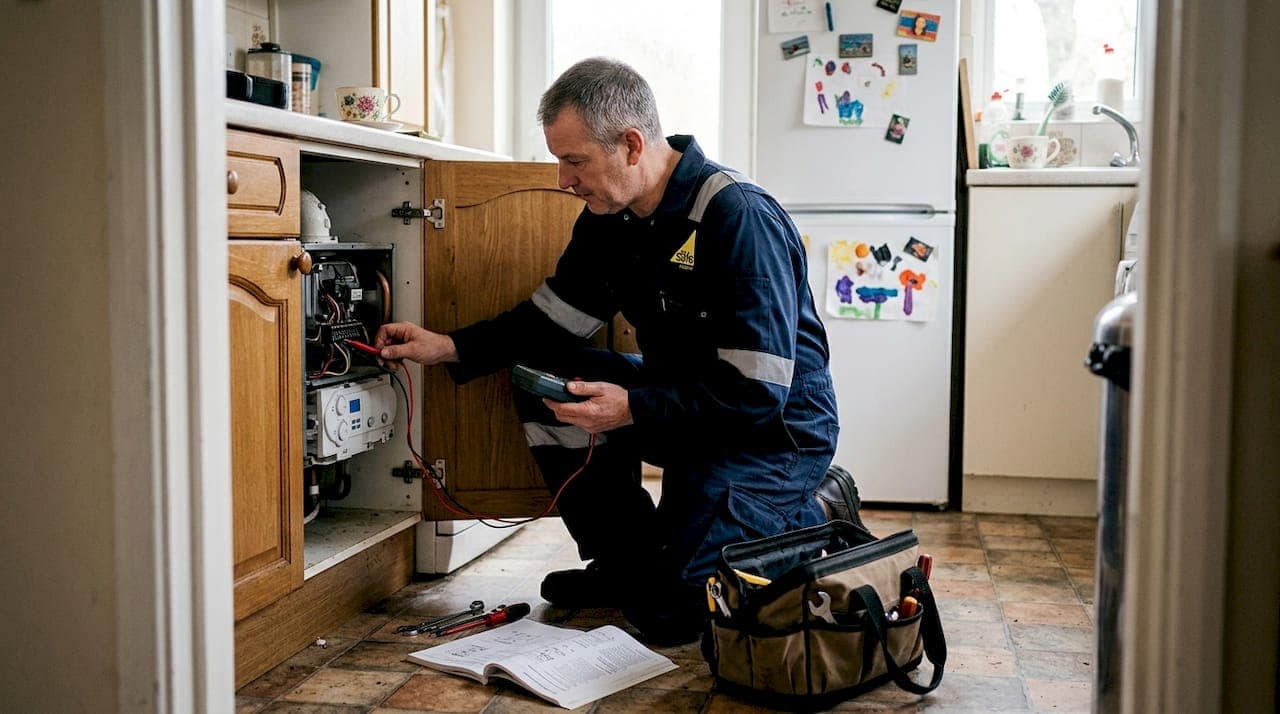
A cold home in the middle of winter is more than an inconvenience. It can quickly become a genuine emergency, especially if you have young children, elderly relatives, or simply no idea what is wrong with your boiler. The confusion around different boiler faults, what they cost, how urgent they are, and whether to repair or replace altogether, leaves many homeowners frozen in indecision as well as temperature. This guide walks you through the main types of boiler repairs, how to spot the warning signs early, and how to make confident decisions when your heating fails.
Table of Contents
- How to identify boiler issues: Key symptoms and warning signs
- The main types of boiler repairs and what causes them
- Comparison of repair types: Urgency, cost, and risk
- Making repair or replace decisions: What experts recommend
- Why 'just fixing it' isn't always the best advice for boiler breakdowns
- Fast, trusted help for every boiler repair
- Frequently asked questions
Key Takeaways
| Point | Details |
|---|---|
| Recognise warning signs | Identifying odd noises, leaks or cold radiators helps you act before costly damage occurs. |
| Know your repair options | The main types of boiler repairs are leaks, pressure faults, pump failures, ignition problems, and component damage. |
| Urgent faults need quick action | Major leaks or lack of heating require emergency help to avoid bigger risks. |
| Regular servicing saves money | Annual boiler service and water treatment can prevent over 80% of breakdowns. |
| Repair vs replace wisely | Weigh repair costs against replacement if your boiler is old, unsafe, or costly to maintain. |
How to identify boiler issues: Key symptoms and warning signs
Before you can fix a boiler problem, you need to know what you are dealing with. Some faults are obvious, like no hot water on a January morning. Others are subtle and easy to miss until they turn into something much worse.
Here are the most common warning signs to watch for:
- Water pooling or dripping around the boiler or pipes
- Strange noises such as banging, kettling, or gurgling sounds
- Pressure gauge reading too low (below 1 bar) or too high (above 3 bar)
- Radiators not heating evenly or staying cold at the top
- No hot water or heating despite the boiler appearing to run
- Pilot light keeps going out or the ignition fails to spark
- Yellow or orange flame instead of a steady blue one (a possible carbon monoxide warning)
Safety must come first. A yellow flame, headaches, or nausea can indicate carbon monoxide, which is odourless and invisible. If you suspect it, leave immediately and call the Gas Emergency Helpline on 0800 111 999. Water leaks, meanwhile, can cause structural damage and encourage mould growth if ignored.
Boiler repair symptoms that are caught early are almost always cheaper to resolve. The full range of issues, from leaks and pressure faults to kettling and ignition failure, covers most breakdowns homeowners face.
Pro Tip: If you live in a hard water area such as the South East of England, limescale builds up faster inside your boiler and pipework. This makes pressure faults and kettling far more likely. A magnetic system filter can significantly slow this process down.
The main types of boiler repairs and what causes them
Recognising the symptoms is only the start. Understanding exactly what type of repair is needed helps you ask the right questions and avoid paying for work that does not address the real problem.
Here are the most common repair categories and what typically causes them:
- Leaks and seal failures Seals and valves wear out over time, especially in older boilers. A small drip left untreated can lead to corrosion and significant water damage.
- Pressure problems Low pressure is often caused by a leak or bled radiators. High pressure may indicate a faulty expansion vessel. Both affect heating efficiency.
- Pump failure The pump circulates hot water through your system. Pump failure accounts for 30% of boiler breakdowns and is often linked to sludge build-up in older systems.
- Heat exchanger damage This is the most expensive fault. Cracks or blockages here affect the boiler's ability to transfer heat safely. Repairs can run from £1,200 to £3,000.
- Ignition and pilot light faults Dirty electrodes, a faulty thermocouple, or gas supply issues are the usual culprits. These are common and generally straightforward to fix.
- Valve faults Motorised valves direct hot water to radiators or the hot water cylinder. When they stick or fail, rooms stop heating properly.
- Kettling This rumbling, boiling noise is caused by limescale on the heat exchanger restricting water flow. It reduces efficiency and stresses the unit.
Industry insight: Boiler efficiency drops by 10 to 20% without regular servicing, and the vast majority of serious breakdowns trace back to poor water treatment. Annual maintenance is not optional if you want to avoid major repair bills.
Exploring heating repair services with a qualified engineer once a year will catch most of these faults before they escalate.
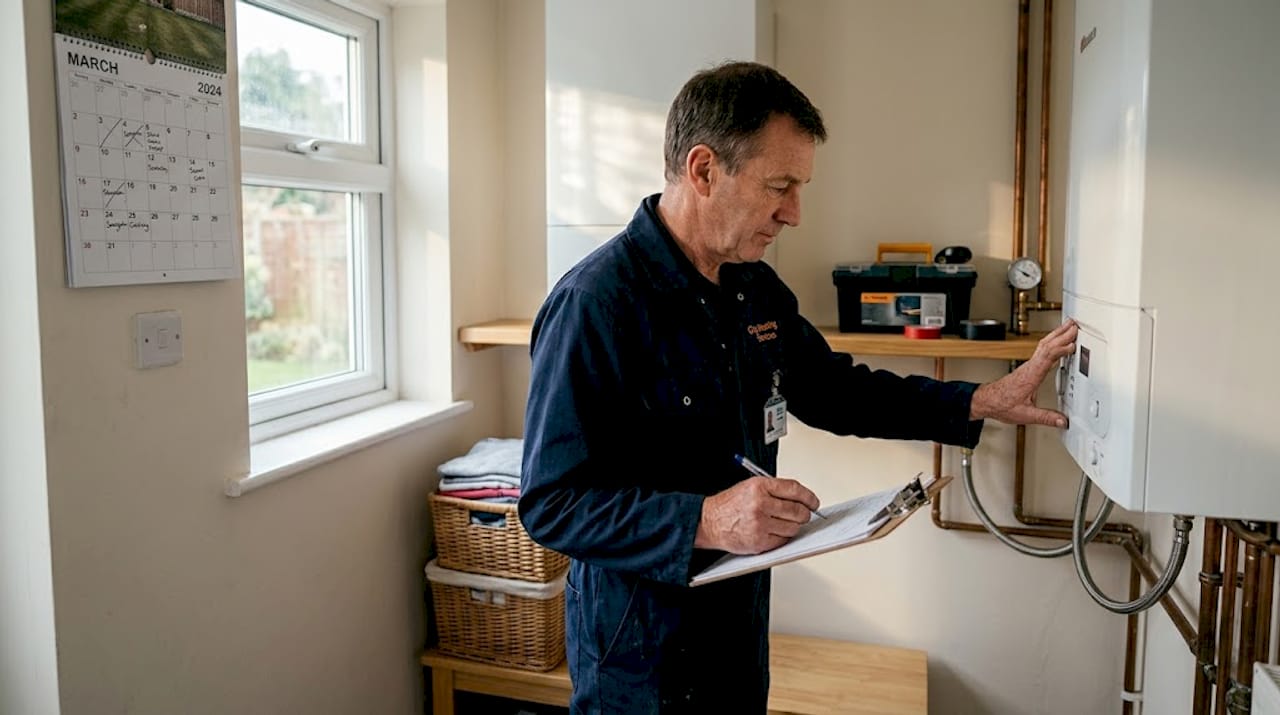
Pro Tip: Book your annual boiler service in late summer or early autumn, before the heating season begins. Engineers are less busy, you will get quicker appointments, and any faults will be caught before you actually need the heat.
Comparison of repair types: Urgency, cost, and risk
Now that you know the main repair types, it helps to see how they compare in terms of urgency, cost, and the risk they pose to your home and family.
| Repair type | Urgency | Typical cost | Safety risk | Likely downtime |
|---|---|---|---|---|
| Water leak | Immediate | £150 to £400 | High | Hours to days |
| No heat or hot water | Immediate | £150 to £500 | Medium | Hours |
| Ignition failure | Same day | £150 to £350 | Medium | Hours |
| Pressure fault | Same day | £100 to £300 | Low to medium | Hours |
| Pump failure | Urgent | £200 to £500 | Low | 1 to 2 days |
| Kettling | Soon | £150 to £400 | Low | Minimal |
| Heat exchanger | Urgent | £1,200 to £3,000 | High | Days |
| Valve fault | Soon | £100 to £350 | Low | Hours |
Some situations require you to act immediately rather than wait and monitor. Call an engineer right away if:
- Water is leaking from the boiler or pipes
- There is no heating and the outdoor temperature is below 5°C
- You suspect a gas leak or carbon monoxide exposure
- The pilot light has gone out and will not relight
- Your boiler is making loud banging or clanking noises
You can take a short-term wait-and-see approach when:
- A single radiator is cold but others are working fine
- The boiler pressure has dropped slightly but the system is still running
- You are hearing minor gurgling that started recently
For genuine emergencies, emergency boiler repairs covered by a 24/7 service mean you are never left in the cold for long. It is also worth noting that condensing boilers save around £340 per year compared to older models, which puts repeated repair costs into stark perspective.
Making repair or replace decisions: What experts recommend
Once you have compared your repair options, the final and often most difficult question is whether to fix what you have or invest in something new.
Consider replacing rather than repairing your boiler if:
- The boiler is over 15 years old and has needed more than two repairs in the past two years
- Repair costs exceed 50% of a new boiler price, which typically starts around £1,500 to £2,500 installed
- The boiler is no longer energy-efficient, especially if it is not a condensing model
- Safety faults are recurring, such as repeated pressure losses or carbon monoxide warnings
- Spare parts are difficult to source, which is common with discontinued older models
Here is how cumulative costs compare over time:
| Scenario | Year 1 cost | Year 3 cost | Year 5 cost |
|---|---|---|---|
| Old boiler, repeated repairs | £400 | £1,100 | £2,200 |
| New boiler installed | £2,000 | £2,200 | £2,400 |
| New boiler with efficiency savings | £2,000 | £1,900 | £1,700 |
As this comparison shows, the upfront cost of a new boiler often becomes the more economical choice within three to five years, particularly when energy savings are factored in.
Expert view: While repair makes sense for a relatively young boiler with a single fault, older units with recurring issues carry growing safety risks and rising cumulative costs. Replacement becomes the smarter investment for long-term comfort and peace of mind.
For tailored guidance, boiler replacement guidance from a registered engineer will give you an honest picture of what your specific unit is worth keeping.
Why 'just fixing it' isn't always the best advice for boiler breakdowns
There is an understandable instinct to just get the boiler working again as quickly and cheaply as possible. We get it. But in our experience, that instinct can actually cost homeowners significantly more over time.
A quick patch on a failing seal or a replacement part on an ageing pump can restore function temporarily. What it does not do is address why those faults are happening. If 80% of failures trace back to poor water treatment, then fixing the symptom without treating the water is like mopping the floor while the tap is still running.
We have seen homeowners spend over £800 across three separate repair visits in a single winter, when a single honest assessment in autumn would have revealed a boiler that simply needed replacing. The financial logic of repeated repairs often looks reasonable in isolation but adds up to a false economy.
Getting practical boiler repair lessons from an engineer you trust means asking them directly: if this were your boiler, what would you do? That question often leads to a more candid and useful answer than a standard quote ever will.
Fast, trusted help for every boiler repair
When your boiler breaks down, the last thing you need is to spend hours searching for someone reliable. You need fast, honest help from engineers who actually know what they are doing.
At Same Day Plumber, our boiler repair specialists are available 24 hours a day, 7 days a week, with no call-out charge and a no fix, no fee guarantee. Whether you are dealing with a sudden leak, a failed ignition, or a complete loss of heating in winter, we respond quickly and aim to get it right first time. Our emergency plumber services cover planned repairs and urgent callouts alike, so you always have somewhere reliable to turn.
Frequently asked questions
How much do common boiler repairs cost in the UK?
Typical boiler repairs range from £120 to £800, though severe faults such as heat exchanger damage can exceed £1,200 and sometimes reach £3,000 for a full replacement of the component.
What are the signs I need emergency boiler repair?
Leaking water, complete loss of heating, noisy operation such as banging or kettling, or a failed ignition or pilot light all mean you should call for professional help without delay.
How can I prevent expensive boiler repairs?
Annual servicing combined with proper water treatment prevents the majority of common breakdowns. Industry figures show that 80% of failures are linked to poor water treatment, which is entirely avoidable with the right maintenance.
When should I replace my boiler instead of repairing it?
If your boiler is over 15 years old, repairs are recurring, or safety risks like CO exposure are present, replacement is usually the safer and more cost-effective long-term choice.