
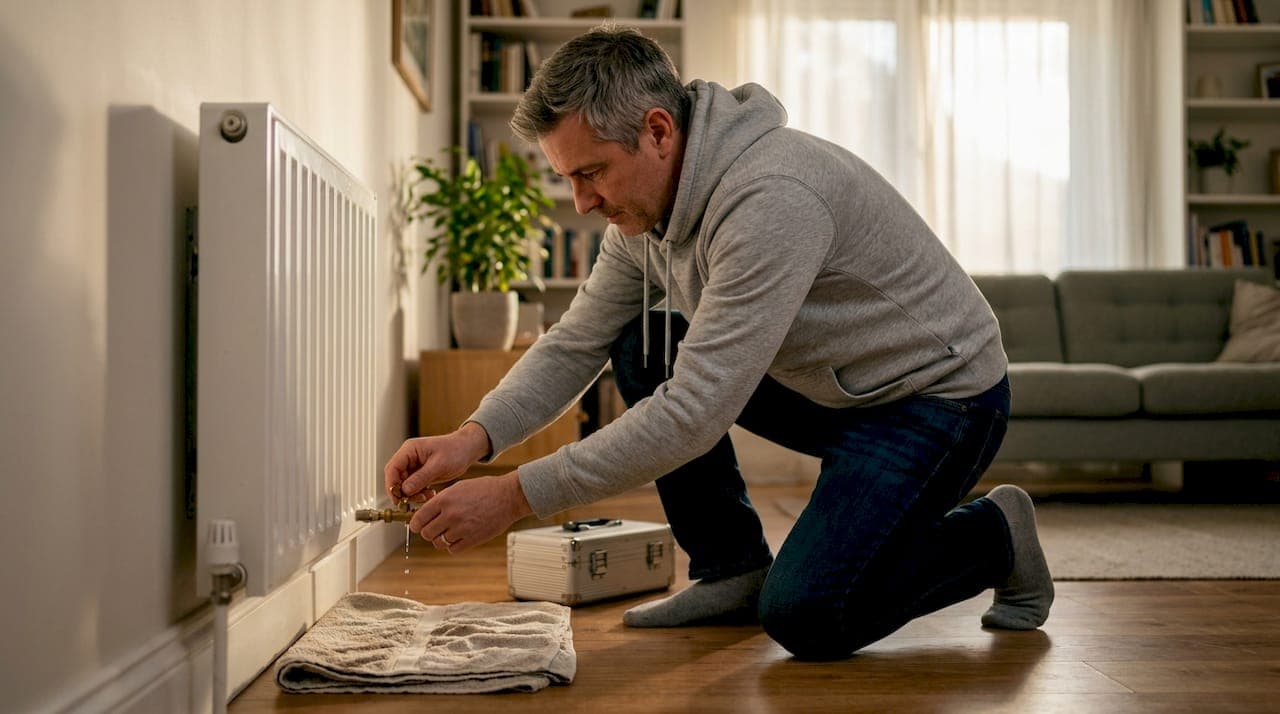
Your heating bills are climbing, yet half your radiators are barely warm. The boiler is running, the thermostat is set correctly, and still the house feels cold. The culprit is almost certainly trapped air inside your central heating system. Trapped air causes cold spots at the top of radiators, creates gurgling noises, and can reduce your system's efficiency by up to 15%. Bleeding your radiators is the straightforward fix, and you do not need to be a plumber to do it. This guide walks you through everything, from spotting the signs to completing the job safely and checking your results.
Table of Contents
- Why and when your boiler and radiators need bleeding
- What you need before you begin: tools and safety
- Step-by-step guide: how to bleed your boiler and radiators
- Aftercare: checking results, troubleshooting and maintenance tips
- Our expert perspective: why a little DIY goes a long way
- Need expert help with your boiler?
- Frequently asked questions
Key Takeaways
| Point | Details |
|---|---|
| Essential maintenance | Bleeding radiators is simple, prevents cold spots and keeps heating costs down. |
| Annual or as needed | Do it at least once a year—especially before winter or when cold spots and noises appear. |
| Safety first | Let your boiler cool, use the right tools, and check system pressure before and after. |
| Still struggling? | If DIY doesn’t fix the issue, a professional plumber can help restore full efficiency. |
Why and when your boiler and radiators need bleeding
Understanding the root cause of the problem makes the fix feel far less daunting. Your central heating system circulates hot water through a closed loop of pipes and radiators. Over time, small pockets of air find their way in, and because air is lighter than water, it rises and collects at the top of each radiator. The result is a radiator that is hot at the bottom but stubbornly cold at the top.
The most common symptoms that tell you bleeding is overdue include:
- Cold patches at the top of radiators while the bottom stays warm
- Gurgling, whistling, or banging noises coming from radiators or pipes
- Radiators taking much longer than usual to reach full temperature
- Higher energy bills without a clear explanation
- The boiler working harder than it should, cycling on and off frequently
Air enters the system in several ways. It can come in during the annual top-up of system pressure, after any repair or maintenance work, through micro-leaks in pipework joints, or simply through the natural chemistry of the water inside the system producing small amounts of hydrogen gas over time.
The efficiency impact is real and measurable. Bleeding removes trapped air, improving heat distribution and allowing your boiler to work at its intended efficiency. Homeowners who bleed their radiators regularly can see energy savings of up to 10% on their heating bills, which adds up meaningfully over a cold British winter.
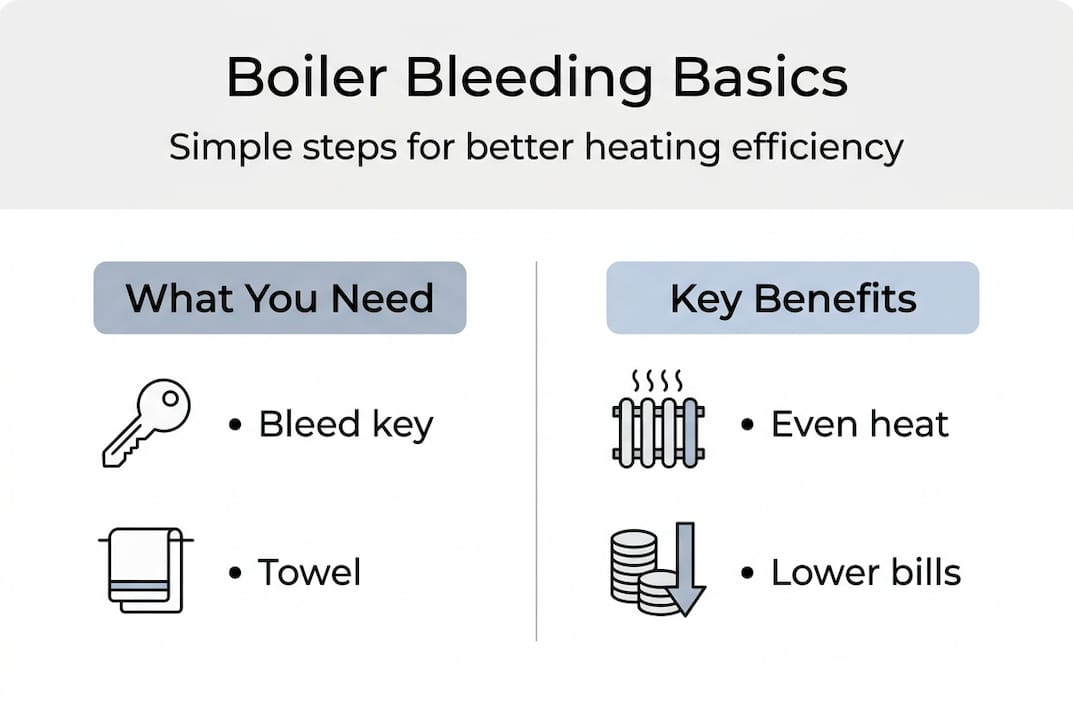
Ignoring this simple maintenance task puts unnecessary strain on your boiler. A system fighting against trapped air runs longer cycles, wears components faster, and is more likely to need boiler repair services before its time. The good news is that bleeding takes less than 30 minutes for most homes and costs nothing beyond a bleed key, which you can pick up for under £2.
The best time to bleed your radiators is once a year before winter sets in, or any time you notice the symptoms above. Do not wait until the coldest week of January to discover your heating is underperforming. A quick check in autumn keeps you ahead of the problem and gives you time to address anything more serious before you really need the heat.
What you need before you begin: tools and safety
Now you know the importance, let us make sure you have everything to bleed your system safely. Preparation takes five minutes and makes the whole process far smoother.
The essential tools you will need are straightforward:
- Radiator bleed key: A small, inexpensive tool that fits the square bleed valve on each radiator. Some modern radiators use a flat-head screwdriver instead.
- Old cloth or towel: To catch any drips of water from the valve.
- Small container or bowl: To collect water once the air has escaped.
- Gloves (optional): Useful if you have sensitive skin, as the water can stain.
| Tool | Purpose | Optional? |
|---|---|---|
| Radiator bleed key | Opens the bleed valve to release trapped air | No |
| Cloth or towel | Protects floors and catches drips | No |
| Small container | Collects water once air is released | No |
| Protective gloves | Protects hands from dirty water | Yes |
| Flat-head screwdriver | Alternative to bleed key on some radiators | Depends on radiator type |
| Torch | Useful in low-light areas near skirting boards | Yes |
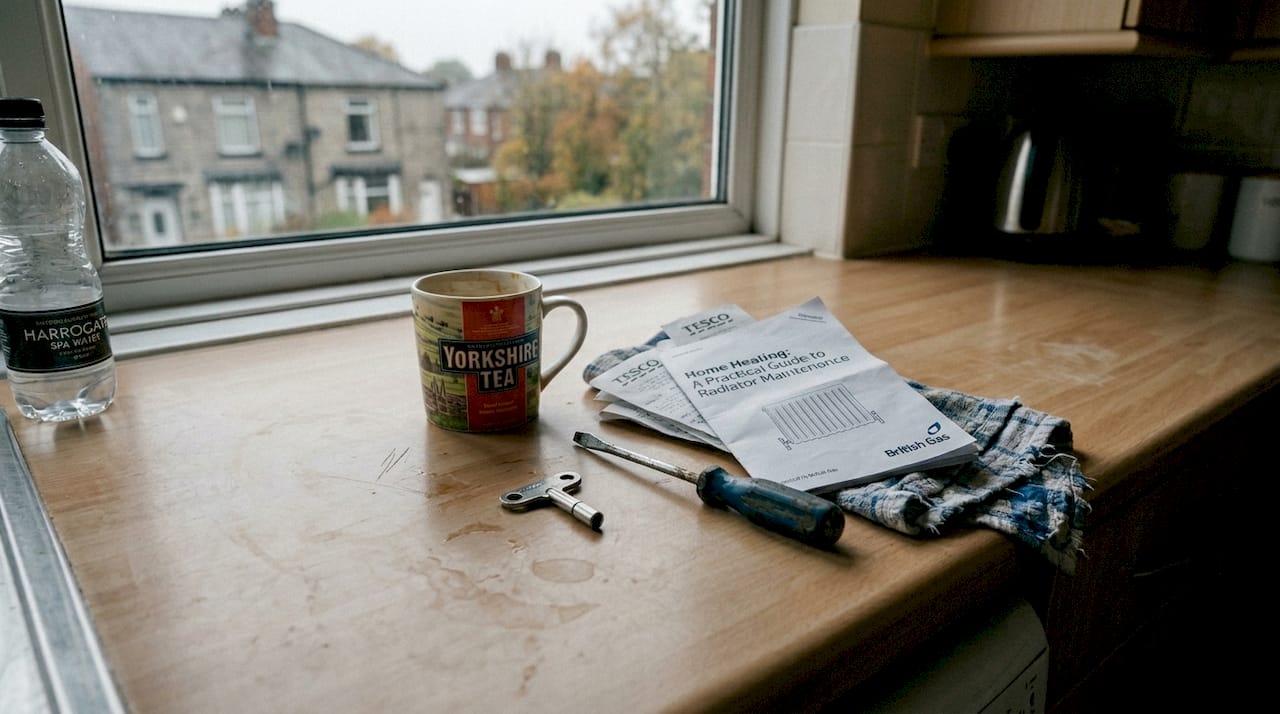
The single most important safety rule is to let your system cool completely before you start. Turn the heating off and wait at least an hour. Hot water under pressure can scald badly if it sprays from an open valve. This is not a step to rush.
Also check your boiler pressure gauge before you begin. Most systems should sit between 1 and 1.5 bar when cold. If it is already low, topping it up before bleeding will make the process more effective. You can find guidance on central heating repairs and pressure issues on our website if you are unsure.
Safety note: Never bleed a radiator while the system is hot or pressurised. The bleed valve releases pressure, and scalding water can escape rapidly if the system has not cooled.
Pro Tip: Lay an old towel on the floor directly beneath the bleed valve before you open it. Water from a central heating system is often discoloured and can stain carpets or wooden floors permanently. Also, never over-tighten the bleed valve when closing it. Firm finger pressure with the key is enough. Forcing it can crack the valve body and create a much bigger problem.
Step-by-step guide: how to bleed your boiler and radiators
With your tools ready and safety in mind, here is exactly how to bleed your heating system from start to finish.
-
Turn off your heating and let it cool. Switch the boiler and heating off completely. Wait at least one hour for the system to reach a safe temperature before touching any radiator valves.
-
Identify the correct bleeding order. Always start with the radiator on the ground floor that is furthest from the boiler, then work your way towards the boiler. Once the ground floor is done, move upstairs and repeat the same pattern, finishing closest to the boiler. This sequence pushes air through the system in the right direction.
-
Position your cloth and container. Place the towel on the floor beneath the bleed valve, which is the small square-headed fitting at the top corner of the radiator. Hold your container directly under it.
-
Open the bleed valve slowly. Insert the bleed key and turn it anti-clockwise by a quarter to half a turn. You will hear a hissing sound as air escapes. This is exactly what you want. Hold the key steady and keep the container in place.
-
Close the valve when water appears. As soon as a steady trickle of water replaces the hissing air, the air pocket is gone. Turn the key clockwise to close the valve firmly but gently. Do not overtighten.
-
Repeat for every radiator in the sequence you identified in step two.
-
Check boiler pressure once finished. Bleeding your radiators releases water along with the air, which can drop system pressure. Check the gauge and repressurise using the filling loop if it has fallen below 1 bar.
-
Turn the heating back on and check all radiators. Run the system for 20 minutes and feel each radiator from top to bottom. They should now heat evenly across their full surface.
| Step | Action | What to check |
|---|---|---|
| 1 | Turn off heating and cool system | System is cool to the touch |
| 2 | Identify bleeding order | Furthest radiator first |
| 3 | Position cloth and container | Floor and hands protected |
| 4 | Open valve anti-clockwise | Hissing sound confirms air release |
| 5 | Close valve when water flows | No drips after closing |
| 6 | Repeat for all radiators | All radiators bled in sequence |
| 7 | Check and restore boiler pressure | Gauge reads 1 to 1.5 bar |
| 8 | Test heating and check radiators | Even heat top to bottom |
Pro Tip: If you are unsure whether a radiator still has trapped air after bleeding, turn the heating on and place your hand at the very top of the radiator. If it remains cold while the bottom is warm, there is still air present. You may need to bleed that radiator a second time. For persistent issues in specific areas, boiler repair in Reading or boiler repair in Newbury are available if you need a professional eye.
Aftercare: checking results, troubleshooting and maintenance tips
After bleeding, it is important to check your work and know how to keep your system running optimally going forward.
Start by monitoring your boiler pressure gauge over the next 24 to 48 hours. A small drop after bleeding is normal, but if pressure keeps falling without explanation, you may have a leak somewhere in the system. A gauge reading consistently below 1 bar or above 2.5 bar needs attention.
Signs that your system may need further professional attention include:
- Radiators still cold after bleeding, even after a second attempt
- Persistent gurgling or banging noises that do not clear
- Boiler pressure dropping repeatedly within days of topping it up
- Visible damp or rust around radiator valves or pipework
- The boiler locking out or displaying fault codes after bleeding
For bleeding frequency, most experts recommend doing this once a year before winter, or immediately when symptoms appear. If your system regularly develops air pockets, consider bleeding twice yearly, once in autumn and once in spring, to keep things running cleanly.
If symptoms persist after bleeding and repressurising, it is time to call in a professional. Ongoing air in the system can indicate a fault with the automatic air vent, a failing pump, or a slow leak. Our team at boiler repairs Bracknell can diagnose and fix these issues quickly.
Pro Tip: Keep a simple handwritten log near your boiler. Note the date each time you bleed the radiators, what pressure the system was at before and after, and any unusual symptoms you noticed. This takes 30 seconds and gives any plumber you call a genuinely useful picture of your system's history. It can also help you spot patterns, such as pressure dropping every three months, which points to a slow leak rather than normal operation.
Our expert perspective: why a little DIY goes a long way
In our experience, a surprisingly large number of boiler callouts trace back to one thing: neglected basic maintenance. Trapped air is one of the most common causes, and it is entirely preventable. We are not saying this to make homeowners feel bad. We say it because the fix is genuinely simple, and most people just were not taught it.
There is a tendency to treat the boiler as a black box that either works or it does not. But your heating system responds well to a little attention. Homeowners who bleed their radiators annually, keep an eye on pressure, and arrange regular boiler checks simply have fewer emergencies. When they do call us, it is for real faults, not air pockets.
We actively encourage homeowners to handle safe maintenance tasks like bleeding. It saves you money, builds your confidence, and means that when a professional is needed, the problem is genuinely worth their time. The boundary is clear though: anything involving gas, the boiler's internal components, or persistent pressure loss needs a qualified engineer. Do not cross that line yourself.
Need expert help with your boiler?
Bleeding your radiators solves most air-related heating problems quickly and cheaply. But if you have followed every step and your home is still not heating properly, that is a signal worth taking seriously.

Same Day Plumber is available 24/7 with no call-out charge and a no-fix, no-fee promise. Our accredited engineers cover a wide area, including boiler repairs in Frimley and across the region. Whether you need a routine service, a pressure investigation, or an emergency fix, Same Day Plumber in Reading and beyond is ready to help. We respond fast, explain everything clearly, and get your heating working properly the first time.
Frequently asked questions
How often should I bleed my boiler or radiators?
Most experts recommend bleeding your radiators once a year before winter or whenever cold spots or noises develop. If symptoms return frequently, consider doing it twice yearly.
What if water doesn't come out when I open the bleed valve?
If no water emerges, your boiler pressure is likely too low to push water to that radiator. Check the pressure gauge and repressurise using the filling loop until it reads between 1 and 1.5 bar, then try again.
Is there a difference between bleeding a radiator and bleeding a boiler?
Bleeding a boiler actually refers to bleeding the radiators in your central heating system. You are removing air from the radiators, not the boiler unit itself, which in turn allows the boiler to operate more efficiently.
Do I need to turn off my boiler to bleed the radiators?
Yes, always. Turn off the heating and allow your system to cool fully before opening any bleed valve. Hot pressurised water can cause serious scalds if the system has not been given time to cool down.