
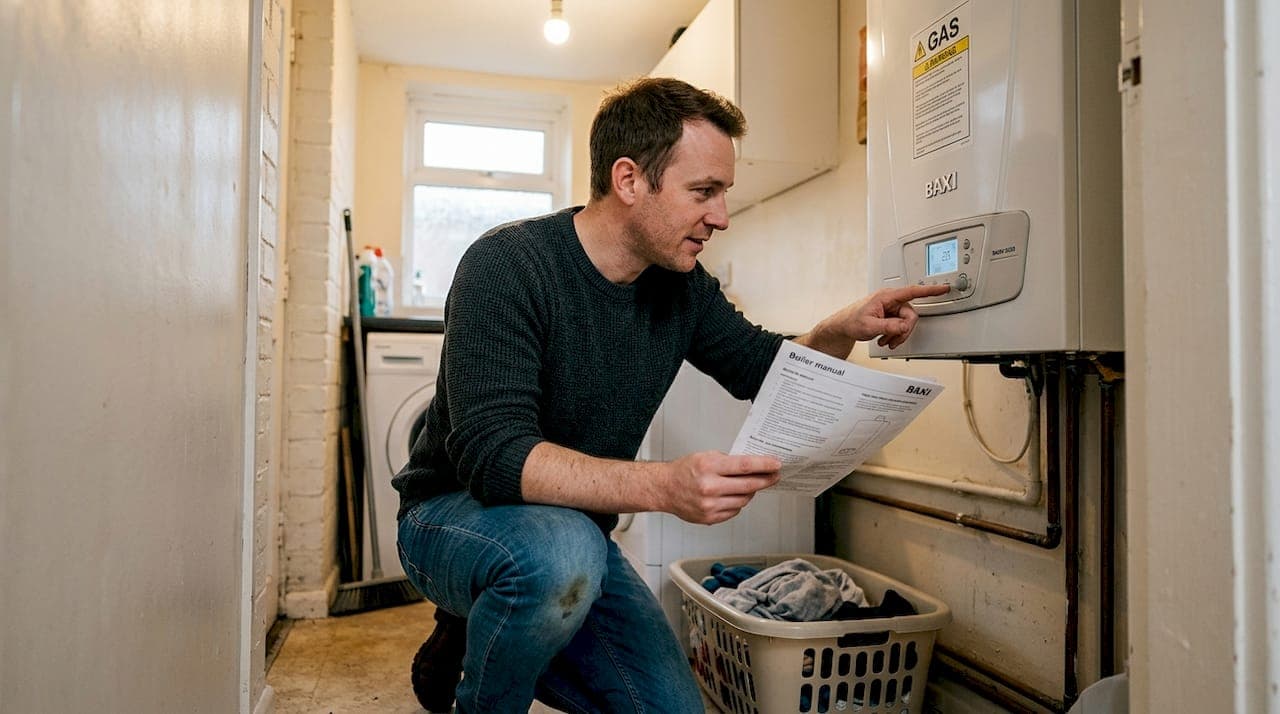
It's the middle of winter, the house is freezing, and your boiler has stopped working. No hot water, no heating, and the prospect of a cold night ahead. It's a stressful situation, and the instinct to panic is completely understandable. The good news is that many boiler faults are caused by straightforward issues you can safely investigate yourself before calling an engineer. This guide walks you through essential safety checks, common fault identification, and a step-by-step restart process, so you can act quickly, stay safe, and make an informed decision about whether you need professional help.
Table of Contents
- Essential safety checks before you begin
- Common faults and how to identify them
- Step-by-step guide: restarting your boiler safely
- Troubleshooting persistent problems and when to call a professional
- Why DIY restarts are useful, but professional support is often essential
- Fast, reliable help for urgent boiler repairs
- Frequently asked questions
Key Takeaways
| Point | Details |
|---|---|
| Prioritise safety first | Always check for gas smells, leaks, or other hazards before touching the boiler. |
| Know common faults | Identifying symptoms helps you decide if a quick fix or an engineer is required. |
| Follow clear steps | Use the manufacturer’s reset guidelines and wait for full system rebooting. |
| Recognise when to call for help | Seek professional support if resets fail, error codes persist, or if you’re ever uncertain. |
Essential safety checks before you begin
Before you touch anything on your boiler, safety comes first. This isn't just a formality. Skipping these checks could turn a minor inconvenience into a genuine emergency. A boiler that has stopped working may have done so for a serious reason, and rushing straight to the reset button without looking around first is a mistake many homeowners make.
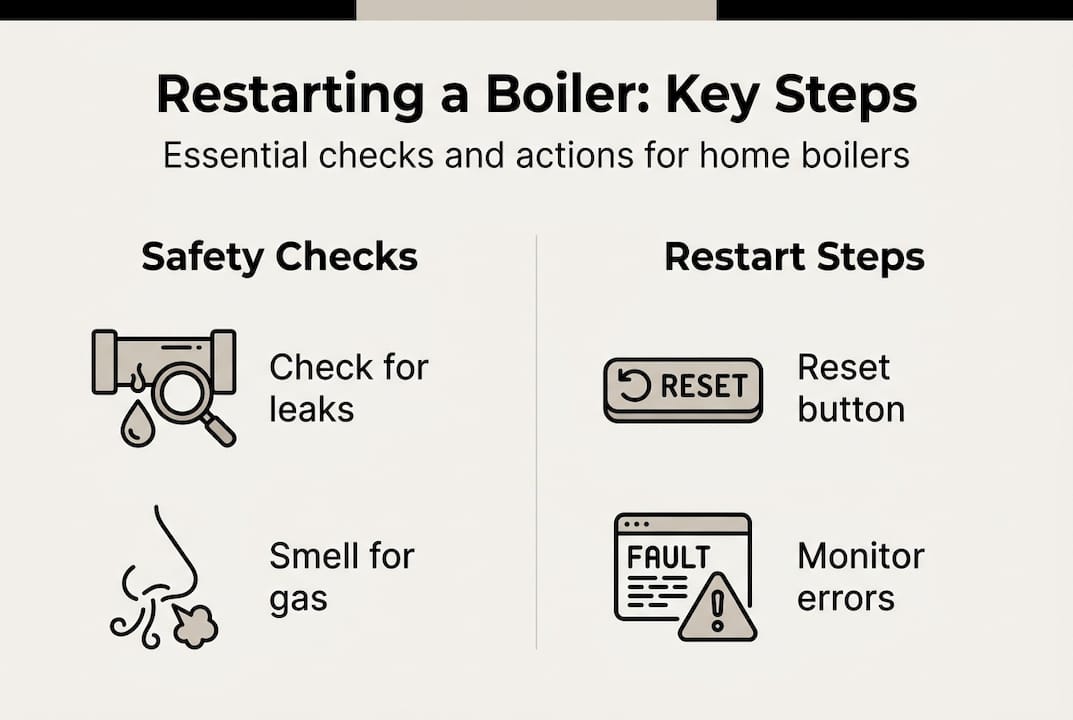
The most critical warning sign is a gas smell. If you detect any odour resembling rotten eggs or sulphur near your boiler, do not attempt to restart it. Open windows and doors immediately, leave the property, and call the National Gas Emergency Service on 0800 111 999. Similarly, if you notice any burning smells, visible scorch marks, or signs of water leaking from the unit, these all need to be assessed before you proceed.
Safety note: The Gas Safe Register advises that homeowners should never attempt to repair or restart a boiler if they suspect a gas leak. Only a registered Gas Safe engineer should work on gas appliances in these circumstances.
As the Boiler Guide recommends, always check for gas or burning smells before attempting any boiler repair. Once you're confident there are no immediate hazards, run through the following checks:
- Power supply: Is the boiler receiving power? Check the fuse box for tripped switches.
- Smell test: No gas or burning odours anywhere near the unit.
- Visible leaks: Look around the base and pipework for any signs of water pooling.
- Pressure gauge: Is the pressure reading between 1 and 1.5 bar? Anything below 1 bar is a common fault trigger.
- Emergency shut-off: Know where your gas stopcock is located in case you need to isolate the supply quickly.
Having the right information to hand makes the whole process faster and safer. Here's what to gather before you go any further:
| Item | Why you need it |
|---|---|
| Boiler manual | Error codes and reset instructions |
| Torch | To inspect dark areas around the unit |
| Boiler make and model | Useful when calling for support |
| Emergency contact numbers | Gas Safe engineer, emergency line |
| Pen and paper | To note error codes or fault descriptions |
If you're unsure whether your boiler is safe to approach, our boiler repair service can provide rapid guidance and on-site support.
Common faults and how to identify them
Once you've verified the space is safe to proceed, the next step is to understand what's actually gone wrong with your boiler. Many faults share similar symptoms, so knowing how to read the signs accurately saves time and helps you avoid unnecessary steps.
The most frequently reported issues fall into a few clear categories. Unlit pilot lights, pressure below 1 bar, or error codes all point to different underlying problems, so identifying the right one matters before you take action.
Common symptoms to watch for:
- No heat or hot water: Could indicate low pressure, a frozen condensate pipe, or a faulty thermostat.
- Strange noises: Banging, gurgling, or whistling sounds often suggest air in the system or a failing pump.
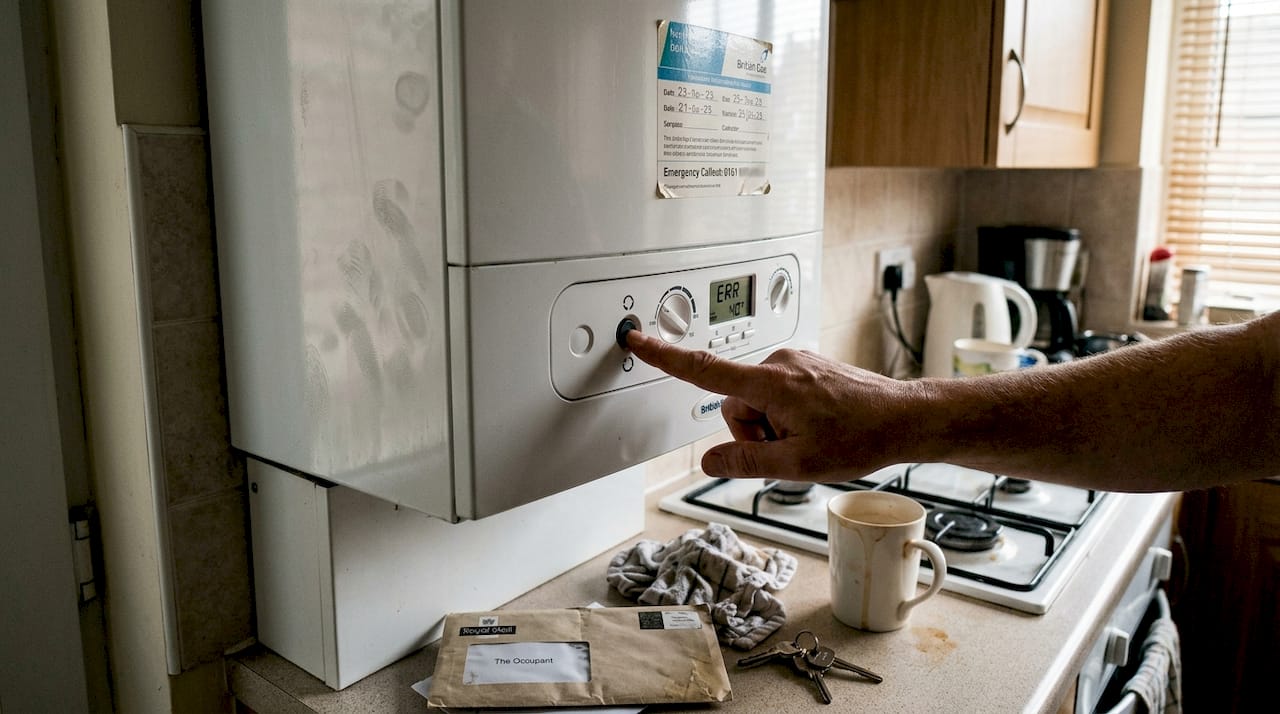
- Error codes on the display: Modern boilers show alphanumeric codes that correspond to specific faults in the manual.
- Boiler keeps switching off: This is known as "short cycling" and is often linked to overheating or low water flow.
- Pilot light won't stay lit: Usually a sign of a faulty thermocouple or a gas supply issue.
Use this comparison table to match your symptoms to the most likely cause:
| Symptom | Likely fault | DIY action possible? |
|---|---|---|
| No heat or hot water | Low pressure or thermostat | Yes, check pressure and settings |
| Boiler locks out repeatedly | Sensor or ignition fault | Limited, may need engineer |
| Unusual banging noises | Air in system or pump issue | Partial (bleeding radiators) |
| Error code on display | Varies by code | Check manual first |
| Pilot light out | Thermocouple or gas supply | No, call engineer |
For more detailed boiler troubleshooting advice, Which? provides a useful breakdown of fault types and their solutions.
Pro Tip: Keep your boiler manual in a kitchen drawer or photograph the key pages and save them to your phone. When an error code appears at 11pm, you'll be very glad you did.
If you're in the Reading area and need fast diagnosis, our boiler repair solutions are available around the clock.
Step-by-step guide: restarting your boiler safely
Now that you've spotted the most likely issue, here's exactly how to perform a safe restart. Before you touch any buttons, double-check that you've completed the safety and fault diagnosis steps above. Skipping ahead is the single most common reason a restart attempt fails or creates a new problem.
Follow these steps in order:
- Confirm the power supply. Check that the boiler is switched on at the wall and that no fuses have tripped in your consumer unit.
- Check the pressure gauge. If it reads below 1 bar, you'll need to repressurise the system using the filling loop before a reset will hold. Your manual will show you how.
- Locate the reset button. On most modern combi boilers, this is a clearly labelled button on the front panel, sometimes marked with a flame or restart symbol. Older models may require you to hold a button for several seconds or follow a specific sequence.
- Press and hold the reset button. Most manufacturers recommend holding it for around three seconds. The boiler should attempt to re-ignite.
- Wait for the system to complete its diagnostic cycle. Do not press anything else during this time.
- Check the display. If the fault code has cleared and the boiler fires up, allow it to run for a few minutes to confirm it's operating normally.
- Test your heating and hot water. Turn on a tap and check that a radiator begins to warm up.
As British Gas advises, manufacturer instructions should always be followed for resets, as the process varies between brands and models.
Pro Tip: After pressing reset, wait a full 60 seconds before assuming it hasn't worked. The boiler runs a self-diagnostic check during this period, and interrupting it can cause a secondary lock-out.
The majority of boiler lock-outs are caused by low pressure or simple electronic faults, meaning a single reset is often all that's needed. If your boiler fails to restart after one attempt, don't keep pressing reset repeatedly. Instead, move on to the troubleshooting steps below. For urgent boiler repairs that can't wait, professional support is available 24/7.
Troubleshooting persistent problems and when to call a professional
Once you've attempted a restart, you need to know when to persist and when to escalate to a qualified engineer. There's a clear point at which DIY action stops being helpful and starts risking further damage to your system.
If the restart hasn't worked, work through this checklist before giving up or calling for help:
- Is the power supply stable? A fluctuating supply or tripped fuse can prevent a successful restart.
- Is the pressure still low? If it dropped again quickly after repressurising, there may be a leak in the system.
- Did you hold the reset button long enough? Some models require a five-second press, not three.
- Is the thermostat set correctly? A thermostat set below the current room temperature won't trigger the boiler to fire.
- Has the condensate pipe frozen? In cold weather, the external pipe that removes waste water can freeze solid, causing a lock-out.
Prevention is always better than a midnight emergency. Annual servicing catches small faults before they become big ones, and it keeps your warranty valid. Strange noises should never be ignored; they're your boiler's way of telling you something isn't right.
Important: As the Gas Safe Register makes clear, if repeated resets fail or you smell gas, seek professional help immediately. Do not attempt further DIY action in these circumstances.
Knowing when to stop is just as important as knowing how to start. If your boiler has locked out more than twice in a short period, produces a fault code that won't clear, makes unusual sounds after restarting, or shows any sign of a gas or water leak, it's time to call a Gas Safe registered engineer. Our team handling Winchester boiler repairs and surrounding areas is available around the clock for exactly these situations.
Why DIY restarts are useful, but professional support is often essential
There's a version of this advice that tells you DIY is always the first and best option. We'd push back on that. Yes, many homeowners can successfully resolve a basic lock-out with a pressure top-up and a reset. That's genuinely useful knowledge. But the risk of misdiagnosis is real, and repeatedly resetting a boiler that has a deeper fault can mask the underlying problem while slowly causing more damage.
Experienced engineers regularly attend jobs where a homeowner has reset the boiler six or seven times over a few days, only to find a cracked heat exchanger or a failing pump that's now worse than it would have been. Being informed is genuinely empowering, and we'd always encourage you to run through the safety checks and attempt a single restart. But recognising the limits of what you can safely assess without specialist tools is just as important.
Proactive annual servicing is far more effective than last-minute troubleshooting. It reduces the likelihood of a breakdown in the first place, and it means an engineer already knows your system when something does go wrong. Our local boiler specialists are always available to advise, whether you need a quick phone consultation or a same-day visit.
Fast, reliable help for urgent boiler repairs
If you've worked through the steps in this guide and your boiler still isn't running, it's time to bring in expert support. Repeated failed restarts, persistent error codes, or any suspicion of a gas leak are all clear signals that professional intervention is needed.

At Same Day Plumber, our Gas Safe registered engineers are available 24 hours a day, 7 days a week, with no call-out charge and a no fix, no fee guarantee. Whether you need an emergency plumber in Reading or a specialist for your boiler repair service, we aim to respond quickly and resolve the problem properly the first time. Don't spend another cold night waiting. Get in touch and we'll have an engineer with you as soon as possible.
Frequently asked questions
What is the safest way to restart my boiler at home?
Always check for gas smells and visible leaks first, then follow your boiler's manual for the correct reset procedure. If you have any doubt at all, follow safety protocols and call a registered engineer rather than proceeding.
Why does my boiler keep needing to be reset?
Frequent resets usually point to an underlying issue such as low pressure, a faulty sensor, or an intermittent power supply problem. As repeated resets signal deeper technical faults, a professional inspection is the right next step.
Can I fix a boiler with a persistent error code myself?
You can attempt a single safe reset after consulting your manual, but an error code that keeps returning almost always requires expert diagnosis to resolve properly.
Is it safe to restart my boiler after a power cut?
Provided there are no unusual smells or visible leaks, wait for a stable power supply to return, check your manual, and reset if recommended. The Gas Safe Register advises that restarts after power loss are only appropriate when no safety warning signs are present.
When should I stop DIY repairs and call a professional?
If you smell gas, spot a water leak, or the boiler fails to restart after one careful attempt, call a Gas Safe registered engineer straight away. Immediate expert help is essential whenever there is any risk to safety.