
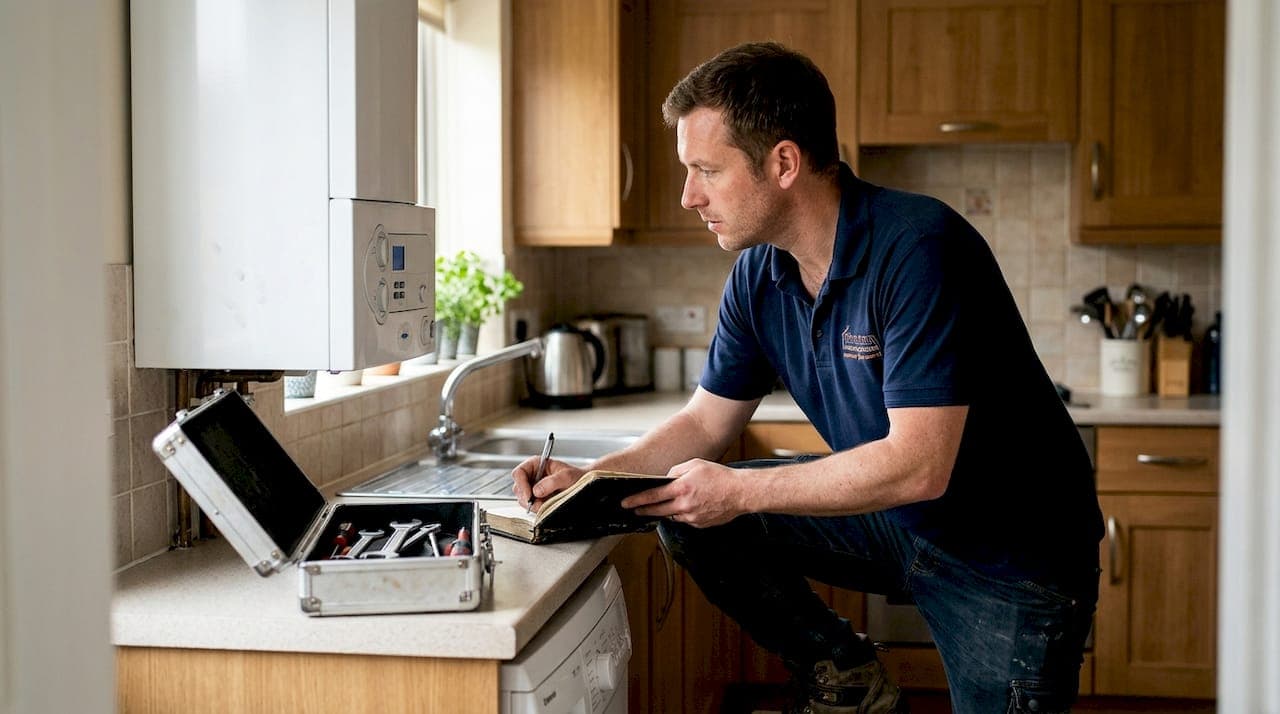
Boiler breakdowns catch most homeowners completely off guard, yet 1 in 5 boilers in the UK fails every single year. That is not bad luck. In many cases, it is the result of skipped services, ignored warning signs, and a lack of basic knowledge about what keeps a boiler running safely. The good news is that the majority of these failures are entirely preventable. This guide walks you through the most common causes of boiler breakdowns, explains what proper maintenance actually involves, and gives you a clear action plan for both preventing problems and handling them when they do occur.
Table of Contents
- How common are boiler breakdowns in UK homes?
- The main causes of boiler breakdowns
- Why regular maintenance matters
- What to do when your boiler breaks down
- Why many breakdowns are avoidable and what most guides miss
- Need urgent help or prevention? Trust your local boiler experts
- Frequently asked questions
Key Takeaways
| Point | Details |
|---|---|
| Breakdowns are common | One in five UK boilers faces failure each year, especially if neglected. |
| Most failures are preventable | Regular servicing and proper water treatment prevent over three-quarters of breakdowns. |
| Older boilers are at risk | Boilers over eight years old are more likely to fail and may be better replaced. |
| Immediate action matters | A quick check of basics and calling an engineer reduces downtime and cost. |
How common are boiler breakdowns in UK homes?
If you have ever had your boiler fail on a cold January morning, you are far from alone. 1 in 5 UK boilers breaks down each year, and research shows that poor maintenance can double the risk of needing an emergency replacement. That is a significant financial hit on top of the stress and discomfort of losing heat and hot water.
Breakdown rates are not evenly spread across the year. Winter months see a sharp spike in call-outs, partly because boilers are working harder and partly because frozen pipes and pressure drops become far more likely. Older boilers are also considerably more vulnerable. A boiler that has not been serviced for several years is operating with wear and tear that goes undetected until something fails.
"Many homeowners only think about their boiler when it stops working. By then, what could have been a minor fix has often become a costly emergency."
Here is a quick look at how breakdown risk changes with boiler age and maintenance habits:
| Boiler age | Serviced annually | Not serviced regularly |
|---|---|---|
| Under 5 years | Low risk | Moderate risk |
| 5 to 10 years | Moderate risk | High risk |
| Over 10 years | High risk | Very high risk |
The pattern is clear. Age alone raises your risk, but neglecting servicing at any age makes things significantly worse. Emergency boiler replacements are often avoidable, yet they remain one of the most common and expensive home repair bills UK households face. Understanding why breakdowns happen is the first step to stopping them.
The main causes of boiler breakdowns
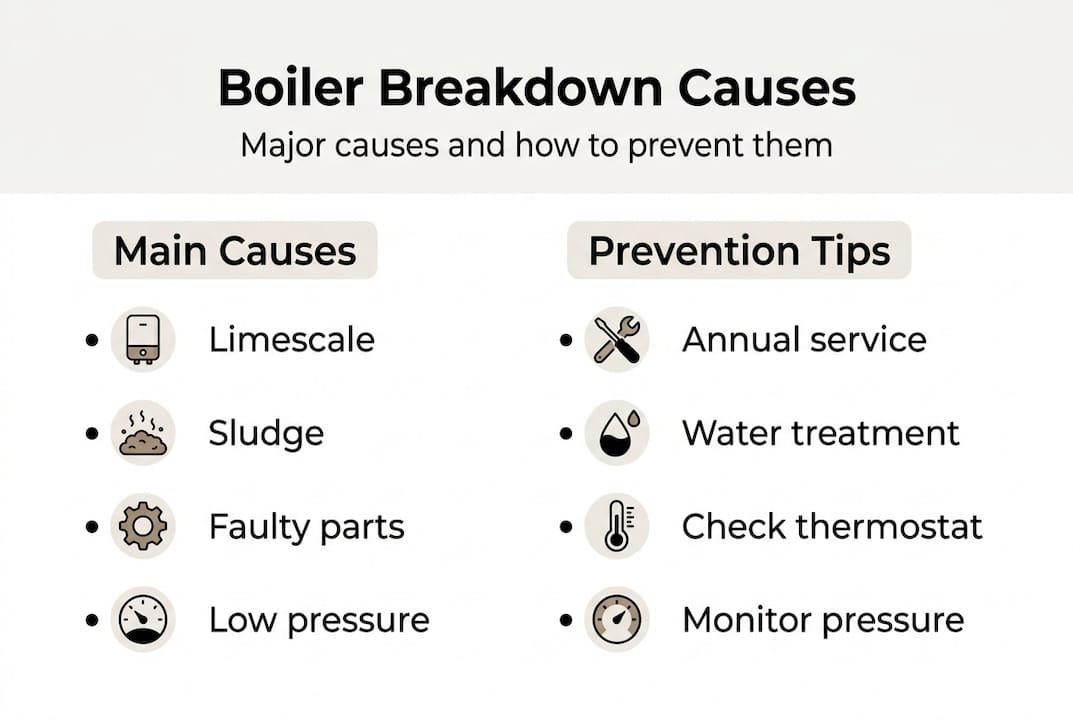
Boilers fail for a range of reasons, but some causes are far more common than others. Knowing what to look for can help you spot trouble early.
Water quality and limescale are the single biggest culprits. Over 80% of boiler failures are linked to poor water treatment and scale buildup inside the system. Hard water areas, which cover much of southern England, are particularly affected. Limescale coats the heat exchanger and other internal components, forcing the boiler to work harder and wear out faster.
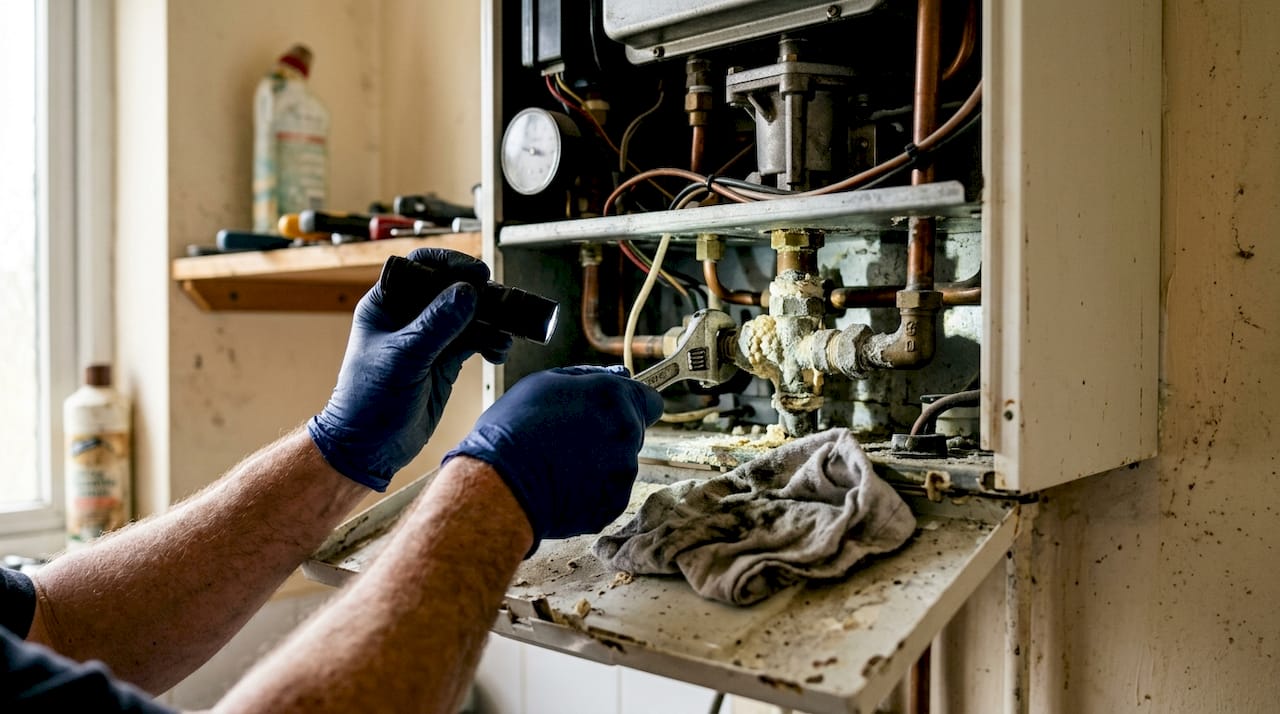
Here is how the main causes compare in terms of how preventable they are:
| Cause | Preventable? | Common fix |
|---|---|---|
| Limescale and sludge | Yes | System flush and inhibitor |
| Worn pump or valve | Partly | Annual inspection |
| Frozen condensate pipe | Yes | Insulation and thawing |
| Ignition failure | Partly | Service and part replacement |
| Pressure loss | Yes | Top up and check for leaks |
Other common causes include:
- Lack of annual servicing, which leaves small faults undetected until they become serious
- Frozen condensate pipes in winter, which block the boiler's waste outlet and trigger a shutdown
- Low or fluctuating system pressure, often caused by small leaks or a failing pressure relief valve
- Worn components such as pumps, motorised valves, and ignition leads, which degrade over time
- Older boiler age, as parts become harder to source and efficiency drops sharply
Pro Tip: Add a central heating inhibitor to your system every year. This chemical treatment reduces corrosion and limescale buildup, which are the leading causes of premature boiler failure. Ask your engineer to check inhibitor levels at your next service.
The important distinction here is between faults that creep up gradually and those that strike without warning. Most gradual faults, including scale, sludge, and worn components, can be caught early with routine checks. Sudden failures, such as ignition problems or pressure drops, are harder to predict but are still less likely in a well-maintained system.
Why regular maintenance matters
Servicing your boiler once a year is not just a formality. Annual professional servicing can prevent up to 75% of boiler breakdowns and is usually a condition of keeping your manufacturer warranty valid. That alone makes it worth the cost.
Here is what a proper annual service should include:
- Visual inspection of the boiler and flue for signs of damage or corrosion
- Checking and cleaning the burner, heat exchanger, and ignition components
- Testing gas pressure and flow to confirm safe and efficient operation
- Inspecting seals, gaskets, and safety devices for wear
- Checking system pressure and bleeding radiators if needed
- Testing inhibitor levels and topping up if required
- Issuing a service record and flagging any parts that may need replacing soon
75% of boiler breakdowns can be prevented through annual professional servicing.
A qualified Gas Safe registered engineer does more than tick a checklist. They bring experience that allows them to notice subtle signs of trouble, such as unusual noises, slight pressure fluctuations, or early corrosion, that most homeowners would never spot. Catching these issues early is far cheaper than dealing with a full breakdown.
Pro Tip: Book your annual boiler service in late summer or early autumn, before the heating season begins. Engineers are less busy, and you will have peace of mind heading into winter knowing your system has been checked.
Maintenance also has a direct impact on running costs. A boiler clogged with sludge or scale uses more gas to produce the same amount of heat. Keeping it clean and well-tuned can noticeably reduce your energy bills over time. If you need support between services, a boiler repair service can address faults quickly before they escalate. For broader heating issues, central heating repairs cover the full system, not just the boiler itself. Homeowners in the south of England can also access local help through boiler repair in Swindon for fast, qualified support.
What to do when your boiler breaks down
Even with the best maintenance routine, boilers can still fail. When yours does, staying calm and working through a few simple checks can save you time and money.
- Check your thermostat. Make sure it is set above the current room temperature and that the timer is not set to off. This sounds obvious, but it is the cause of many unnecessary call-outs.
- Check the power supply. Confirm the boiler is switched on and that no fuses have tripped in your consumer unit.
- Check the system pressure. Most boilers need a pressure between 1 and 1.5 bar. If the gauge reads below 1, you may simply need to repressurise the system using the filling loop.
- Try the reset button. Most modern boilers have a reset button. Press and hold it for a few seconds. If the boiler fires up and runs normally, monitor it closely over the next few hours.
- Check for a frozen condensate pipe. In cold weather, the plastic pipe that carries waste gases outside can freeze. You can often thaw it yourself using warm (not boiling) water poured over the pipe.
- Call a qualified engineer if none of the above resolves the issue, or if you smell gas, see unusual flames, or notice carbon monoxide alarm activity.
Pro Tip: Never ignore a boiler that keeps locking out and needing a reset. Repeated lockouts are a sign of an underlying fault. Each reset without a proper fix risks further damage.
Older boilers over 8 to 10 years are significantly more prone to failure, and at that age it is worth weighing up whether a repair or a full replacement makes more financial sense. Planning ahead, rather than waiting for a winter emergency, gives you time to compare options properly. Local engineers offering boiler repairs in Abingdon, boiler repair in Reading, boiler repair in Newbury, and boiler repairs in Bracknell can assess your boiler honestly and advise on the best course of action.
Why many breakdowns are avoidable and what most guides miss
Here is something worth saying plainly: the majority of boiler breakdowns we attend are not random misfortune. They are the result of systems that were never properly set up, never treated for water quality, and never serviced consistently. The boiler itself is often fine. The environment around it is not.
What most guides do not tell you is that installers rarely explain water treatment to homeowners at the point of installation. A new boiler fitted into an old, sludge-filled system without a power flush is already on borrowed time. Nobody mentions the inhibitor. Nobody explains that the warranty depends on annual servicing.
Busy households put off the annual check because nothing seems wrong. That is exactly when problems are quietly developing. The most empowering thing you can do is ask your installer two questions: has the system been flushed, and what do I need to do each year to keep this warranty valid? Those two questions could save you hundreds of pounds and a very cold night.
Need urgent help or prevention? Trust your local boiler experts
Knowing the causes of boiler breakdowns is one thing. Having a reliable team to call when something goes wrong is another matter entirely.

At Same Day Plumber, we are available 24 hours a day, 7 days a week, with no call-out charge and a no fix, no fee promise. Whether you need a fast emergency response or want to book a routine service before winter arrives, our Gas Safe registered engineers are ready to help. You can reach a 24/7 plumber in Newbury for urgent support, get boiler repairs in Frimley from a local specialist, or call on our emergency plumber in Reading when you cannot afford to wait. We respond quickly, work cleanly, and get it right the first time.
Frequently asked questions
What is the most common cause of boiler breakdowns?
Poor water treatment and limescale are responsible for over 80% of UK boiler failures, making water quality the single most important factor in boiler longevity.
Can regular servicing really prevent most boiler faults?
Yes, annual professional servicing can prevent around 75% of boiler breakdowns, and it is usually required to keep your manufacturer warranty valid.
Is it worth repairing an old boiler?
Boilers over 8 to 10 years old are considerably more likely to fail, so replacing an ageing unit is often more reliable and cost-effective than repeated repairs.
What should I do first if my boiler stops working?
Start by checking your thermostat settings, the power supply, and the system pressure, then try the reset button. If the boiler still does not work, call a qualified Gas Safe engineer.