
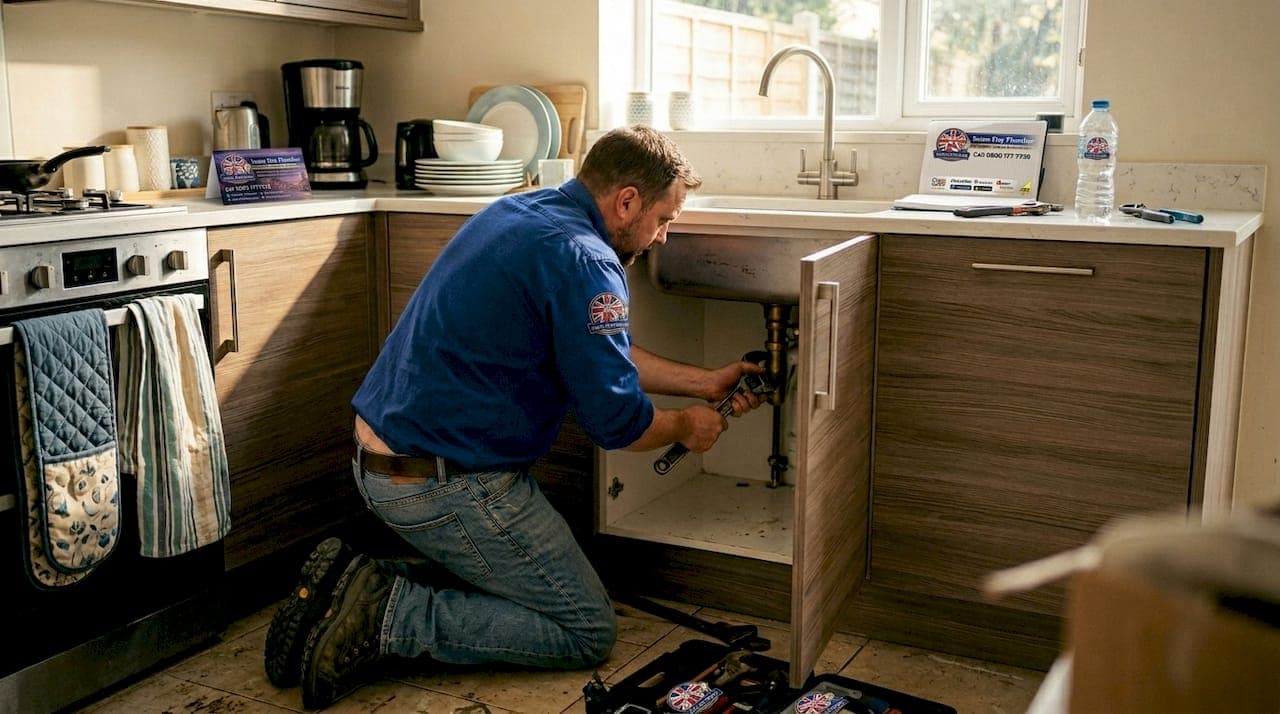
When a plumber mentions a "P-trap," a "DWV system," or asks whether your pipes are "solvent welded," it is easy to feel completely lost. Most homeowners encounter plumbing jargon only when something goes wrong, which is precisely the worst time to be baffled by terminology. Getting the language right matters more than you might think. It changes how quickly problems get resolved, whether you get a fair quote, and how confidently you can describe an issue before a plumber even sets foot in your home. This guide walks you through the most important plumbing terms in plain language so you can communicate clearly and avoid costly misunderstandings.
Table of Contents
- Why plumbing terminology matters for homeowners
- Essential plumbing terms you need to know
- Materials and methods: what pipes, fittings, and joints really mean
- Common plumbing problems decoded
- What most guides miss about plumbing terminology
- Where to find reliable plumbing help
- Frequently asked questions
Key Takeaways
| Point | Details |
|---|---|
| Terminology prevents confusion | Understanding basic plumbing terms helps you communicate clearly and avoid costly mistakes. |
| Modern codes protect safety | Knowing why S-traps are banned reveals how sewer gas risks are prevented in your home. |
| Pipe material affects repairs | The type of pipe—copper, PEX, PVC, or cast iron—determines the right method and tools for any fix. |
| Symptoms reveal problems | Recognising terms helps you identify and describe plumbing issues to professionals for faster resolution. |
Why plumbing terminology matters for homeowners
Think back to the last time you had to call a plumber. You probably described the problem in the most general terms you could manage: "there is a funny smell near the sink" or "the drain is making a strange noise." That description is a reasonable starting point, but it leaves the plumber working with very little to go on. When you can add even a small amount of technical context, the entire conversation changes.
Plumbing terminology creates a shared language between you and the professional you have hired. When you can say "I think it might be a dry trap because the smell only appears near a rarely used bathroom," you save your plumber time and yourself money. Unnecessary diagnostic time costs money, and that cost often lands on you.
Here are the key situations where knowing the right terms makes a measurable difference:
- Emergencies: Describing a burst supply pipe versus a blocked drain waste system leads to a faster and more targeted response.
- Planned repairs: Knowing whether your current system uses copper or PEX helps you ask informed questions about replacement options.
- Maintenance visits: Understanding what a vent stack does means you can ask about its condition during a routine inspection.
- Quotes and estimates: Recognising terms on a written quote helps you spot anything unusual or question items you do not recognise.
One of the most common sources of confusion is the DWV system, which stands for drain, waste, and vent. This is the network of pipes that removes wastewater from your home. The DWV system relies on gravity, trap seals holding between two and four inches of water, and venting to keep air pressure balanced throughout the system. When any of these elements fail, you get very specific symptoms: a gurgling sound points to a venting problem, unpleasant odours suggest a dry trap, and persistently slow drains usually indicate a slope or blockage issue. Knowing those connections lets you describe your symptoms in terms your plumber immediately understands.
Familiarising yourself with basic plumbing terminology also helps you assess whether the advice you are receiving makes sense. You do not need to become an expert. You just need enough knowledge to follow the conversation and ask good questions. And if you are ever in doubt, reliable local plumbers will always take the time to explain things clearly when you ask.
Pro Tip: Before any plumber visit, write down your symptoms using the most specific language you can. Even partial use of correct terminology signals that you are an engaged homeowner, which can influence the level of detail you receive in return.
Essential plumbing terms you need to know
With a clear picture of why terminology matters, here are the most important terms you are likely to encounter when dealing with home plumbing. These are the words that come up again and again, whether you are calling about a dripping tap or a major leak.
-
DWV (Drain, Waste, and Vent): This is the complete system that removes used water and sewage from your home. The drain carries water away; the waste pipes move solid and liquid waste to the sewer; the vent pipes allow air into the system so water flows freely without creating suction or pressure imbalances.
-
Trap: A trap is a curved section of pipe, usually found directly beneath a sink, bath, or shower. It holds a small amount of water that acts as a seal, blocking sewer gases from travelling back up into your home. If a drain is unused for weeks, that water can evaporate, breaking the seal and allowing odours to enter.
-
P-trap vs S-trap: The P-trap is shaped like a sideways "P" and is the standard fitting in modern UK homes. It connects to a vent pipe, which maintains the water seal reliably. The S-trap has a vertical outlet and is no longer permitted under modern building codes because it is prone to self-siphoning. Self-siphoning means water drains so fast that it pulls the seal water along with it, leaving the trap empty and your home exposed to sewer gases. If a plumber mentions replacing your S-trap, this is a genuine safety improvement, not an unnecessary upsell.
-
Vent stack: This is a vertical pipe that runs up through your walls and exits through the roof. It allows air into the DWV system so waste water flows freely. A blocked vent stack is a common cause of gurgling drains and unpleasant smells.
-
Supply pipes: These bring fresh, pressurised water into your home and to individual fixtures. They are separate from the drain system entirely and operate under pressure rather than gravity.
-
Shut-off valve: A valve, usually located under a sink or behind a toilet, that allows you to stop water supply to a single fixture without turning off water to the whole house. Knowing where these are is genuinely useful in a minor emergency.
-
Solder: A metal alloy melted to join copper pipes together. Requires a blowtorch and skill to do properly. This is relevant when a plumber quotes for copper pipework repairs.
-
Crimp: A method of joining PEX flexible pipes using a metal ring compressed with a special tool. Much faster than soldering and does not require heat.
If you ever need emergency plumbing tips or want to speak with trusted plumbers who will explain your options without jargon, help is never far away.
Pro Tip: The moment you discover a leak, locate and close the relevant shut-off valve immediately. This single action can prevent hundreds of pounds worth of water damage while you wait for a plumber to arrive.
Materials and methods: what pipes, fittings, and joints really mean
Plumbers frequently refer to pipe materials when discussing repairs, quotes, or upgrades. If you do not know the differences, it is very easy to agree to something without understanding what you are getting. Here is a clear breakdown.
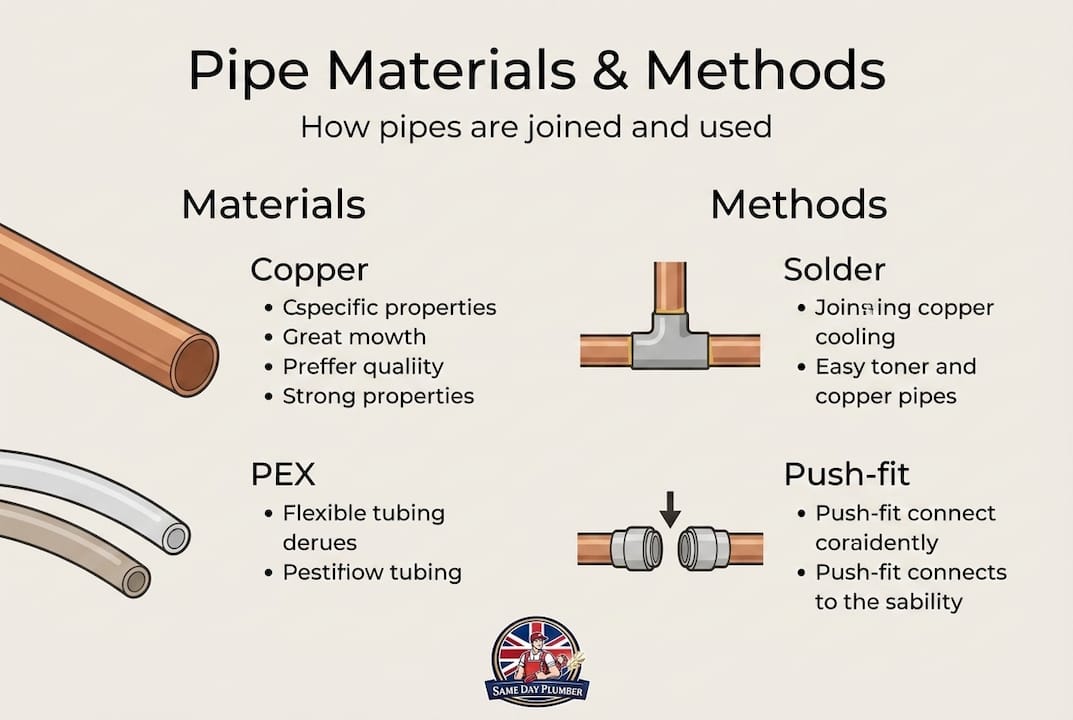
| Pipe material | Typical use | Joining method | Key characteristic |
|---|---|---|---|
| Copper | Supply pipes | Solder | Durable, heat resistant |
| PEX | Supply pipes | Crimp | Flexible, freeze resistant |
| PVC | Drainage | Solvent weld | Lightweight, affordable |
| ABS | Drainage | Solvent weld | Slightly more rigid than PVC |
| Cast iron | Old drainage | Mechanical joint | Heavy, corrodes over time |
The differences between these materials have a real impact on repair costs, longevity, and what your plumber will recommend. Cast iron is heavy and corrodes, which is why older homes often need pipe upgrades; modern PVC and ABS are lightweight and joined using solvent welding, which involves applying a chemical solvent that fuses the plastic together permanently. PEX, increasingly common in modern plumbing materials, is a flexible plastic used for supply pipes that bends around obstacles without needing as many joints, reducing potential leak points.
Here is what each joining method means in practice:
- Solder: Copper pipes are heated and metal alloy is melted into the joint. Requires an open flame and is permanent once cooled. A skilled job.
- Crimp: A ring around a PEX connection is compressed with a crimping tool. No heat needed and faster to complete.
- Solvent weld: A chemical primer and cement fuse plastic pipes at the joint. Sets quickly and creates a bond stronger than the pipe itself. Very reliable for drainage.
- Push-fit connectors: These click-together fittings require no tools or heat and are widely used for temporary repairs or quick connections. Your plumber may use these in tight spaces.
Understanding these terms helps you ask better questions. For instance, if a plumber quotes for copper supply pipe replacement but your home already has PEX, you can ask why copper is being recommended and whether PEX is an appropriate alternative. For any solutions for pipe repairs, knowing your current pipe material in advance genuinely speeds up the process.
Fittings are also worth understanding briefly. An elbow changes pipe direction, a tee splits flow in two directions, and a reducer connects pipes of different diameters. These are the building blocks of any pipe run, and plumbers may reference them when explaining the scope of a job.

Common plumbing problems decoded
Once you understand the terminology, diagnosing everyday plumbing problems becomes far less daunting. Most common issues have very clear links to specific parts of the plumbing system, and knowing those links lets you describe problems precisely.
| Symptom | Likely cause | Related term |
|---|---|---|
| Gurgling drains | Air pressure imbalance | Vent blockage |
| Persistent bad odours | Empty water seal | Dry trap |
| Slow drainage | Blockage or insufficient slope | DWV slope, clog |
| Water hammer (banging pipes) | Pressure surge in supply pipes | Supply pipe, pressure |
| Sewage smell near rarely used sink | Evaporated trap seal | Dry trap |
Drainage slope is a surprisingly important and often overlooked factor. Horizontal drain pipes need a minimum slope of 1/4 inch per foot, equivalent to about 2%, to allow gravity to move waste along at the right speed. Too little slope and waste sits in the pipe, causing blockages. Too much slope and water rushes ahead of solids, leaving them behind to build up into a clog. When a plumber mentions "checking the fall" on your drains, this is what they mean.
Knowing whether your problem is a venting issue, a trap issue, or a slope issue helps you avoid paying for the wrong fix. These are three completely different problems with three completely different solutions.
Here is a straightforward way to begin diagnosing your own symptoms before calling a plumber:
- Identify which fixtures are affected. A single slow drain usually points to a localised blockage. Multiple slow drains across the house suggest a main line issue or a venting problem.
- Note when the smell appears. Smells from a rarely used sink almost always indicate a dry trap. Run the tap for thirty seconds and see if the smell disappears within a few hours.
- Listen for gurgling. If you hear gurgling when one fixture drains while another is in use, this strongly suggests a shared vent problem.
- Check for visible signs. Water stains, damp patches, or corrosion around joints are physical clues that supply pipes or drain connections may be failing.
For anything beyond a simple blockage, contact a professional for emergency repair services before the problem develops further. Catching issues early, especially with venting or slope problems, can prevent far more expensive structural damage.
What most guides miss about plumbing terminology
Most terminology guides online do exactly what their title suggests: they provide definitions and stop there. What they rarely address is how the knowledge actually changes your outcomes as a homeowner.
In our experience working with homeowners across the country, the biggest gap is not understanding individual words. It is understanding how the parts of a plumbing system relate to each other. A homeowner who knows that a gurgling sound is connected to the vent stack, which connects to the DWV system, which depends on slope and trap seals, can follow a plumber's explanation in real time, ask targeted questions, and make informed decisions about which repairs are genuinely urgent.
There is also a practical negotiation angle that people rarely discuss. When you use accurate terminology, tradespeople tend to give you more detailed explanations and more thorough quotes. It is human nature. You are perceived as someone who will notice if something is vague or missing.
Understanding plumbing terminology is not about becoming an amateur plumber. It is about having enough language to be a genuinely informed client. That distinction shifts the entire dynamic of the conversation and often leads to better work, clearer timelines, and fewer surprises on the final invoice.
Where to find reliable plumbing help
Now that you have a solid grounding in plumbing terminology, putting that knowledge to work is the natural next step. Whether you are dealing with a gurgling drain, an unpleasant odour from a dry trap, or a supply pipe that needs replacing, describing your problem accurately from the outset makes every service call more productive.

At Same Day Plumber, we are available around the clock for both emergencies and planned work, with no call-out charge and a no fix, no fee promise. If you need an emergency plumber Reading or want to book a visit for a longer-term repair, our team is ready to respond quickly and explain everything clearly. Browse our full range of plumbing services and get in touch whenever you need us.
Frequently asked questions
What does DWV mean in plumbing?
DWV stands for drain, waste, and vent, describing the system that removes wastewater from your home using gravity, trap seals, and air pressure balance through vent pipes.
Why are S-traps not allowed in modern plumbing?
S-traps are prohibited because their vertical outlet makes them prone to self-siphoning, a process where the water seal is lost and sewer gases can enter the home.
How much slope should a horizontal drain pipe have?
A horizontal drain pipe requires a minimum slope of 1/4 inch per foot, which equals roughly 2%, to allow gravity to move waste at the correct speed without leaving solids behind.
Why do some pipes make gurgling sounds?
Gurgling nearly always points to a venting issue where disrupted air pressure in the DWV system causes irregular airflow through drain pipes, creating that characteristic noise.
What is the difference between copper, PEX, PVC, and cast iron pipes?
Copper is durable and soldered; PEX is flexible and crimped for supply lines; PVC and ABS are lightweight solvent-welded plastics used for drainage; cast iron is a heavy older material that corrodes gradually over time.