
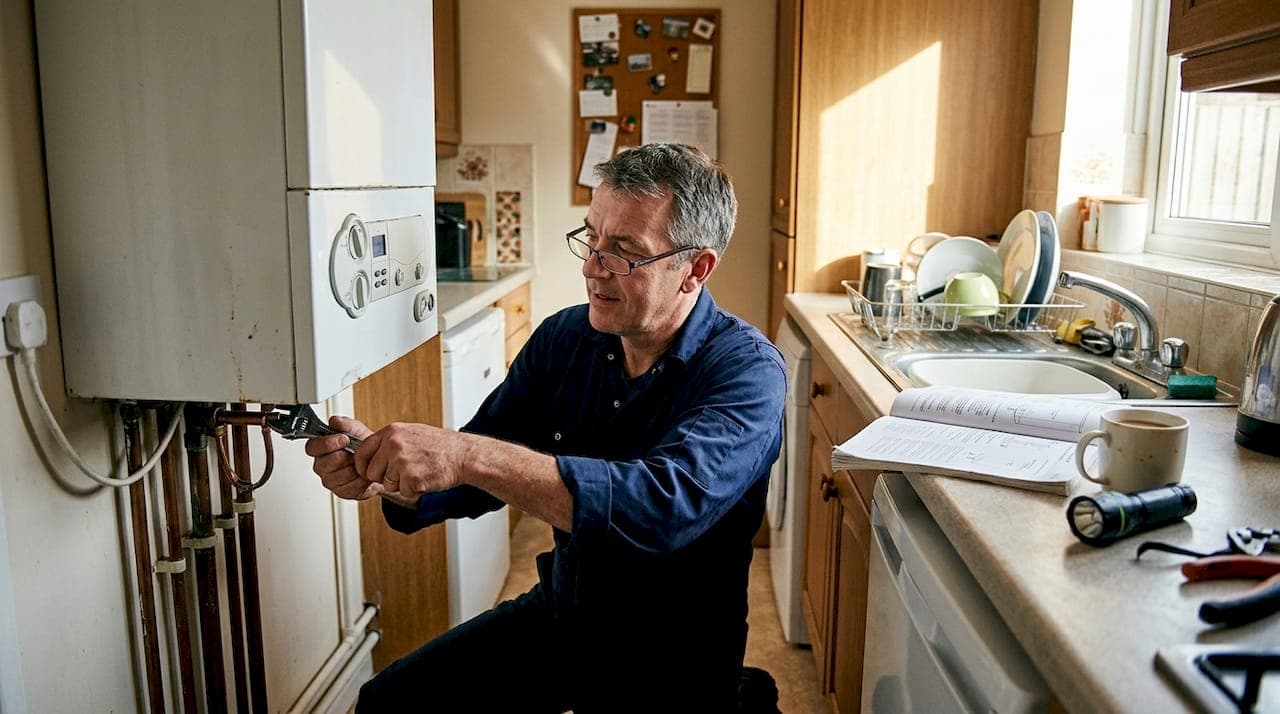
Many homeowners assume that a plumber and a heating engineer are interchangeable. They are not. Calling the wrong professional during a boiler breakdown or heating emergency can cost you time, money, and in some cases, your safety. Heating engineers hold specialist qualifications that go far beyond general plumbing, and the law actually requires certified professionals for certain types of gas work. This guide walks you through exactly what heating engineers do, how they differ from plumbers, when you genuinely need one, and how to choose someone you can trust to get the job done safely and correctly.
Table of Contents
- What does a heating engineer do?
- Heating engineers versus plumbers: Key differences explained
- Emergency repairs: When and why to call a heating engineer
- Routine maintenance: Maximising safety and efficiency with a heating engineer
- How to choose a trusted heating engineer for your home
- Why finding the right heating engineer matters more than you think
- Why local, trusted heating engineers make all the difference
- Frequently asked questions
Key Takeaways
| Point | Details |
|---|---|
| Heating engineers are specialists | They are certified to handle complex tasks involving boilers and central heating systems. |
| Call the right expert | Always use a heating engineer for gas or heating emergencies—plumbers don’t have the necessary training. |
| Regular servicing matters | Annual maintenance by a heating engineer improves efficiency and prevents costly breakdowns. |
| Check accreditations | Ensure any heating engineer you hire is Gas Safe registered for your safety and legal compliance. |
| Trust local professionals | Reliable, well-reviewed local teams can provide fast, effective solutions for all your home heating needs. |
What does a heating engineer do?
A heating engineer is a certified specialist whose entire focus is on the systems that keep your home warm and your water hot. That means boilers, radiators, underfloor heating, hot water cylinders, and the controls that manage them all. Unlike a general plumber, a heating engineer trains specifically to understand the mechanical, electrical, and gas-related aspects of these systems.
To work legally on gas appliances in the UK, a heating engineer must be registered with the Gas Safe Register. This is not optional. It is a legal requirement, and any engineer who cannot show you their Gas Safe ID card should not be touching your boiler. Beyond Gas Safe registration, many engineers hold qualifications from bodies such as City and Guilds or OFTEC (for oil heating systems), and the best ones pursue ongoing training as technology evolves.
As heating engineers are specialists in installing, repairing, and maintaining heating systems, their day-to-day tasks cover a wide range of work:
- Installing new boilers and central heating systems
- Diagnosing and repairing boiler faults
- Servicing radiators and checking pressure levels
- Fitting and commissioning underfloor heating
- Replacing hot water cylinders and thermal stores
- Carrying out annual boiler services
For homeowners dealing with central heating repairs, using a properly qualified heating engineer is not just best practice. It is the only safe option.
"A qualified heating engineer brings a level of technical knowledge and legal accountability that simply cannot be matched by an unregistered tradesperson. For anything involving gas, always check credentials first." — Heating industry guidance
Heating engineers versus plumbers: Key differences explained
The confusion between plumbers and heating engineers is understandable. Both work with pipes and water. But their areas of expertise are quite different, and mixing them up in an emergency can leave you worse off.
Plumbers handle general water systems while heating engineers handle regulated heating appliances. In plain terms, a plumber fixes a leaking tap, unblocks a drain, or replaces a bathroom suite. A heating engineer fixes your boiler, balances your radiators, or installs a new central heating system.
| Task | Plumber | Heating engineer |
|---|---|---|
| Leaking tap or pipe | Yes | Sometimes |
| Blocked drain | Yes | No |
| Boiler installation | No | Yes |
| Radiator repair | No | Yes |
| Gas appliance work | No | Yes (Gas Safe only) |
| Underfloor heating | No | Yes |
| Hot water cylinder | Sometimes | Yes |
Here is a simple step-by-step way to decide who to call:
- Is the problem related to a tap, drain, or general pipework? Call a plumber.
- Is the problem with your boiler, radiators, or central heating? Call a heating engineer.
- Does the job involve gas in any way? You must call a Gas Safe registered heating engineer.
- Are you unsure? Describe the problem when you call and ask if they are Gas Safe registered.
- In a genuine emergency involving gas smell or carbon monoxide, call the National Gas Emergency Service on 0800 111 999 immediately.
Pro Tip: Save the number of a trusted local heating engineer in your phone before you ever need one. When your heating fails at 11pm in January, you will not have time to research. Whether you need a same day plumber in Ascot or reliable plumbers in Basingstoke, knowing who to call ahead of time makes all the difference.
Emergency repairs: When and why to call a heating engineer
Heating emergencies do not follow a schedule. They tend to happen on the coldest nights, over bank holidays, or just as guests arrive. Knowing when to call a heating engineer, and doing so quickly, can prevent a bad situation from becoming a dangerous one.
These are the five most common heating emergencies that require a specialist:
- Boiler breakdown: No heat or hot water, especially in winter, is a genuine emergency for households with young children or elderly residents.
- Boiler pressure loss: A sudden drop in boiler pressure can indicate a leak or a fault in the expansion vessel.
- Strange noises from the boiler: Banging, kettling, or gurgling sounds often signal limescale build-up or a failing pump.
- Radiators not heating up: Cold spots or completely cold radiators can mean airlocks, sludge build-up, or a circulation pump failure.
- Suspected carbon monoxide leak: This is a life-threatening emergency. Leave the property immediately and call the gas emergency line.
Unaddressed heating emergencies can cause property damage and serious health risks, particularly during the UK winter months when systems are under the most strain. Understanding the emergency response importance of having a qualified engineer attend quickly is not overstating the situation.
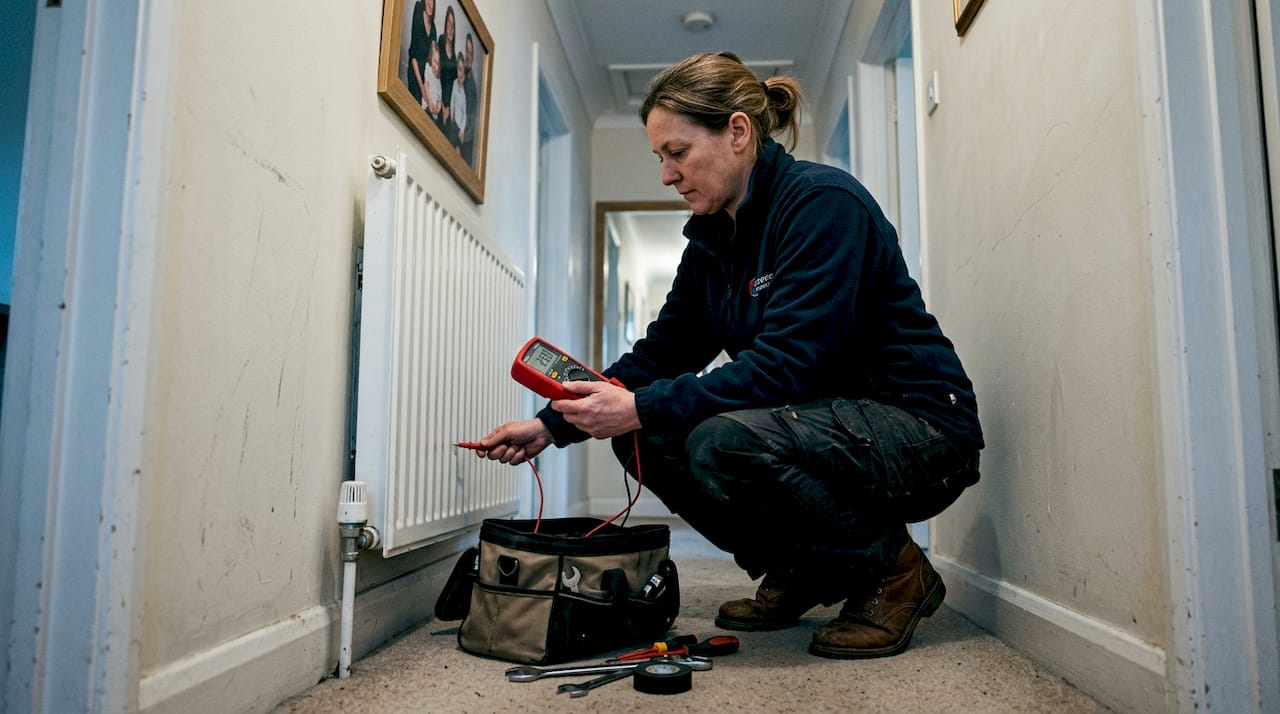
While you wait for the engineer, you can take a few simple steps to limit damage. Turn off the boiler if it is making unusual noises. Check your stopcock location in case of a water leak. Keep affected rooms as warm as possible using electric heaters if available. Do not attempt to repair gas components yourself under any circumstances.
When you call, ask the engineer whether they are Gas Safe registered, whether they carry common parts for your boiler model, and what their estimated arrival time is. A reliable engineer will answer all three questions clearly.
Routine maintenance: Maximising safety and efficiency with a heating engineer
Emergencies grab attention, but the real value of a good heating engineer comes from the routine work that prevents those emergencies from happening in the first place. Annual servicing by competent heating engineers can reduce breakdowns and save on energy costs, which adds up to real savings over the life of your system.
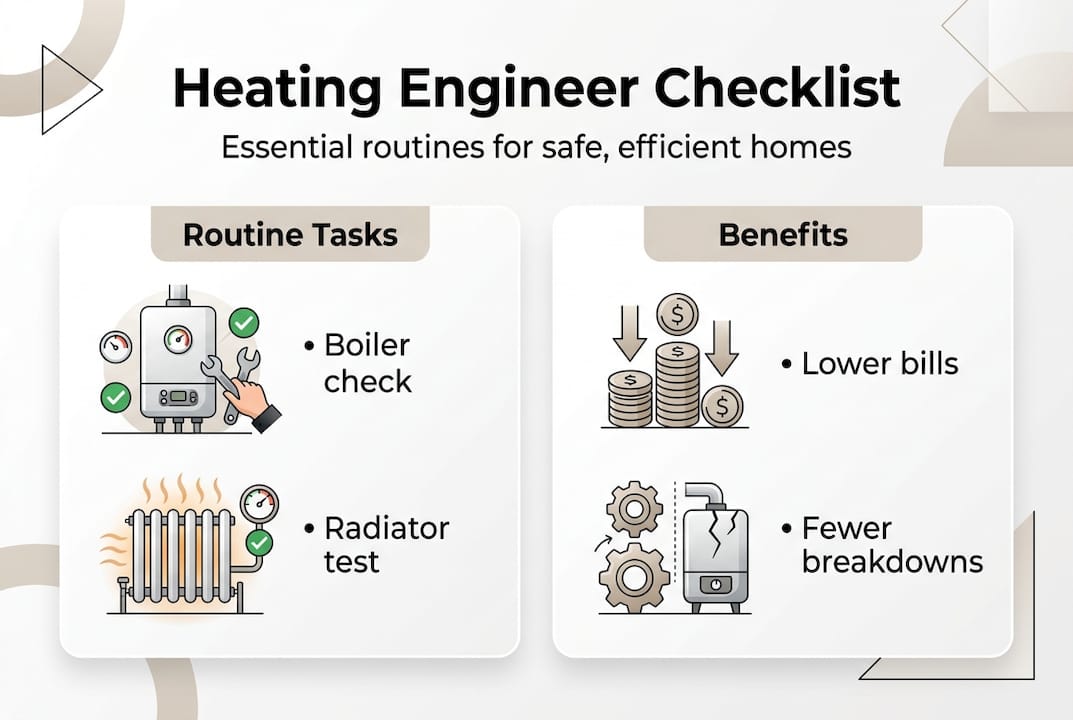
A typical maintenance visit covers a thorough inspection and clean of the boiler, checking flue integrity, testing controls and safety devices, bleeding radiators, checking system pressure, and identifying any components showing early signs of wear.
| Maintenance benefit | Impact |
|---|---|
| Reduced breakdown risk | Up to 50% fewer emergency call-outs |
| Improved energy efficiency | Potential saving of 10-15% on heating bills |
| Extended boiler lifespan | Average boiler lasts 2-3 years longer with annual servicing |
| Warranty compliance | Most manufacturers require annual service to keep warranty valid |
For landlords, annual gas safety checks by a Gas Safe registered engineer are a legal requirement under the Gas Safety (Installation and Use) Regulations 1998. Failure to comply can result in prosecution. For homeowners, it is simply good sense. Understanding the boiler servicing importance is something every property owner benefits from.
Pro Tip: Book your annual boiler service in September or early October, before the winter rush. Engineers are busier and harder to schedule from November onwards, and prices can reflect that demand.
During a maintenance visit, ask your engineer these questions:
- Is my boiler operating at the correct pressure?
- Are there any parts showing signs of wear that I should plan to replace?
- Is my flue positioned correctly and free from obstruction?
- Am I losing heat efficiency anywhere in the system?
- Is my thermostat and programmer working as it should?
How to choose a trusted heating engineer for your home
Finding a good heating engineer is not just about picking the first name that appears in a search. The person you choose is responsible for the safety of your home and everyone in it. Take a few minutes to vet them properly.
Follow this checklist before you book:
- Check Gas Safe registration. Every engineer working on gas must be registered. You can verify this on the Gas Safe Register website using their ID number.
- Ask about relevant qualifications. For oil systems, look for OFTEC registration. For renewables, check for MCS certification.
- Read local reviews. Look at Google, Checkatrade, or Trustpilot for recent feedback from homeowners in your area.
- Ask for a written quote. Any reputable engineer will provide a clear, itemised quote before starting work.
- Check their insurance. Public liability insurance protects you if something goes wrong during the job.
- Ask about guarantees. Good engineers stand behind their work with a warranty on parts and labour.
Homeowners should verify Gas Safe registration and seek local recommendations before hiring any heating engineer. This is not excessive caution. It is the minimum standard.
"Your heating engineer should be able to show you their Gas Safe ID card on arrival without being asked. If they hesitate or cannot produce it, do not let them start work." — Gas Safe Register guidance
Pro Tip: Never accept a verbal quote alone. A written scope of work protects both you and the engineer if any dispute arises about what was agreed.
For trusted local plumbers and heating engineers, local knowledge and community reputation matter enormously. An engineer who works regularly in your area understands local water quality, common system types, and has a reputation to maintain.
Why finding the right heating engineer matters more than you think
Here is something the industry does not say often enough: most heating emergencies are avoidable. They are not bad luck. They are the result of years of skipping annual services, ignoring warning signs, or hiring the cheapest person available rather than the most qualified.
We have seen it repeatedly. A homeowner calls us in a panic because their boiler has failed in the middle of winter. When we investigate, it turns out the system has not been serviced in four or five years. The repair bill is always far higher than several years of annual services would have cost.
Experience, responsiveness, and ongoing training are what separate a true heating specialist from someone who simply knows their way around a boiler. The difference shows up when something unusual happens, when a fault is not obvious, or when a system is old and parts are scarce. A well-trained engineer solves the problem. A generalist guesses.
There is also the matter of insurance. Some home insurance policies are invalidated if gas work is carried out by an unregistered engineer. That is a risk no homeowner should take. Choosing the right professional protects your safety, your family's comfort, and your financial cover.
Why local, trusted heating engineers make all the difference
When your heating fails, you need someone who can arrive quickly, diagnose accurately, and fix it properly the first time. That is exactly what we do at Same Day Plumber.

We cover emergencies and planned work across Reading and the surrounding area, with no call-out charge and a no fix, no fee promise. Whether you need central heating repairs in Reading, a fast response from our emergency plumbers in Reading, or a qualified engineer for boiler repairs in Reading, our team is available 24 hours a day, 7 days a week. We are locally based, properly accredited, and committed to getting your home warm and safe as quickly as possible.
Frequently asked questions
What is the difference between a plumber and a heating engineer?
Plumbers work on water systems and general pipework, while heating engineers specialise in boilers, radiators, and central heating systems that often involve gas.
When should I call a heating engineer instead of a plumber?
Call a heating engineer for any issue involving your boiler, radiators, or central heating, particularly where gas appliances are concerned. Heating engineers are specialists certified to handle gas appliances safely and legally.
Are heating engineers required to be Gas Safe registered?
Yes, it is a legal requirement in the UK. Always verify Gas Safe registration before allowing any engineer to work on your gas boiler or appliances.
How often should I have my boiler serviced by a heating engineer?
Once a year is the recommended minimum. Annual servicing reduces breakdowns and keeps your energy costs lower over time.
Can heating engineers help in emergencies?
Yes. Heating engineers are trained to respond to urgent problems including boiler breakdowns and loss of heating or hot water. Heating problems can escalate quickly if not addressed by a qualified professional.