
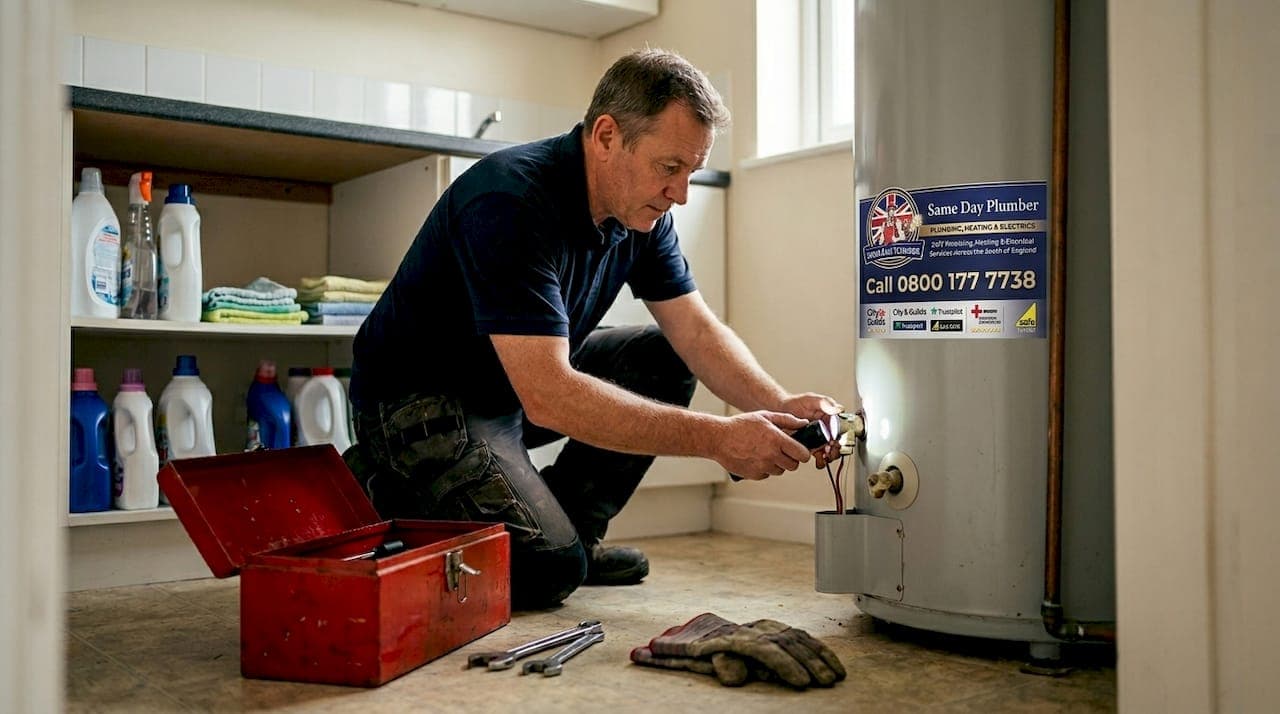
That rumbling noise from your airing cupboard or the sudden shock of a cold shower does not always mean your water heater is finished. Many homeowners assume the worst and rush into costly replacements, when in reality common water heater issues such as sediment build-up, loose connections, or a tripped thermostat are entirely fixable. The trouble is that misdiagnosis is rife, and without clear guidance, small problems quietly grow into expensive ones. This guide walks you through identifying faults, carrying out basic repairs safely, deciding whether to repair or replace, and knowing when to call in a professional before a dripping pipe turns into a flooded utility room.
Table of Contents
- Typical water heater issues and what they mean
- Step-by-step guide to basic water heater repairs
- Repair or replace? How to decide and compare options
- The importance of regular maintenance and professional help
- The truth most guides miss: water heater reliability relies on attention to detail
- Need urgent water heater repairs? Local experts can help
- Frequently asked questions
Key Takeaways
| Point | Details |
|---|---|
| Know the warning signs | Understanding leak types, noises, and heater age prevents surprise failures. |
| DIY vs pro repairs | Simple fixes are safe for owners, but complex or gas/electric problems need trusted plumbers. |
| Maintenance pays off | Annual flushes and anode checks extend heater life and limit breakdown risk. |
| Repair or replace wisely | If repairs cost above half a new unit or the heater is older than a decade, replacement makes financial sense. |
Typical water heater issues and what they mean
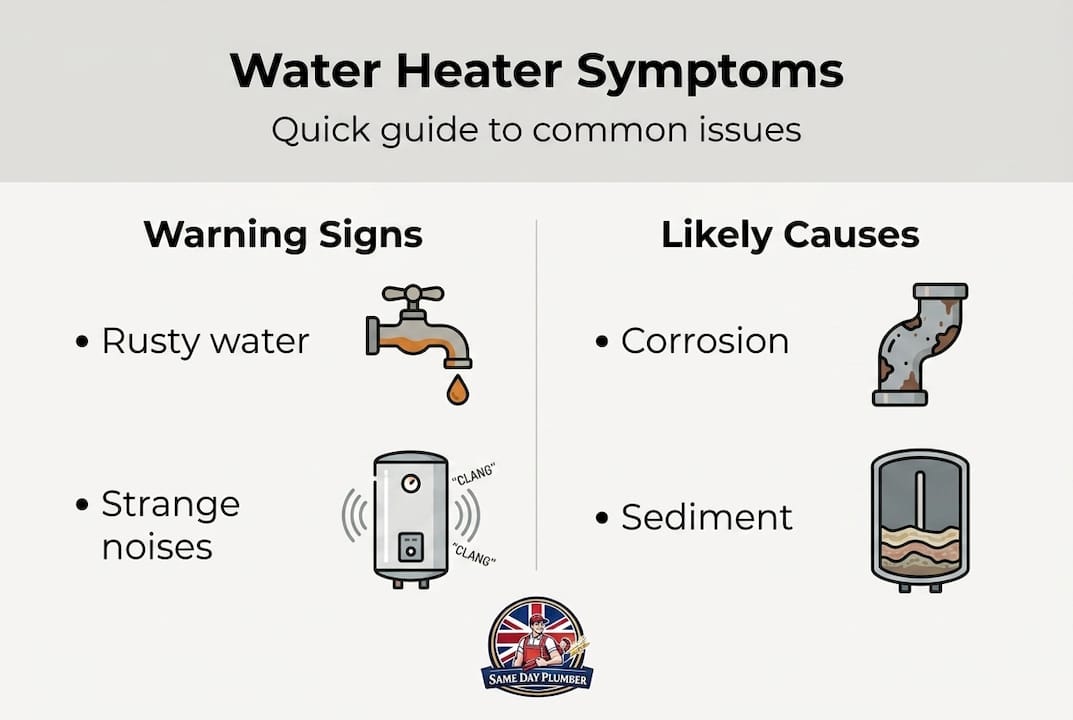
Most homeowners encounter water heater problems in one of four ways: water pooling around the base, a rusty tinge coming from the hot tap, unusual rumbling or popping sounds, or simply no hot water at all. Each symptom points to a different fault, and reading them correctly is half the battle.
Here is a quick breakdown of the most common symptoms and their likely causes:
- Rust-coloured water often signals tank corrosion or a failing anode rod, not always the pipework
- Rumbling or popping sounds typically come from sediment settling at the bottom of the tank, not an imminent explosion
- Water pooling at the base could mean a serious tank leak, but also a simple condensation issue or a loose pressure valve connection
- No hot water on an electric unit usually points to a failed heating element or tripped high-limit switch; on a gas unit, a pilot light or thermocouple fault is the usual culprit
- Dripping from the temperature and pressure (T&P) valve does not automatically mean the valve is faulty; it may indicate excess system pressure instead
This last point catches a lot of homeowners out. A misdiagnosis is common: a T&P drip is not always a faulty valve, and rumbling from sediment is not a sign of imminent failure. Repair is viable if the tank is under seven or eight years old with no structural damage, whereas corrosion, rust-coloured water, or leaks on a unit over ten years old generally indicate replacement is the smarter move.
| Symptom | Likely cause | Action required |
|---|---|---|
| Rust-coloured water | Corroded anode rod or tank | Replace rod or consider full replacement |
| Rumbling or popping | Sediment build-up | Flush tank; repair viable |
| No hot water (electric) | Failed element or thermostat | Reset or replace element |
| No hot water (gas) | Pilot light or thermocouple fault | Relight or call engineer |
| Dripping T&P valve | Excess pressure or faulty valve | Check pressure; replace valve if needed |
| Pooling at base | Tank crack or loose fitting | Inspect fittings; replace if cracked |
If your unit has broader heating or system faults, it is worth also looking at boiler repairs or central heating repairs, as interconnected systems can mask the true source of a problem.
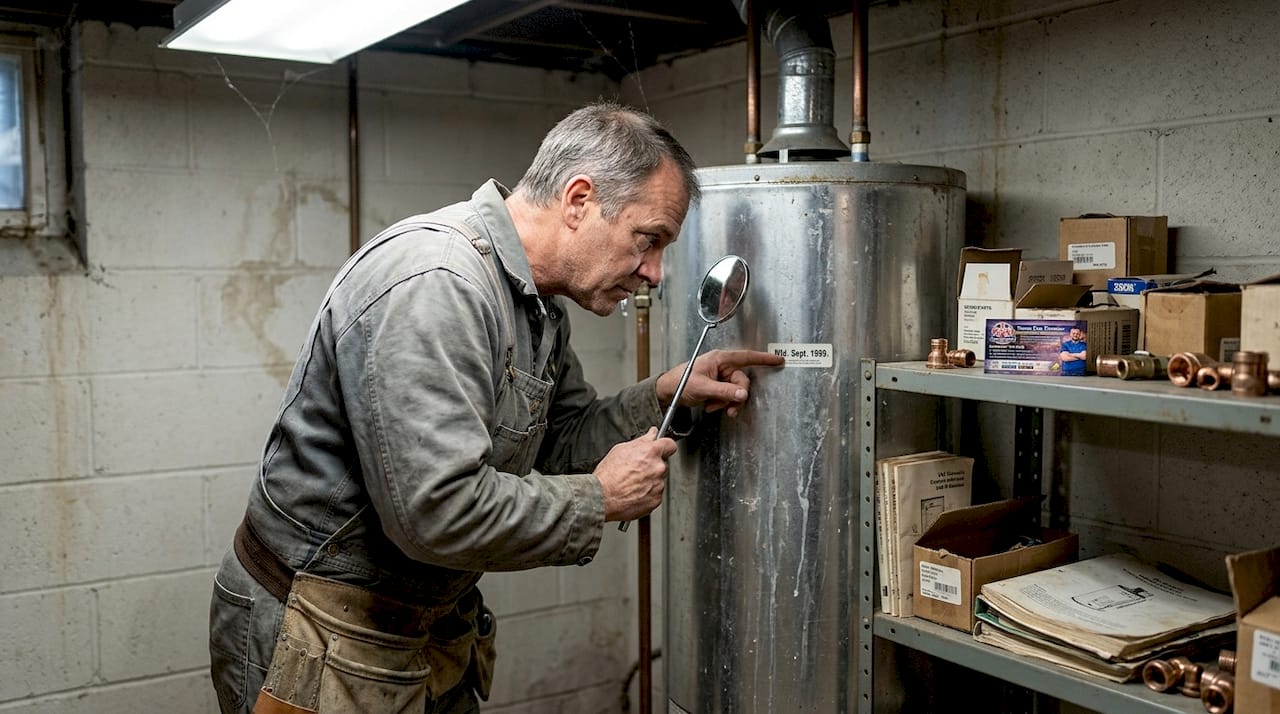
Pro Tip: Use your senses and the unit's age together. A seven-year-old tank making noise is a repair job. A twelve-year-old tank doing the same thing is a warning sign worth taking seriously.
Step-by-step guide to basic water heater repairs
Knowing the most common issues, here is how you can safely troubleshoot many of them yourself before reaching for the phone.
Before you touch anything, take a photograph of the current state of all connections and settings. It sounds simple, but when you are reassembling components under pressure, a reference image is invaluable.
- Check the circuit breaker or fuse for electric units. A tripped breaker is the most overlooked fix. Reset it and wait twenty minutes before deciding anything is seriously wrong.
- Press the high-limit reset button on the electric thermostat housing (usually a red button behind an access panel). This trips when water overheats and is often all that needs doing.
- Inspect for obvious leaks by drying the area around all fittings and watching carefully. Pinpointing the exact source before drawing conclusions saves a lot of unnecessary work.
- Flush the tank to remove sediment. Turn off power or gas, connect a hose to the drain valve, open a hot tap indoors to allow airflow, and drain until the water runs clear. Refill before restoring power.
- Relight the pilot light on gas units by following the manufacturer's label instructions precisely. Always ventilate the area first and wait several minutes if you smell gas before attempting a relight.
- Replace the T&P valve if it continues dripping after pressure checks. Repair methodologies confirm that sourcing the leak first, draining the tank, shutting off power and water, and fitting a new valve is the correct sequence, with an expansion tank installed if high pressure is the underlying cause.
For more involved procedures on specific units, DIY water heater fixes can provide additional detail, and our own boiler repair steps page covers related fault-finding approaches.
Pro Tip: Never attempt advanced electrical wiring repairs or any internal gas component work yourself. These are not just difficult jobs; they are legally and safely restricted to qualified professionals.
Repair or replace? How to decide and compare options
With stepwise repairs in mind, it is key to know when fixing is not enough and a new unit is the better investment.
The most useful rule in the trade is the 50% rule: if the cost of a repair exceeds half the price of a full replacement unit, renewal almost always makes more financial sense. Factor in that a repaired older unit will still have a shorter remaining lifespan and may develop further faults within months.
| Factor | Repair | Replace |
|---|---|---|
| Unit age | Under 8 years | Over 10 years |
| Estimated cost | Under 50% of replacement | Over 50% of replacement |
| Tank condition | Intact, no rust | Corroded or cracked |
| Downtime | Hours | 1 to 2 days |
| Warranty impact | Limited or none | Full manufacturer warranty |
| Risk level | Low if fault is minor | Eliminates uncertainty |
Lifespan also shapes this decision significantly. Tank gas heaters last 8 to 12 years, electric models reach 10 to 15 years, and tankless systems can exceed 20 years with good maintenance. Hard water and skipped annual servicing can cut years off all of these figures.
A water heater that receives annual attention will consistently outlast a neglected unit of the same model by three to five years. Maintenance is not optional; it is the difference between a 10-year unit and a 15-year one.
For a broader view of how unit type affects longevity and running costs, a gas vs electric comparison is a good starting point.
Signs that always mean replacement rather than repair:
- Visible rust or corrosion on the tank body itself
- Water leaking directly from the base of the tank
- Unit is more than ten years old with recurring faults
- Repeated repairs within the same twelve-month period
Thinking about the lifespan of boilers alongside your water heater can also help you plan ahead and avoid two major replacement costs hitting at once.
The importance of regular maintenance and professional help
Making the right repair decision often starts years earlier with smart maintenance, and sometimes the best fix is picking up the phone sooner rather than later.
The three most impactful maintenance tasks you can carry out or commission annually are:
- Flushing the tank to remove sediment that reduces efficiency and causes the rumbling sounds many homeowners ignore
- Replacing the anode rod every three to five years to prevent internal tank corrosion
- Checking the T&P valve annually to confirm it operates correctly under pressure
Annual flushing and anode rod replacement are the foundation of a long-lasting system. Skip these and you are simply shortening the unit's life on your own terms.
Some situations should never be treated as DIY jobs regardless of how confident you feel:
- Any fault involving the gas supply line or internal gas components
- Electrical element replacement on units without a clear isolation point
- Leaks that are difficult to locate or have caused water ingress to flooring or cabinetry
- Units over ten years old showing any new symptoms
- Persistent faults that return within weeks of a previous fix
Calling a professional promptly prevents far greater damage, particularly with leaks, which can compromise flooring, cabinetry, and even electrical fittings if left unattended. A good local plumber will also maintain records of your unit's history, which is invaluable when making future repair or replacement decisions.
For households where electrical and plumbing systems overlap, electrical services for plumbing can address both without the need for two separate call-outs. And when a fault is urgent, understanding why emergency plumbing response speed matters can help you make a faster, calmer decision under pressure.
Pro Tip: Book your annual water heater check with the same local plumber each time. Familiarity with your specific unit means they spot changes faster and can flag concerns before they become faults.
The truth most guides miss: water heater reliability relies on attention to detail
Here is a perspective from within the trade that you will not usually find in a standard online guide.
The vast majority of emergency water heater call-outs we attend are not the result of sudden mechanical failure. They are the accumulated result of months or years of ignored small signs: a T&P valve that dripped occasionally, a flushing job that was delayed season after season, a rumbling sound that was written off as "just what it does." These small oversights compound quietly until a manageable repair becomes an unavoidable replacement.
Quick internet searches also mislead well-meaning homeowners into surface fixes that do not address root causes. Relighting a pilot light without checking the thermocouple, or tightening a fitting without identifying why it loosened, simply postpones the real problem.
A prompt plumbing service with knowledge of your system's full history is worth far more than a stack of browser tabs. Build that relationship early, keep records, set an annual reminder, and treat your water heater as the essential appliance it is rather than something to think about only when it fails.
Need urgent water heater repairs? Local experts can help
If you have worked through this guide and realised your issue needs more than a DIY fix, do not leave it to chance.

At Same Day Plumber, our water heater repair specialists are available around the clock with no call-out charge and a no-fix, no-fee guarantee. Whether you are dealing with a sudden leak, a unit that has stopped producing hot water, or simply want a professional inspection before a small fault becomes a big one, our fast-response emergency plumbers are ready to respond. Our plumbers in Reading and across the surrounding area bring local knowledge and fully transparent pricing to every job.
Frequently asked questions
What is the most common cause of water heater failure?
Sediment build-up and deferred maintenance are the top culprits behind water heater breakdowns, as they accelerate wear on heating elements, tank walls, and valves over time.
How can I tell if my water heater needs a full replacement?
Persistent leaks, visible corrosion, or a unit over ten years old often indicate replacement is wiser than repair, particularly when repair costs exceed 50% of the price of a new unit.
Can I repair my water heater myself or do I need a plumber?
Basic checks and sediment flushing are reasonable DIY tasks, but gas and electric repairs or major leaks should always be handled by a certified professional for safety and compliance reasons.
How long does a typical water heater last?
Gas tank heaters last 8 to 12 years, electric models typically reach 10 to 15 years, and tankless systems can exceed 20 years when properly serviced and maintained throughout their lifespan.