
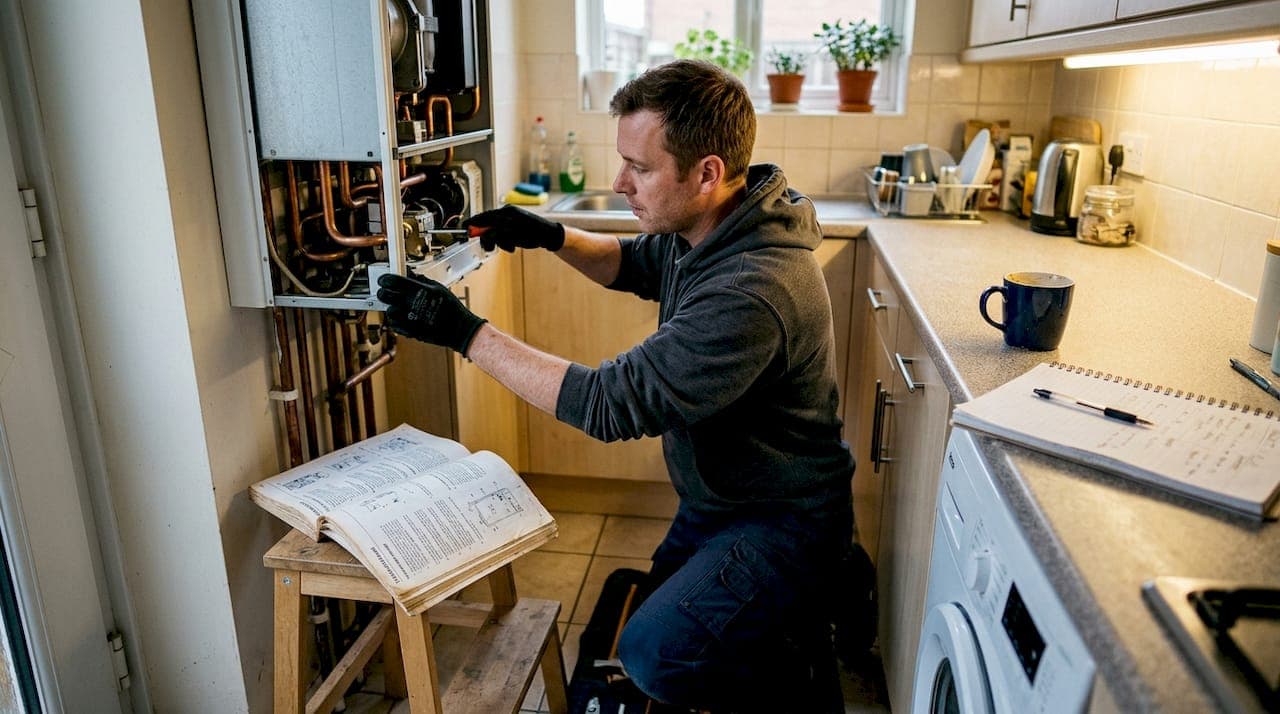
Around 1.5 million UK households face boiler problems every winter, and roughly one in five boilers breaks down each year. That is a striking figure, but what surprises most homeowners is how rarely a single, obvious fault is to blame. Boiler stoppages can stem from electrical issues, mechanical wear, water quality problems, or something as simple as a frozen pipe outside. The confusion that follows a breakdown, especially on a cold morning with no heat or hot water, is exactly what this guide is designed to cut through. Read on to understand the real causes, how to troubleshoot safely, and what you can do to prevent the next outage before it happens.
Table of Contents
- The most common reasons boilers stop working
- How to diagnose and troubleshoot boiler stoppages
- Warning signs and risks: What to look out for
- Prevention: Maintenance steps to keep your boiler running
- What most homeowners get wrong about boiler breakdowns
- Need urgent help? Same day boiler repair is one call away
- Frequently asked questions
Key Takeaways
| Point | Details |
|---|---|
| Multiple breakdown causes | Boilers can stop due to pressure loss, frozen pipes, ignition faults, or control issues. |
| DIY checks possible | Simple issues like low pressure or a frozen pipe can often be checked safely by homeowners. |
| Know the warning signs | Unusual noises, leaks, or frequent resets signal a deeper problem needing fast action. |
| Annual service prevents faults | Most boiler outages can be avoided with regular professional servicing and water treatment. |
| Urgent help is available | Local specialist plumbers offer rapid repair and emergency callouts so heating downtime is minimised. |
The most common reasons boilers stop working
When your boiler goes quiet, the cause could be one of several faults, and knowing which category you are dealing with saves time and keeps you safe. The type of boiler you have, whether that is a combi, system, or conventional model, also shapes which faults are most likely.
Here is a quick overview of the leading culprits:
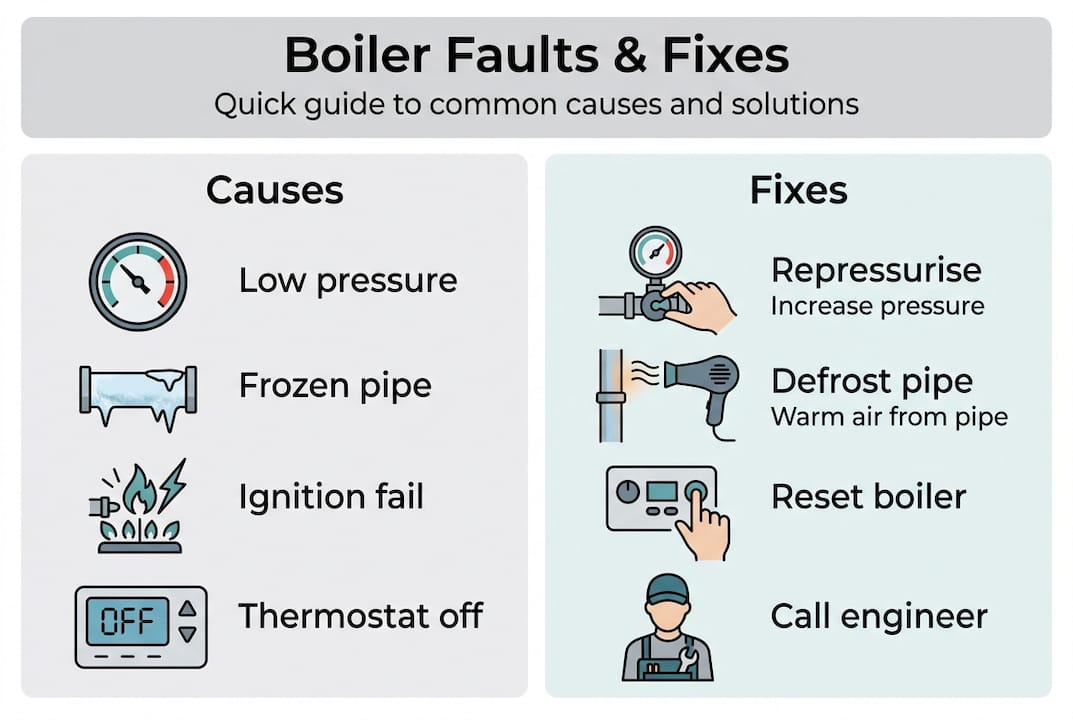
- Low boiler pressure: One of the most common reasons a boiler stops working, low pressure prevents the system from circulating water and can trigger an automatic shutdown.
- Frozen condensate pipe: Modern condensing boilers have a plastic pipe that drains waste water outside. In cold weather, this pipe freezes and blocks drainage, causing the boiler to lock out.
- Thermostat or timer fault: If the signal never reaches the boiler, it simply will not fire, even if everything else is in order.
- Ignition failure: A faulty spark electrode, dirty igniter, or interrupted gas supply can all prevent combustion.
- Gas supply issues: A closed meter valve or unpaid account can cut supply without warning.
- Water leaks: Drips from joints, seals, or valves cause pressure drops and corrosion over time.
- Limescale and sludge: In hard water areas, mineral deposits coat the heat exchanger and restrict flow, reducing efficiency and eventually causing shutdowns.
| Fault type | Most common boiler affected | DIY possible? |
|---|---|---|
| Low pressure | Combi, system | Yes (repressurise) |
| Frozen condensate | Combi (external pipe) | Yes (carefully thaw) |
| Thermostat fault | All types | Partially (check settings) |
| Ignition failure | All types | No |
| Sludge or limescale | Conventional, system | No (power flush needed) |
| Water leak | All types | No |
Statistic: Annual boiler servicing, paired with correct servicing and inhibitor use, prevents the vast majority of these faults from developing in the first place.
Understanding which faults overlap with your boiler type narrows the search considerably. A combi boiler owner in a cold part of the country should keep an eye on the condensate pipe every winter. A homeowner with an older system boiler in a hard water area should prioritise sludge prevention. Problems with identifying boiler pressure problems early is one of the simplest ways to avoid a full lockout.
How to diagnose and troubleshoot boiler stoppages
Once you know the usual suspects, you can work through a logical sequence of checks. This is not about playing engineer. It is about ruling out the simple things before spending money on a callout for something you could have fixed in minutes.
- Check the power supply. Is the boiler switched on at the socket or isolation switch? Has a fuse blown in the consumer unit? A tripped breaker is an easy miss.
- Check the gas supply. Turn on a gas hob ring to confirm the supply is live. If there is no gas elsewhere in the home, contact your supplier immediately.
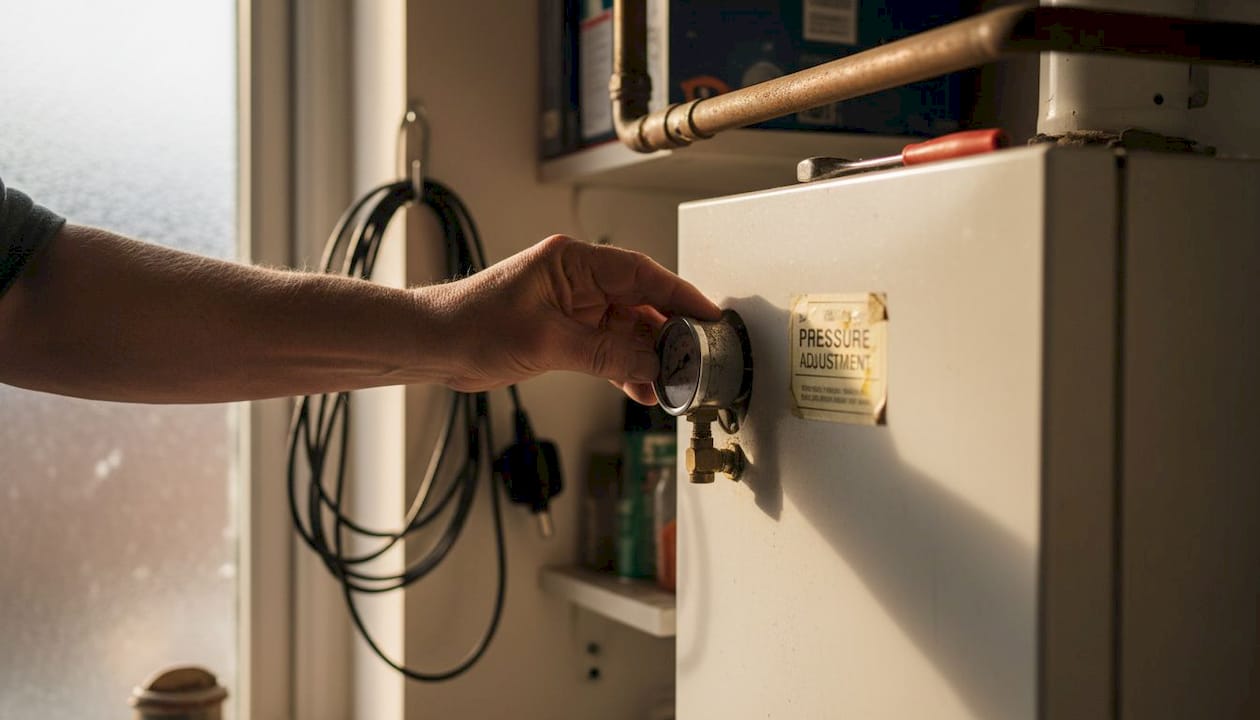
- Check the pressure gauge. Most boilers need to read between 1 and 1.5 bar when cold. Below 0.5 bar and the boiler will not fire.
- Inspect the condensate pipe. In freezing weather, feel along the external pipe for a hard, icy section. A frozen pipe is a very common winter lockout cause.
- Check the thermostat and timer settings. Confirm the thermostat is set above the current room temperature and the timer is set to an active period.
- Try a single reset. Press the reset button once and wait. If the boiler fires briefly then cuts out again, do not keep resetting. Repeated resets can mask a more serious fault.
Pro Tip: If you can diagnose central heating problems from the outside in, working from the simplest checks first, you will save yourself both time and unnecessary repair costs.
| Issue | Safe for DIY? | Call a professional? |
|---|---|---|
| Low pressure (repressurise) | Yes | If pressure keeps dropping |
| Frozen condensate (warm cloth/warm water thaw) | Yes | If pipe is cracked |
| Thermostat settings check | Yes | If fault code persists |
| Ignition or spark failure | No | Always |
| Internal leak or valve fault | No | Always |
| Gas smell | No | Call National Gas Emergencies: 0800 111 999 |
For boiler pressure troubleshooting or central heating checks that go beyond the basics, a qualified engineer will always be the faster, safer choice. The DIY fixes that are viable are limited to a handful of non-technical tasks. Everything inside the boiler casing is for a Gas Safe registered engineer only.
Warning signs and risks: What to look out for
Some boiler problems announce themselves gradually before they become a full breakdown. Learning to read these early signals can save you from a cold house and an expensive emergency callout.
Watch out for these warning signs:
- Kettling: A rumbling, banging, or whistling sound from the boiler often means limescale has built up on the heat exchanger, restricting water flow and causing localised boiling.
- Unusual smells: A faint eggy or sulphurous smell near the boiler could indicate a gas leak. Leave the property immediately and call 0800 111 999.
- Fluctuating water temperature: Hot water that goes cold and then hot again points to a faulty diverter valve or failing thermistor.
- Repeated lockouts: If you are pressing reset more than once a week, the boiler is telling you something is wrong. This is not normal operation.
- Water around the boiler: Even a small puddle is a red flag. Leaks from seals, valves, or heat exchanger corrosion cause water loss and can trigger an automatic shutdown to prevent further damage.
"If you smell gas, do not switch any lights on or off, do not use your phone inside the property, and do not try to find the source. Get out and call the National Gas Emergency line."
Pilot light or ignition failure, often caused by draughts, dirty electrodes, or a faulty thermocouple, is another issue that homeowners sometimes try to fix themselves. Resist the temptation. Without the correct equipment, you cannot tell whether the electrode is simply dirty or whether the gas valve itself is at fault.
Pro Tip: If you notice your boiler showing a fault code, photograph it before calling an engineer. The code tells the engineer exactly which component has flagged an issue, which speeds up the diagnosis considerably.
Common missteps include resetting the boiler repeatedly, covering up leaks with tape or sealant, and ignoring small noises that gradually get louder. Problems with ignition and pilot issues or boiler breakdown causes benefit from professional assessment rather than repeated trial-and-error resets. For a clear picture of next steps, what to do for a broken boiler lays out the process well.
Prevention: Maintenance steps to keep your boiler running
Most boiler breakdowns are not random. They are the result of months or years of neglect, hard water damage, or a missed service. The good news is that a straightforward maintenance routine dramatically reduces your risk.
- Book an annual service. A Gas Safe engineer will clean internal components, check for gas leaks, test controls, and flag any parts that are wearing out. Annual servicing prevents over 80% of potential breakdowns, which makes it the single most effective investment you can make in your heating system.
- Treat your system water. Hard water areas are at particular risk from limescale and magnetic sludge. Adding a chemical inhibitor to the system water, and fitting a magnetic filter on the return pipe, dramatically reduces internal corrosion. Common boiler issues linked to sludge are almost entirely preventable with this step.
- Power flush when necessary. If your radiators have cold spots at the bottom or your boiler is noisy, a power flush clears out accumulated sludge and restores circulation.
- Check your pressure monthly. A quick glance at the pressure gauge takes ten seconds. Catching a slow pressure drop early prevents a full lockout later.
- Lag your condensate pipe. Insulating the external section of the condensate pipe costs very little and prevents the most common winter lockout cause almost entirely.
Statistic: Homes in hard water areas that skip inhibitor treatment are significantly more likely to need emergency repairs within five years of installation.
Pro Tip: If your boiler is over 12 to 15 years old and has needed more than one significant repair in the past two years, replacement is almost always more cost-effective than continued patching. Modern A-rated boilers are considerably more efficient and cheaper to run year-round.
Keeping up with annual boiler servicing is not just about avoiding breakdowns. It also keeps your warranty valid, maintains gas safety certification, and ensures your boiler runs at peak efficiency throughout the heating season.
What most homeowners get wrong about boiler breakdowns
Here is a perspective worth sitting with: most homeowners treat a boiler breakdown as a single-cause event. The boiler stopped, the engineer came, the part was replaced, and the problem is solved. But that is rarely the full picture.
In our experience, the boilers that break down repeatedly are almost always in homes where the underlying system has never been properly treated. Sludge builds up silently over years. Pressure drops a little each month. The thermostat drifts slightly out of calibration. None of these feel urgent on their own, but together they create the conditions for a lockout, usually on the coldest night of the year.
The fix that most people want is a reset or a single part swap. The fix that actually works is combining basic DIY awareness with proper annual servicing and water treatment. Homeowners who understand typical causes for boiler breakdowns and act on that knowledge preventatively rarely face genuine emergencies. The ones who wait until the boiler stops entirely are the ones paying for out-of-hours callouts in January.
Need urgent help? Same day boiler repair is one call away
Sometimes you follow every step, check every setting, and the boiler still will not fire. When that happens, waiting is not an option, especially with young children or elderly family members in the home.

At Same Day Plumber, we respond fast, with no call out charge and a no fix, no fee guarantee. Our engineers are available 24/7 and cover a wide area, so whether you need an emergency plumber in Reading or fast boiler repair in Reading, help is never far away. Our 24/7 plumbers in Reading are qualified, Gas Safe registered, and carry common parts on the van to get your heating back on as quickly as possible. Call us or book online and we will be with you the same day.
Frequently asked questions
Why won't my boiler turn on even when the thermostat is calling for heat?
The most likely causes are low system pressure, a power interruption, a frozen condensate pipe, or a thermostat or control fault that blocks the ignition signal entirely. Check each of these in sequence before calling an engineer.
How can I safely repressurise my boiler?
Locate the filling loop beneath the boiler, open both valves slowly until the pressure gauge reads around 1.2 bar, then close both valves. If low boiler pressure keeps returning, there is a leak somewhere in the system and a professional should investigate.
What should I do if I hear banging or whistling from my boiler?
Those noises usually point to kettling from limescale, which restricts water flow through the heat exchanger. A power flush and inhibitor treatment from a qualified engineer will resolve it and protect the boiler long-term.
Is it normal for my boiler to leak water?
No. Even a small drip from a seal, valve, or heat exchanger means an internal fault is present. Leaks from seals or valves can worsen quickly, so switch the boiler off and call a Gas Safe engineer without delay.
How often should I have my boiler serviced to prevent breakdowns?
Once a year, by a Gas Safe registered engineer. Annual servicing prevents 80%+ of common breakdowns, keeps your warranty active, and ensures your boiler is running safely and efficiently throughout the heating season.