
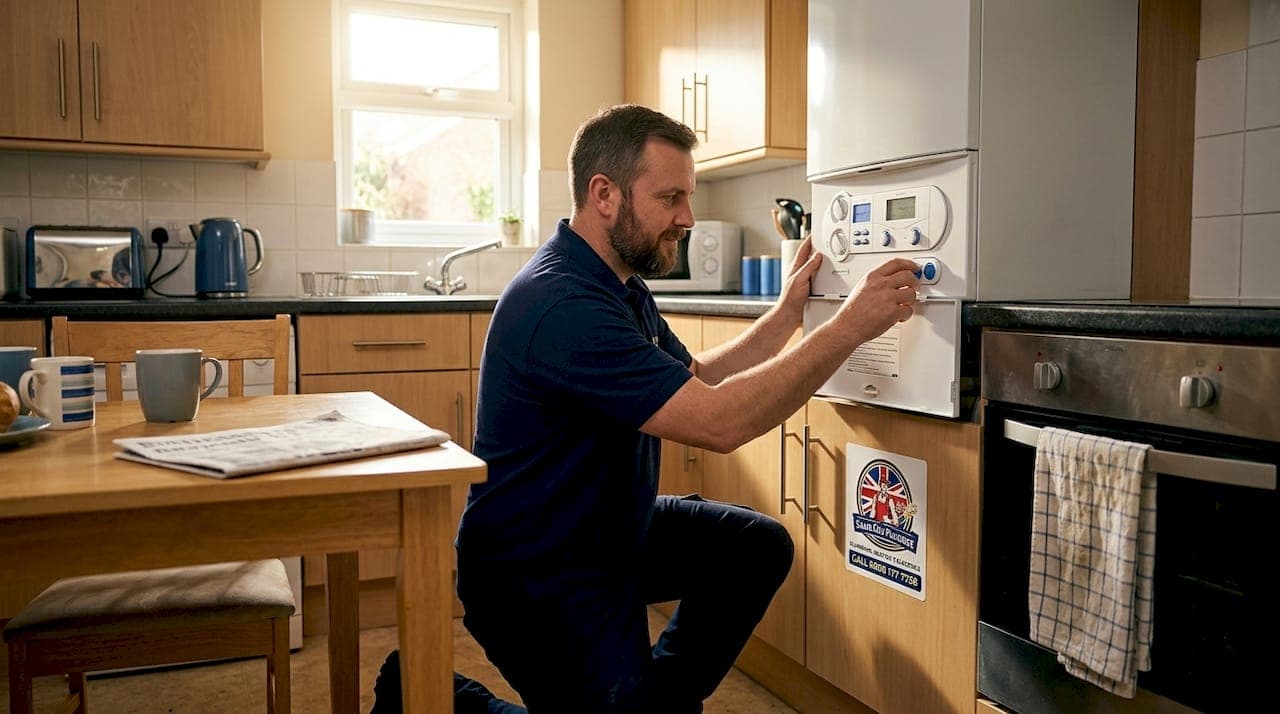
A boiler that's slowly failing rarely shuts down without warning. It drops hints: a strange noise here, a cold radiator there, a pressure gauge creeping into the red. Most homeowners either miss these signals or put off acting on them, hoping things will settle on their own. That instinct is understandable, but it's also costly. Catching boiler problems early keeps your home warm, your hot water reliable, and your family safe from hazards like carbon monoxide. Here's exactly what to look and listen for.
Table of Contents
- How to spot urgent boiler problems
- Why ignoring these signs leads to bigger problems
- The most dangerous boiler warning: carbon monoxide and urgent safety threats
- Quick comparison: how different boiler symptoms point to specific repairs
- When to DIY, monitor, or call a professional engineer
- The crucial truth: combination symptoms are your early warning
- Get rapid boiler repairs from local experts
- Frequently asked questions
Key Takeaways
| Point | Details |
|---|---|
| Unusual noises matter | Persistent banging or whistling almost always signals a problem needing expert diagnosis. |
| Leaks are urgent | Any water leak around your boiler can quickly escalate, so book professional help immediately. |
| CO risks mean emergency | If you spot yellow/orange flames or a CO alarm, turn off the boiler and call the emergency services. |
| Don’t ignore repeat faults | Recurring shutdowns or pressure loss usually lead to bigger issues if left unchecked. |
| Act early pays off | Prompt repairs protect your home, wallet, and safety much better than waiting and hoping for the best. |
How to spot urgent boiler problems
Now that we recognise why catching boiler problems early matters, let's break down the unmistakable warning signs you can't afford to ignore.
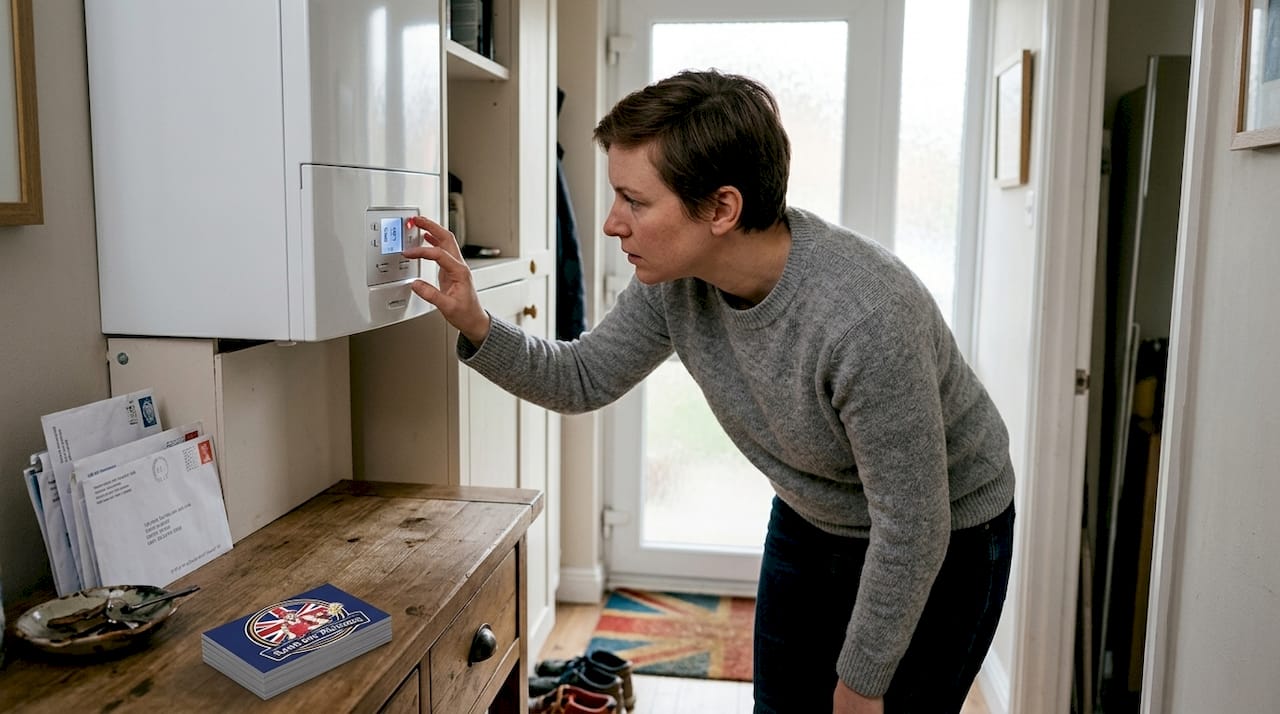
Boilers rarely give you one clean, obvious symptom. Instead, they communicate through a collection of signals that, taken together, paint a clear picture of what's going wrong. Understanding each signal in plain language helps you decide whether to monitor, act quickly, or call for help straight away.
The most commonly reported boiler repair warning signs fall into four main categories:
- Unusual noises. Banging, whistling, gurgling, and kettling sounds are all signs of boiler trouble that should not be dismissed. Kettling, which sounds like a boiling kettle, usually means limescale build-up on the heat exchanger. Banging can point to delayed ignition or a pump problem. Gurgling often indicates trapped air or a low water level.
- Inconsistent or absent heating. If some radiators are warm and others stay stone cold, or if your hot water runs out faster than usual, the boiler isn't distributing heat properly. This could be as simple as airlocks in the system or as serious as a failing pump.
- Low or fluctuating pressure. The pressure gauge on your boiler should sit between 1 and 1.5 bar when the system is cold. If it keeps dropping, you likely have a leak somewhere in the pipework or a failing pressure relief valve.
- Visible leaks or moisture. Pooling water around the boiler unit is never a minor cosmetic issue. A leaking boiler creates real risks: water near electrical components is a fire and shock hazard, and persistent moisture accelerates internal corrosion, shortening the boiler's life considerably.
Safety first: Any visible water pooling around your boiler should be treated as urgent. Do not attempt to mop it up and carry on. Switch off the boiler and call a qualified engineer.
Pro Tip: Take a photo of your boiler's pressure gauge and the area around it once a month. This gives you a visual baseline so you can spot changes quickly without guessing.
Why ignoring these signs leads to bigger problems
Understanding the main warning signs is important, but reacting quickly also has real-world impact on both safety and cost.
A boiler fault doesn't stay at the same level of severity indefinitely. Left unaddressed, most faults worsen in a predictable sequence. What starts as an occasional banging noise can escalate into a cracked heat exchanger. What begins as a slight pressure drop can end with a burst pipe and a flooded property.
Here's the typical escalation path when boiler faults are ignored:
- Minor symptom appears. A noise, a cold radiator, or a pressure dip. The boiler still functions but not at full efficiency.
- Additional components come under strain. When one part fails to do its job properly, others work harder to compensate. The pump, for example, may overwork itself trying to compensate for restricted circulation.
- Secondary faults develop. You now have two or three things failing rather than one. Repair costs increase substantially because engineers need to address multiple issues.
- Total breakdown. The boiler locks out entirely. You lose heating and hot water, often at the worst possible time, typically during cold weather when the system is under the most demand.
- Emergency call-out. Urgent repairs outside of standard hours cost significantly more than a routine repair booked in advance.
The pattern of intermittent or repeated faults is especially telling. If your boiler keeps throwing the same error code every few weeks, or if you're resetting it regularly, that repetition is your boiler telling you the root cause has not been resolved. Each reset buys you a little time but moves you closer to a complete boiler breakdown.
Pro Tip: Keep a simple log on your phone noting the date, the symptom, and what you did about it. Even two or three entries showing the same fault recurring will give an engineer valuable context and save time during diagnosis.
Did you know? Homeowners who act on the first sign of a fault typically pay a fraction of the cost compared with those who wait until a full breakdown occurs. Early intervention is almost always the more affordable choice.
The most dangerous boiler warning: carbon monoxide and urgent safety threats
Some warning signs are inconvenient; others are actively hazardous. Here's what every homeowner must know about the most serious dangers.
Carbon monoxide (CO) is produced when a boiler burns gas incompletely. It has no colour, no smell, and no taste, which is exactly what makes it so dangerous. Hundreds of people are hospitalised in the UK each year due to CO poisoning, and the source is frequently a faulty gas appliance.
The key carbon monoxide warning signs to watch for include:
- Yellow or orange flame instead of the crisp blue flame you'd normally expect from a correctly burning boiler.
- Black soot marks or dark staining around the boiler casing or flue. These indicate incomplete combustion.
- Physical symptoms in your household. Headaches, dizziness, nausea, confusion, and shortness of breath that ease when you leave the property are classic signs of CO exposure.
- CO alarm sounding. If you have a carbon monoxide detector and it activates, treat it as a genuine emergency, not a false alarm.
If your CO alarm sounds or you suspect a leak: Stop using the boiler immediately. Open windows and doors. Leave the property. Do not use any electrical switches. Call the National Gas Emergency number (0800 111 999) from outside or a neighbour's home.
Reviewing essential boiler safety tips before winter arrives is genuinely worthwhile. Installing at least one audible CO alarm on each floor of your home is one of the cheapest and most effective things you can do to protect your family.
Never dismiss a CO alarm as faulty without having it confirmed by a Gas Safe registered engineer. The stakes are simply too high.
Quick comparison: how different boiler symptoms point to specific repairs
For clarity, let's compare common boiler symptoms side by side so you can quickly judge their seriousness and who to call.
Proper boiler fault diagnosis follows a structured process: visual inspection, fault code reading, pressure and leak checks, circulation and pump assessment, electrical testing, and combustion analysis. Engineers don't guess; they work through these stages systematically. The table below reflects that logic.
| Symptom | Possible cause | Urgency | Recommended next step |
|---|---|---|---|
| Kettling or whistling noise | Limescale on heat exchanger | Moderate | Book a service; engineer to descale or replace heat exchanger |
| Banging on start-up | Delayed ignition or pump fault | High | Call an engineer promptly; don't continue using the boiler |
| Radiators cold at top | Trapped air in system | Low | Bleed radiators yourself; monitor for recurrence |
| Radiators cold throughout | Pump failure or circulation issue | High | Call an engineer; central heating not functioning |
| Pressure below 1 bar | System leak or pressure relief valve fault | Moderate to high | Repressurise once; if it drops again, call an engineer |
| Visible water pooling | Internal leak, valve failure, or corrosion | Urgent | Switch off boiler; call engineer immediately |
| Yellow or orange flame | Incomplete combustion, CO risk | Emergency | Evacuate and call National Gas Emergency 0800 111 999 |
| Black soot marks | Flue blockage or combustion fault | Emergency | Evacuate and call National Gas Emergency 0800 111 999 |
| Error code on display | Various faults depending on code | Varies | Note the code and call your engineer with that information |
Pressure figures matter enormously here. As Viessmann confirms, the gauge should sit between 1 and 1.5 bar; once it falls into the red zone, the boiler may fail to ignite at all, and repeated pressure drops almost always point to a leak that needs professional attention.
For a full walkthrough of what to check before calling an engineer, the step-by-step boiler diagnostics guide covers the process clearly. Pairing that with an essential boiler maintenance routine will significantly reduce the chance of unexpected faults developing.
When to DIY, monitor, or call a professional engineer
Now you've seen the comparisons, here are some simple rules to help you decide your immediate next action.
Not every boiler symptom demands an emergency call-out. Some things genuinely are fine to handle yourself. The challenge is knowing the difference.
Follow this decision sequence when you notice a problem:
- Check for safety hazards first. Any sign of CO risk, a gas smell, or a visible electrical issue near water means you leave the property and call the gas emergency line immediately. There is no DIY response to a CO or gas emergency.
- Is it a simple, low-risk task? Bleeding radiators, repressurising the boiler (once), resetting a tripped circuit breaker, or checking the thermostat settings are all tasks most homeowners can manage safely. Do these first if the fault appears minor.
- Has the same fault appeared more than once? If you've bled the radiators twice in a month, or repressurised the boiler and watched the gauge drop again, stop troubleshooting yourself. Call a Gas Safe engineer. Recurring symptoms indicate an underlying issue that won't self-resolve.
- Is the fault affecting heat or hot water across the whole property? Whole-system failure is not a waiting game. Call for service.
- Are you unsure what the fault is? If you can't identify the problem, don't guess. A broken boiler troubleshooting guide can help you rule out simple causes, but when in doubt, call a professional.
Pro Tip: Write the Gas Safe Register number (0800 408 5500) and the National Gas Emergency number (0800 111 999) somewhere prominent in your home, such as inside a kitchen cupboard. Don't wait until a crisis to search for them.
The general principle is straightforward. Gas and safety-critical faults require a Gas Safe registered engineer, full stop. Everything else deserves a quick, honest assessment before you either attempt a basic fix or pick up the phone.
The crucial truth: combination symptoms are your early warning
With all this in mind, what do seasoned engineers wish more homeowners knew about warning signs and response timing?
In our experience, the biggest mistake homeowners make isn't failing to notice a single symptom. It's dismissing symptoms because they seem minor in isolation. A small noise, a slight pressure drop, an occasional cold radiator: none of these seems alarming on its own. But when you see two or three of them together, that combination is a genuinely important red flag.
Research into common boiler failure patterns consistently shows that recurring faults combined with visible corrosion or leaks justify faster professional involvement rather than repeated resets. Engineers don't reset their way to a solution; they diagnose. Every time a homeowner resets a locked-out boiler without finding the cause, they're deferring a problem that is getting slightly worse each time.
There's also a common myth worth addressing: that booking a boiler engineer is an admission the boiler needs replacing. It isn't. Many faults are inexpensive to fix when caught early. A limescale-blocked heat exchanger can be cleaned. A faulty pressure relief valve can be swapped out. An airlocked pump can be cleared. These are not large jobs when found in time.
The homeowners who consistently spend least on their heating systems are those who invest in regular boiler servicing every year and respond to the first symptom rather than the third or fourth. It's not about being anxious about your boiler; it's about treating it with the same basic attentiveness you'd give your car.
If your boiler is displaying two or more of the warning signs in this article simultaneously, don't wait another week. That combination is your earliest and clearest warning to act.
Get rapid boiler repairs from local experts
When you spot any of the warning signs above, getting professional help shouldn't add to the stress. Here's how to sort it straight away.
At Same Day Plumber, we understand that a failing boiler isn't something you can schedule around. Cold homes, no hot water, and potential safety risks demand fast, reliable attention. That's exactly what we provide.

Our boiler repair service covers everything from straightforward pressure faults to more complex heating system diagnostics, with no call out charge and a no fix, no fee guarantee. We're available 24 hours a day, 7 days a week, so you're never left without support when it matters most. If you're in Berkshire and need an emergency plumber in Reading, we can typically reach you the same day. Don't wait for a minor fault to become a complete breakdown. Get in touch and let us restore your heating safely and properly, first time.
Frequently asked questions
What is the most common sign my boiler needs repair?
Unusual noises and inconsistent heating are the most frequently reported early warning signs, with banging, kettling, and whistling all pointing to specific faults that a qualified engineer can diagnose and fix quickly.
How dangerous is a leaking boiler?
A leaking boiler is a genuine hazard because water near electrical components creates a shock and fire risk, while ongoing moisture causes internal corrosion that can lead to complete system failure.
What should I do if my carbon monoxide alarm sounds near the boiler?
Stop using the boiler, open all windows, leave the building immediately, and call the National Gas Emergency number 0800 111 999 from outside, as CO alarm activation should always be treated as a real emergency.
Can I fix low boiler pressure myself?
You can repressurise the system using the filling loop, but if the pressure drops repeatedly after repressurising, stop attempting fixes and call a heating engineer as a leak or valve fault is almost certainly present.
Is it worth waiting to see if a boiler fault clears itself?
If a fault is intermittent or recurring, waiting typically makes things worse and increases both repair costs and the likelihood of a full breakdown, so calling a professional promptly is nearly always the better choice.