
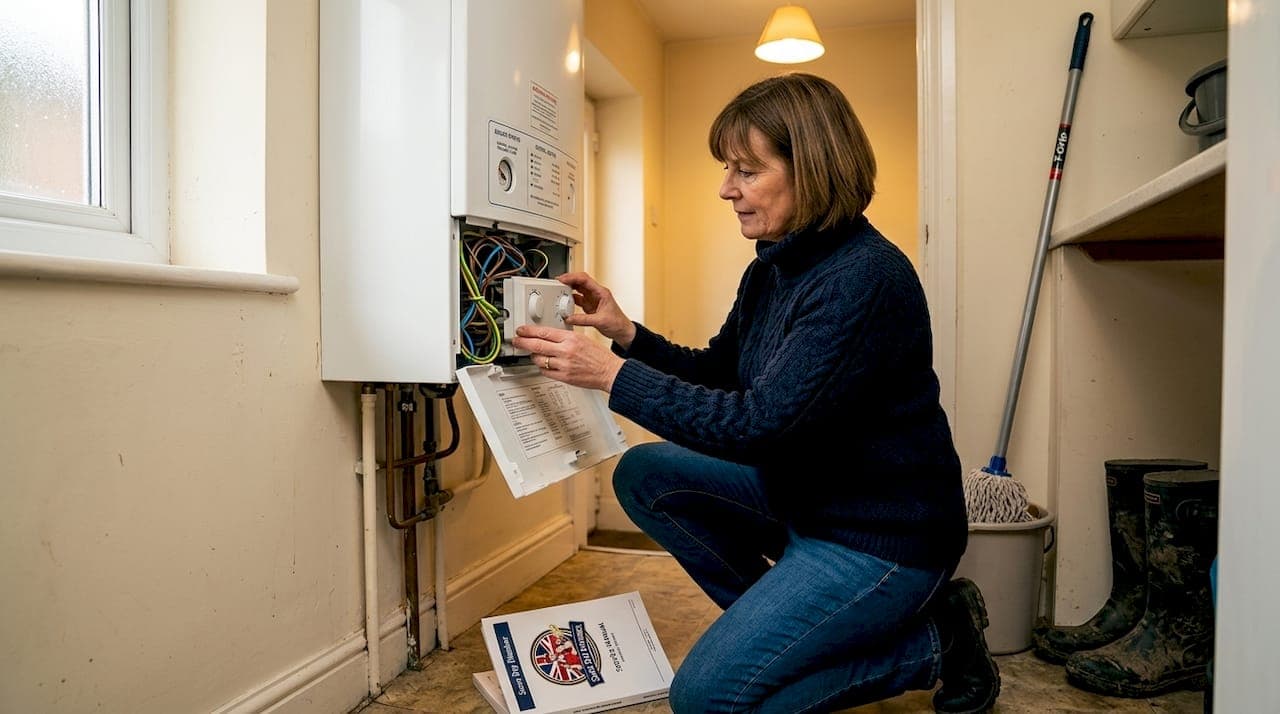
You walk through the front door on a cold evening, reach for the radiator out of habit, and feel nothing. No warmth, no familiar gurgle of pipes, just cold metal and the realisation that your boiler isn't working. It's a stressful moment, but it's also one that thousands of UK homeowners face every winter. Before you ring a plumber or assume the worst, there are safe, practical checks you can carry out yourself that solve the problem more often than you'd expect. This guide walks you through every step in order, from gathering your tools to recognising when a Gas Safe engineer needs to take over.
Table of Contents
- Gather essentials and understand safety basics
- Initial checks: Thermostat, timer, and power supply
- System pressure, lockouts, and error codes
- Frozen condensate pipes and less obvious culprits
- When to stop DIY: Calling a certified engineer
- A practical checklist beats blind guesswork
- Fast-track your repair with trusted professionals
- Frequently asked questions
Key Takeaways
| Point | Details |
|---|---|
| Start with basics | Check thermostat, timer, and power before moving on to more advanced steps. |
| Monitor pressure | Ensure boiler pressure is between 1.0–1.5 bar when cold for safe operation. |
| Heed error codes | Always reference fault codes in your manual and avoid repeated resets if errors recur. |
| Frozen pipes risk | Watch for frozen condensate pipes during cold weather as a leading cause of boiler lockouts. |
| Know when to call | Stop DIY if you face persistent lockouts or electrical faults and contact a certified engineer. |
Gather essentials and understand safety basics
With expectations set, let's lay the groundwork for safe troubleshooting. The temptation when your heating fails is to start pressing buttons and turning valves immediately. Resist it. A few minutes spent organising your tools and reviewing safety basics will protect you and prevent accidental damage to your boiler.
The first rule is electrical isolation. Check power controls and the electrical isolator before touching anything else, including the boiler switch, the fused spur on the wall nearby, and your consumer unit for any tripped switches or RCDs. If you're unsure whether the circuit is live, treat it as if it is. If any component feels hot to the touch, wait for it to cool completely before proceeding. This is especially important around the flue terminal and the heat exchanger area.
Here's what you'll want to have to hand before starting:
| Item | Purpose |
|---|---|
| Torch | Inspecting dark cupboards and reading gauges |
| Owner's manual | Fault codes, pressure guidance, reset procedure |
| Flathead screwdriver | Opening panel covers where permitted |
| Towel and gloves | Handling warm pipework, containing drips |
| Phone or camera | Photographing wired controls and error codes |
| Pen and paper | Logging fault codes and actions taken |
Refer to our step-by-step boiler repair guide for a broader overview of what homeowner-level repairs involve before you start.
Safety essentials to keep in mind:
- Never work on internal boiler electrics or remove sealed panels
- Switch off the boiler at the programmer and the fused spur before inspecting
- Ensure the area around the boiler is dry and well ventilated
- If you smell gas at any point, stop immediately, leave the property, and call the National Gas Emergency number (0800 111 999)
- Keep children and pets away from the boiler area during checks
Warning: Skipping electrical isolation before inspecting your boiler is one of the most dangerous mistakes a homeowner can make. Even a brief contact with a live circuit in a damp utility cupboard can cause a serious shock. Always isolate first, check twice, then proceed.
Initial checks: Thermostat, timer, and power supply
Having your tools and safety measures ready, start with these basic but vital checks. It sounds obvious, but a surprising number of "no heat" call-outs turn out to be nothing more than a timer that's drifted or a thermostat set too low. Ruling these out costs nothing and takes under five minutes.
Confirming the system is calling for heat is the correct starting point: check that the thermostat is set to Heat or On, raise the setpoint temporarily to around 21°C or above, and override any programmer or timer to "Boost" or "Constant ON." Only once the system is genuinely requesting heat can you be confident the boiler's failure to respond is a real fault.
Follow these steps in order:
- Raise the thermostat to at least 21°C and confirm it's set to heating mode, not just "fan" or "off"
- Override the timer or programmer by switching to "Constant ON" or "Manual" mode, bypassing any schedule that might be blocking the call for heat
- Check the boiler's fused spur, the dedicated switch usually mounted on the wall near the unit, and confirm the consumer unit has no tripped breakers
- Reset any tripped RCDs in the consumer unit, but note that an RCD that trips again immediately signals an underlying electrical fault requiring an engineer
- Inspect the boiler display for any error codes, warning lights, or fault indicators, and note them down before doing anything else
Understanding why boilers stop working helps you approach each step with context rather than guesswork. You can also review our guide on safe home troubleshooting for extra reassurance before touching any controls.
Important: Never work near mains electrical components if there is standing water, condensation, or any sign of dampness near the electrics. The combination of water and electricity is genuinely dangerous. If you see moisture around the consumer unit or fused spur, call a professional before proceeding.
Pro Tip: Before toggling any wired controls or switches, photograph them with your phone. That image lets you restore the original settings instantly if something goes wrong during troubleshooting, and it gives an engineer useful context if they're called out later.
Confirming basic power checks resolves a significant proportion of "no heat" faults without any further action needed.
System pressure, lockouts, and error codes
After establishing power and confirming the boiler is calling for heat, dig deeper by addressing system and safety lockouts. This is where many homeowners feel uncertain, but it's actually quite straightforward once you know what you're looking for.
Find the pressure gauge on your boiler. It's usually a small dial or digital display on the front panel, sometimes visible through a viewing window on a combi boiler. Low system pressure is one of the most common causes of "no heat" because most modern boilers include a safety feature that prevents them firing below a minimum threshold. The target pressure when the system is cold is 1.0 to 1.5 bar. If the needle is sitting below 1.0, repressurising is likely your fix.
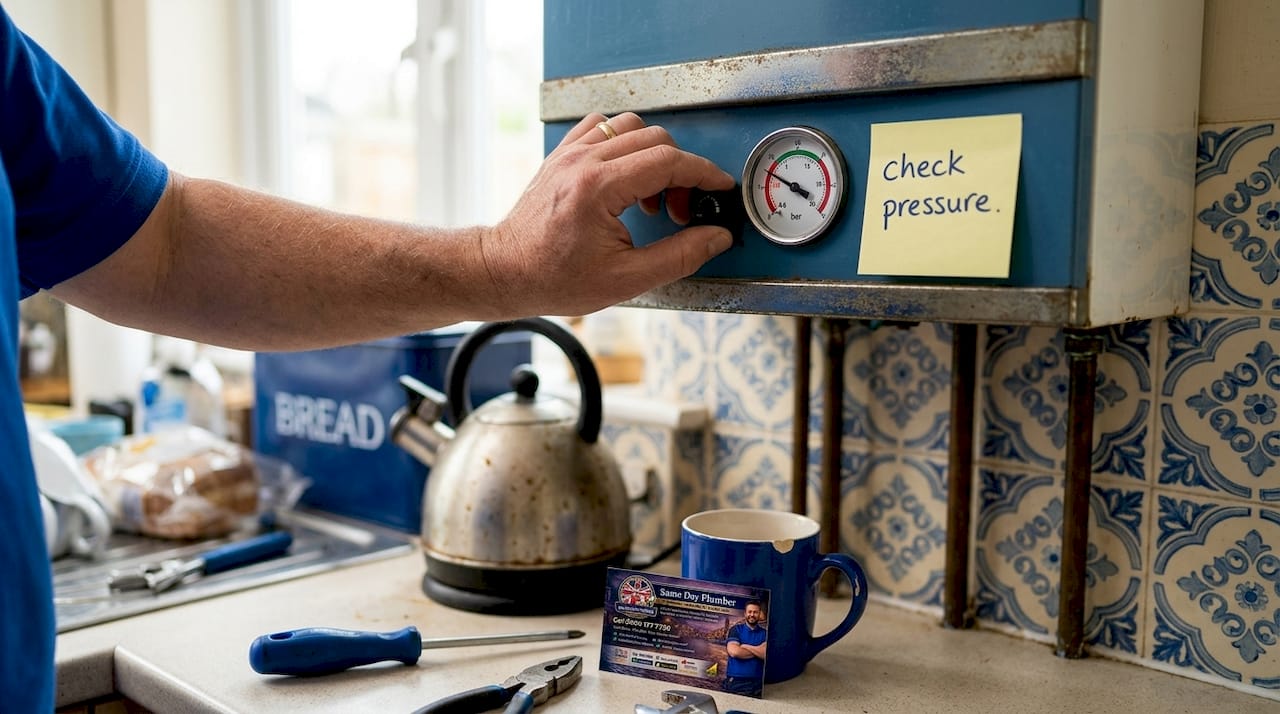
Repressurising is done using the filling loop, a small braided hose usually found beneath the boiler connecting two pipes. Consult your owner's manual for the exact procedure for your model before opening any valves, and check our boiler safety tips page for additional guidance. If you're not confident, this is something a plumber can do quickly and inexpensively.
Ignition lockout categories cover a wide range of causes, many of which are correctable by the homeowner once identified. Here's a summary of common fault types:
| Fault type | Likely cause | Homeowner action |
|---|---|---|
| Low pressure (F1/E118 type) | System leak or recent bleed | Repressurise via filling loop |
| Ignition lockout | Gas supply, spark failure | Check gas supply, single reset |
| Condensate blockage | Frozen or blocked outlet pipe | Safely thaw, reset boiler |
| Temperature sensor fault | Sensor failure | Note code, call engineer |
| Fan or flue fault | Flue obstruction, fan failure | Note code, call engineer |
For a full breakdown of what repairs these faults involve, read through our essential boiler repairs guide.
Pro Tip: If you reset the boiler and the same fault code reappears within minutes, stop resetting. Repeated resets without resolving the underlying fault can cause further damage and result in a significantly larger repair bill.
The majority of ignition lockouts stem from user-correctable issues such as low pressure, power interruptions, or timer errors rather than component failure. That said, if the error code points to something internal, your owner's manual or the manufacturer's app will indicate whether professional attention is required.
Frozen condensate pipes and less obvious culprits
If the previous steps haven't revealed the cause, consider these harder-to-detect faults. Winter brings a specific set of boiler problems that often go undiagnosed because homeowners don't realise a condensate pipe even exists, let alone that it can freeze.
Frozen condensate pipes in cold weather are a well-known trigger for boiler lockouts and can prevent heating even when everything else is functioning normally. The condensate pipe carries acidic water produced during the boiler's combustion process and typically runs through an external wall or along an outdoor surface, making it vulnerable in temperatures below freezing.
Signs to look out for:
- A gurgling, bubbling, or unusual noise from the boiler or pipework
- A flashing error light or specific fault code relating to condensate
- The pipe visibly frosted or iced over outside the property
- The boiler cutting out in cold weather but appearing fine otherwise
- Hot water working normally while central heating has no effect
To safely thaw a frozen condensate pipe, pour warm water (not boiling, which can crack the plastic pipe) slowly along the exterior of the pipe from a watering can or jug. Once thawed, reset the boiler and check whether heating is restored. Check our 7 key signs your boiler needs repair guide if you're unsure whether this is a recurring fault.
Another less obvious culprit is the diverter valve. On combi boilers, the diverter valve directs water either to the radiators or to the hot water taps depending on demand. A stuck or failing diverter valve is a common edge-case cause when your hot water works perfectly but central heating remains stone cold. This is a component fault that requires a Gas Safe engineer to diagnose and replace, but knowing about it saves you hours of hunting for other causes. You can find further heating repair resources if you believe this might be your issue.
Pro Tip: Read through your owner's manual from cover to cover at least once. Many modern boilers have secondary settings, holiday modes, or summer/winter switches that can inadvertently disable central heating entirely while leaving hot water fully operational.
When to stop DIY: Calling a certified engineer
Once all homeowner-level attempts are exhausted, it's crucial to recognise when professional help is needed. Knowing your limits here isn't an admission of defeat. It's the decision that prevents a manageable fault from becoming a costly replacement job.
Stop DIY and call an engineer when:
- The fault code returns immediately after resetting
- You notice electrical smells, burning odours, or visible scorch marks near the boiler
- Water is leaking from the boiler body or visible components
- You've lost confidence at any point during the process
- The boiler is displaying a fault code your manual describes as "engineer required"
- You suspect a gas supply issue (always call the National Gas Emergency line first)
Internal electrical faults such as a failed PCB or internal fuse require a Gas Safe registered engineer by law. These are not components a homeowner can safely inspect or replace, and attempting to do so can void your boiler warranty as well as create serious safety hazards.
Do not attempt to repeatedly reset your boiler if the fault returns each time, and never remove sealed panels or access covers. These protections exist for a reason, and bypassing them without professional training creates real risk of injury or gas leak.
For homeowners worried about cost, it's worth knowing that emergency heating repair programmes exist in various forms, with some councils and organisations providing financial assistance or contractor dispatch at reduced or no cost to eligible residents. Ask your local council or housing association about what's available in your area.
You can also explore our boiler servicing guidance to understand the value of annual servicing in preventing these emergencies from occurring in the first place. And when you're ready to book, our boiler repair service page outlines exactly what to expect.
A practical checklist beats blind guesswork
There's a pattern we see repeatedly when engineers arrive at a job. A homeowner noticed the boiler wasn't working, pressed reset four or five times, tried a few settings, couldn't identify the fault, and then called for help two days later than they should have. By that point, the boiler has sometimes been over-reset to the point where a fault that would have been straightforward to repair has become a more serious issue.
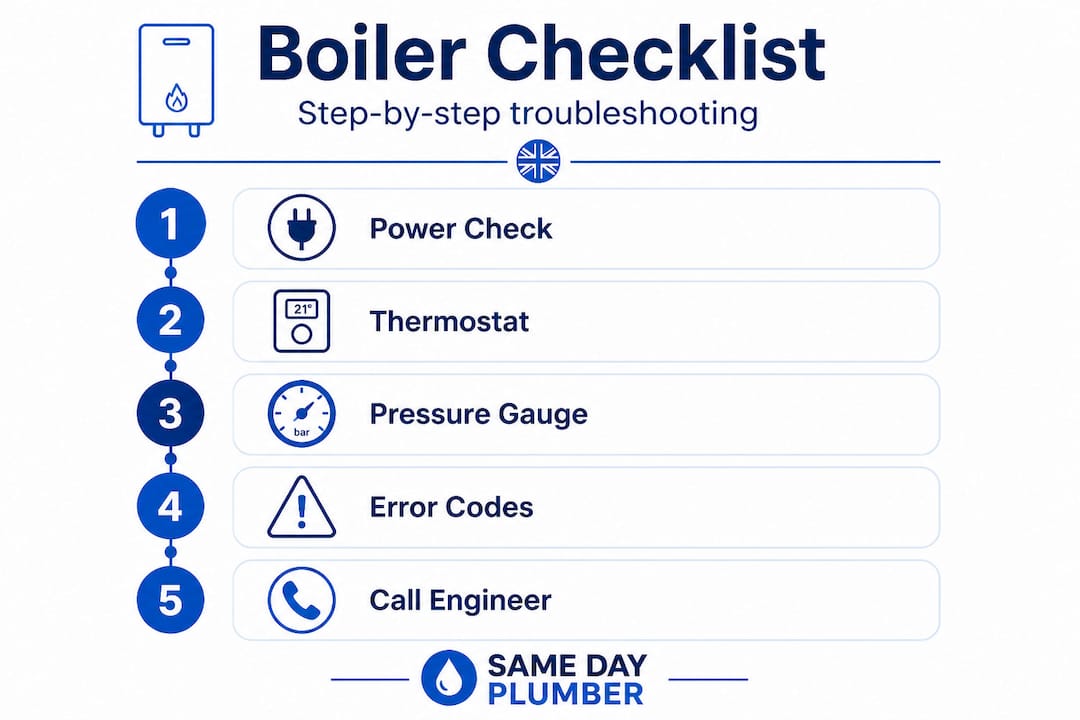
Following a structured checklist, like the one this guide outlines, does something important. It removes panic from the equation. When you work through steps in a logical sequence, you rule out causes systematically rather than chasing symptoms. That means you either fix the problem faster, or you hand over genuinely useful diagnostic information to the engineer who takes over.
Experienced engineers consistently report that the hardest jobs are not the most technically complex ones. They're the ones where the homeowner has already intervened in ways that obscure the original fault. Switched settings back and forth. Reset the boiler six times. Bled radiators unnecessarily. Each action without documentation adds time to the diagnosis.
"Resetting the boiler without diagnosing the fault is a shortcut to a bigger repair bill."
That's not a harsh judgement. It's a reflection of how boiler systems work. They're designed to lock out for a reason. Overriding the lockout repeatedly without fixing the underlying cause tells you nothing and can mask the real signal the system is trying to send.
Our homeowner boiler repair guide goes even further on structured diagnosis if you want to build on the process covered here.
Pro Tip: Keep a simple log on your phone noting the fault code, the time it appeared, what you tried, and how the boiler responded. A 30-second note like this can save an engineer 20 minutes of diagnosis and significantly reduce your labour costs.
Fast-track your repair with trusted professionals
Working through this guide puts you ahead of most homeowners when it comes to diagnosing a cold boiler. But some faults genuinely need professional hands, and waiting days without heating in a British winter isn't something anyone should have to endure.

Same Day Plumber provides 24/7 boiler and heating support with no call-out charge and a no-fix, no-fee guarantee. Whether you've worked through every step here and hit a wall, or you'd simply rather have a qualified engineer handle it from the start, our team responds quickly and gets it right first time. For urgent situations, our emergency boiler repair service is available around the clock. To book a visit or discuss your fault, head to our local boiler repair experts page and get the help you need without the wait.
Frequently asked questions
What temperature should my boiler pressure be before I repressurise?
The boiler pressure should read 1.0 to 1.5 bar when the system is cold before you start repressurising. Anything below 1.0 bar typically means the boiler won't fire safely.
Why does my boiler only give hot water but not central heating?
This usually points to a stuck diverter valve on a combi boiler, which prevents hot water from reaching the radiators. If basic checks don't resolve it, a Gas Safe engineer will need to inspect or replace the valve.
How can I tell if my boiler's condensate pipe is frozen?
A frozen condensate pipe often triggers a boiler lockout and can produce gurgling sounds or flashing error lights on the display. Check for visible ice on any external pipe sections during cold weather.
Is it safe to keep resetting my boiler if it won't ignite?
No. If the fault code returns immediately after a reset, stop and call an engineer. Repeated resets without addressing the cause can worsen the fault and increase repair costs significantly.
Where can I get emergency boiler repairs if I struggle to afford them?
Some councils and organisations run emergency heating repair programmes that dispatch qualified engineers at low or no cost to eligible residents. Contact your local council or housing association to find out what support is available in your area.