
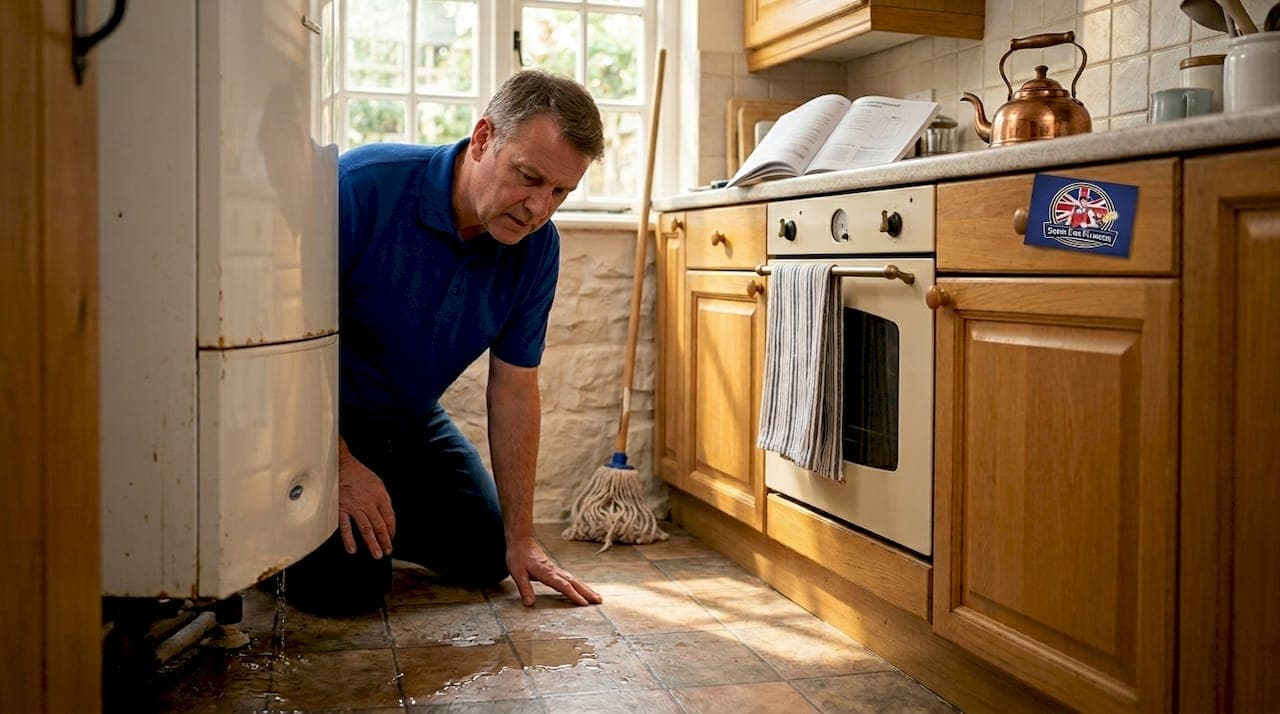
A drip from your boiler might seem trivial, but it rarely is. What looks like a minor nuisance can signal corroded pipework, a failing heat exchanger, or a pressure problem that worsens rapidly if left alone. Many homeowners assume they can mop up the water, ignore it for a few days, and deal with it later. That instinct is understandable, but it can turn a straightforward repair into a costly breakdown or, in the worst cases, a genuine safety hazard. This guide covers exactly what causes boiler leaks, how to spot when one needs urgent attention, and the clear line between what you can safely handle yourself and when you absolutely need a qualified engineer.
Table of Contents
- Common causes of boiler leaks explained
- How to spot urgent boiler leak risks
- Safe troubleshooting steps for homeowners
- When DIY ends: calling an expert for boiler leaks
- What most guides miss about boiler leaks: practical realities
- Find trusted boiler repair and emergency plumbing support
- Frequently asked questions
Key Takeaways
| Point | Details |
|---|---|
| Identify leak types | Recognise the difference between minor drips and leaks requiring professional intervention. |
| Safety comes first | If water reaches electrics or leaks are steady, act urgently and contact a heating engineer. |
| DIY limits | Do not attempt repairs beyond basic troubleshooting; Gas Safe engineers are essential for internal boiler problems. |
| Professional expertise | Experts diagnose hidden causes and ensure repairs comply with safety standards. |
| Local support available | Reliable local boiler repair services offer fast, qualified response for urgent leaks. |
Common causes of boiler leaks explained
Understanding why your boiler is leaking is the first step towards fixing it properly. Not all leaks are equal. Some are surface level and easy to trace; others originate deep inside the unit where only a trained engineer can safely intervene.
Ageing pipework and corrosion
One of the most frequent culprits is simple age. Over years of heating cycles, the metal pipework and internal components inside a boiler are exposed to fluctuating temperatures, pressure changes, and moisture. Corrosion over time causes leaks from pipework and components, including drips from the bottom of the unit. If your boiler is more than ten years old and you notice rust staining near joints or around the base, corrosion is a strong candidate.
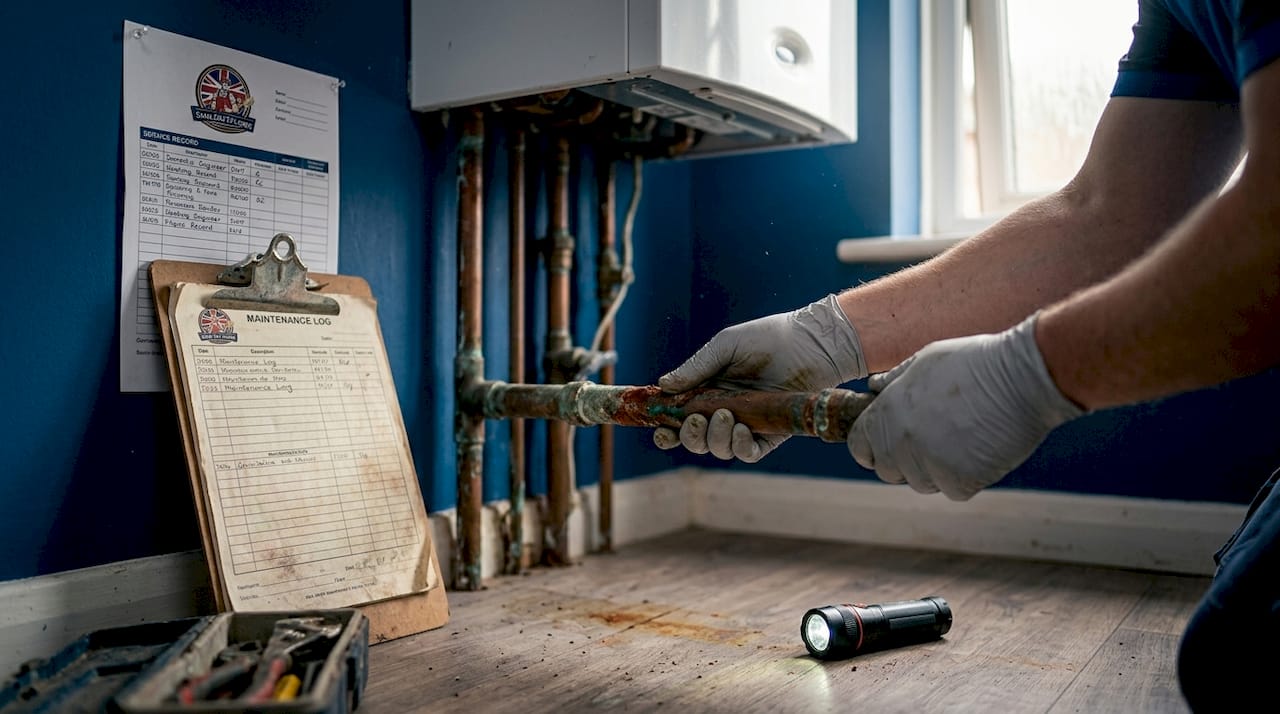
A slow, steady drip caused by corroded pipework might not flood your home overnight, but it does not stay minor. Water sitting on or near boiler components accelerates further corrosion and can damage surrounding cabinetry, flooring, and electrics over time.
Faulty seals and heat exchanger problems
Inside the boiler, rubber and fibre seals keep water contained within the system. These seals degrade naturally with age and heat exposure. When they fail, water escapes at the joints or around internal parts. Faulty seals and a faulty heat exchanger are both potential causes that typically require professional assessment and repair.
The heat exchanger is particularly significant. It is the component responsible for transferring heat from the gas burner to the water in your central heating system. When it develops a crack or leak, water can escape into areas of the boiler where it should never be. This is not a component you can simply tighten or patch yourself.
Quick visual checks vs hidden faults
Some leaks are visible: a drip at a pipe joint, a wet patch beneath the unit, or water pooling near the pressure relief valve. These are at least traceable. Hidden faults, however, are the ones that catch homeowners off guard. Leaks inside the casing, around the heat exchanger, or within the sealed components are often invisible until water damage becomes obvious elsewhere.
Learning about the main causes of boiler breakdowns can help you spot patterns before a leak becomes a full breakdown.
Comparing causes by urgency
| Cause | Visible to homeowner? | Urgency level | DIY safe? |
|---|---|---|---|
| Corroded pipe joint | Often yes | Moderate | Tighten only if accessible |
| Pressure relief valve drip | Yes | Moderate to high | No, requires engineer |
| Faulty internal seal | Rarely | High | No |
| Cracked heat exchanger | No | Very high | No |
| Loose pipe fitting | Sometimes | Low to moderate | Tighten if external |
Key warning signs to watch for:
- Rust-coloured water or staining around the base of the boiler
- Persistent drips even after the boiler has been switched off
- A sudden drop in boiler pressure on the gauge
- Water appearing inside the boiler casing
- Damp patches on adjacent walls or floors
How to spot urgent boiler leak risks
Knowing the cause is important. Knowing whether a leak is dangerous right now is more important still. There are specific conditions under which a boiler leak moves from "call an engineer this week" to "stop everything and act immediately."
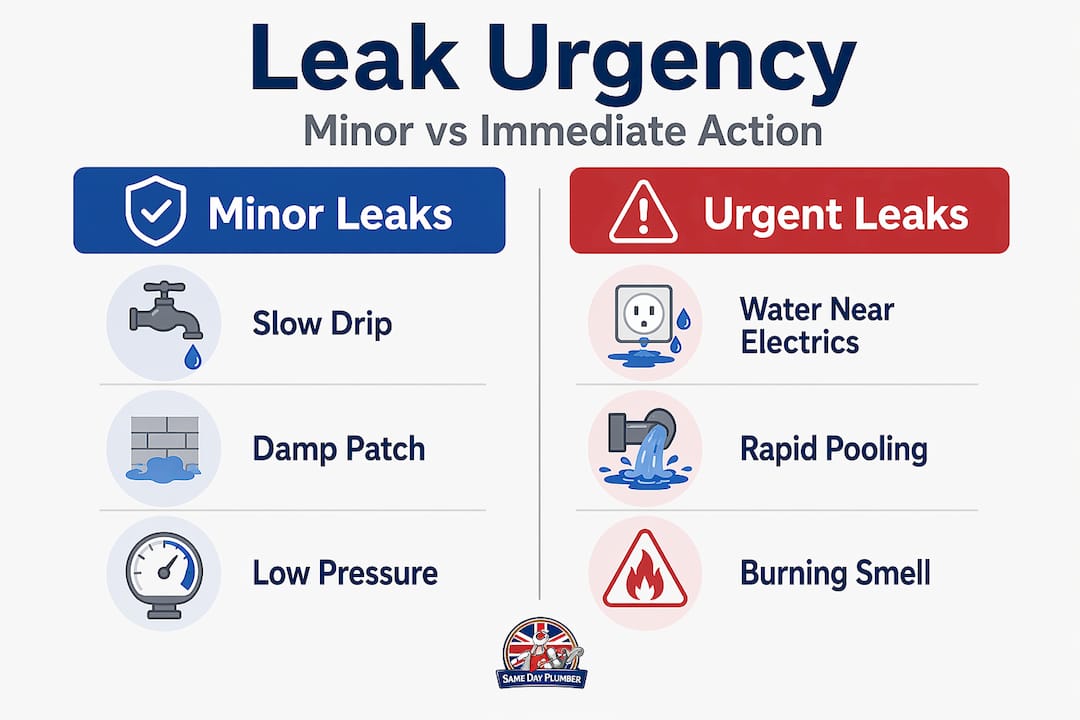
Red flag signs that demand immediate action
The most serious scenario is water near electrical components. Boilers contain wiring, circuit boards, and ignition components. If water is reaching any of these, treat it as urgent, switch off the boiler power if safe to do so, and arrange an engineer's attendance without delay.
Other high urgency signs include a steady, ongoing drip rather than a one-off condensation spot, any smell of gas accompanying the leak, visible water inside the casing, and a pressure gauge that has dropped to zero or is fluctuating rapidly.
Steps to take if you suspect unsafe conditions
- Switch off the boiler using the main power switch, not just the programmer or thermostat.
- Turn off the gas supply at the meter if you smell gas alongside the leak.
- Do not open the boiler casing. This is a critical rule. Opening the casing exposes live components and can void your warranty.
- Move any valuables or electrics away from the leak zone if water is spreading.
- Call a Gas Safe registered engineer immediately. For steady or internal leaks, contact a qualified engineer rather than attempting any form of DIY repair.
Understanding wider boiler safety tips and recognising signs your boiler needs repair will help you stay ahead of problems before they become dangerous.
Did you know? According to industry data, water damage from unattended boiler leaks is one of the leading causes of home insurance claims in the UK, often running into thousands of pounds in repair costs when left unaddressed.
Pro Tip: Place a piece of dry kitchen paper or a white cloth beneath any suspected leak point before you call an engineer. It helps you confirm whether the drip is active and gives the engineer a clearer picture of the leak pattern when they arrive.
Safe troubleshooting steps for homeowners
Once you have assessed urgency and confirmed there is no immediate danger to electrics or gas, there are limited but useful steps you can take as a homeowner. The key word here is limited. Many people assume that because they can see a drip at a pipe joint, they can fix it. That assumption leads to worsened leaks, voided warranties, and in some cases, unsafe conditions.
What you can safely do
- Check the pressure gauge. Most combi boilers operate at 1 to 1.5 bar. If pressure has dropped significantly, the leak may be linked to a pressure loss issue. You can re-pressurise the system using the filling loop, but only if you know how and the boiler manufacturer's instructions permit it.
- Identify the general location of the leak. Is it at a visible pipe joint? Near the pressure relief valve outlet? Beneath the unit? Note the location carefully without touching or opening anything.
- Turn off the water supply to the boiler if the leak is worsening and you cannot reach an engineer immediately. This is typically safe and slows further water damage.
- Collect water with towels or a container to protect floors and nearby electrics.
- Check the manufacturer's manual for any specific guidance on your boiler model. Some manufacturers include troubleshooting sections for common leak scenarios.
- Do not attempt to tighten internal fittings or remove any panels. As noted, a Gas Safe engineer is required for any internal repair or investigation, not just as good practice but as a matter of safety and legal compliance.
If you need guidance on how to restart a broken boiler after an engineer has confirmed it is safe to do so, or want a full boiler repair step by step walkthrough, those resources offer safe, structured guidance.
"The moment a homeowner opens the boiler casing to investigate a leak, they have moved beyond what is legally and safely within their remit. Gas appliances are regulated for a reason."
Pro Tip: Take a short video on your phone of the leak and any associated readings on the pressure gauge before switching anything off. This footage is genuinely useful when briefing the engineer and saves diagnostic time on the visit.
Why manufacturer instructions matter
Every boiler model has specific pressure tolerances, component layouts, and reset procedures. Acting on generic internet advice without checking your specific manual can cause you to inadvertently worsen a fault. A small over-pressurisation during a DIY re-fill, for example, can trigger the pressure relief valve to discharge again, giving the false impression that the problem is fixed when it has actually worsened.
When DIY ends: calling an expert for boiler leaks
There is a point with every boiler leak where homeowner action must stop and professional involvement must begin. That point comes sooner than most people expect.
Legal limits of homeowner action
In the UK, working on gas appliances without Gas Safe registration is illegal. This does not just mean replacing a gas valve; it extends to many forms of boiler access and repair. Even if you are confident in your practical skills, attempting internal boiler repairs puts you on the wrong side of the Gas Safety (Installation and Use) Regulations 1998.
Internal or steady leaks require a Gas Safe engineer, not a DIY attempt. This is a legal requirement, not just a manufacturer's recommendation.
What a Gas Safe engineer actually does
A qualified heating engineer brings tools, diagnostic equipment, and training that allow them to safely open the casing, pressurise the system, and test individual components. Here is what a professional leak investigation typically involves:
- Visual inspection of all visible pipework, joints, and external components
- Pressure testing to identify where the system is losing pressure
- Component testing on the heat exchanger, pump, and seals
- Water analysis to assess corrosion levels in the system
- Repair or replacement of faulty seals, gaskets, valves, or pipework
Faulty seals and heat exchangers require this level of professional assessment. There is no shortcut.
Knowing the essential types of boiler repairs will give you a better understanding of what repair categories exist and roughly what each involves. Understanding the role of heating engineers also helps you ask the right questions when an engineer visits. And if you want to reduce the chance of leaks developing in the first place, understanding why boiler servicing matters is essential reading.
What to expect in terms of cost and process
Repair costs vary significantly depending on the fault. Seal replacements are relatively straightforward. Heat exchanger repairs or replacements are substantially more involved and costly. Always ask for a written quote before work begins, confirm the engineer's Gas Safe registration number, and check whether any repair comes with a guarantee.
Questions worth asking any engineer before they start:
- Are you Gas Safe registered, and can I see your ID card?
- What is included in your call-out fee and how is labour charged?
- Will the repair carry a warranty, and for how long?
- Do you have any evidence the leak has affected other components?
- Is repair the most cost-effective option given the boiler's age?
What most guides miss about boiler leaks: practical realities
Here is the uncomfortable truth most online guides dance around: the biggest risk with a boiler leak is not the leak itself. It is the decision to wait.
We see this pattern repeatedly. A homeowner notices a small drip, places a towel beneath the boiler, and intends to "get it looked at soon." Weeks pass. The drip continues. Corrosion spreads. The heat exchanger develops a secondary fault. By the time an engineer visits, what could have been a straightforward seal replacement has become a decision about whether to repair or replace an ageing boiler entirely.
The maths here are not complicated. A seal repair called in promptly might cost a fraction of what a full heat exchanger replacement or system flush costs after weeks of untreated leaking. Prompt action consistently works out cheaper. Not occasionally. Consistently.
There is also a DIY temptation worth naming directly. Some homeowners are genuinely skilled at practical tasks. They have retiled bathrooms, fitted new taps, and rewired sockets without issue. That competence can create false confidence around boilers. Gas appliances are categorically different from other home maintenance tasks. The regulatory framework exists because the consequences of getting it wrong, carbon monoxide exposure, gas leaks, fires, can be severe. Watching the key signs your boiler needs repair and acting on them early is not overcautious. It is simply sensible.
The practical reality is this: a leak is your boiler asking for help. Answering that request quickly and with the right professional almost always leads to a better, cheaper, safer outcome than delay.
Find trusted boiler repair and emergency plumbing support
Dealing with a boiler leak is stressful, especially when you are not sure how serious it is or who to trust with the repair. The good news is that help is available quickly, without inflated call-out charges or vague timescales.

At Same Day Plumber, we cover boiler leaks and heating emergencies with qualified engineers who respond fast and get the job done properly the first time. There is no call-out charge, no fix no fee, and we are available 24/7. Whether you need a planned repair or an urgent response, our boiler repair service is built around your timeline. If you are facing a leak right now and need someone on site urgently, our emergency plumber service is here around the clock. Do not wait for a small drip to become a bigger problem.
Frequently asked questions
What is the most common cause of boiler leaks?
Corrosion and wear over time are the most common causes, often affecting pipework, joints, or internal components, particularly in older boilers.
Can I repair a leaking boiler myself?
You should not attempt DIY repairs if the leak is internal or ongoing. Contact a Gas Safe engineer for any internal fault, as this is both the safe and legal course of action.
What should I do if boiler water is near electrics?
Switch off the boiler power immediately if it is safe to do so, then arrange an engineer's visit urgently, as water near electrics is a serious safety hazard.
Who is qualified to repair a leaking boiler?
A Gas Safe registered heating engineer is the only person qualified to diagnose and repair boiler leaks safely. Always verify Gas Safe registration before allowing any engineer to work on your boiler.
Does a leaking boiler mean I need a full replacement?
Not necessarily. Many leaks are repairable, but severe corrosion affecting pipework or major internal component failure in an older boiler may make replacement the more cost-effective long-term choice.