
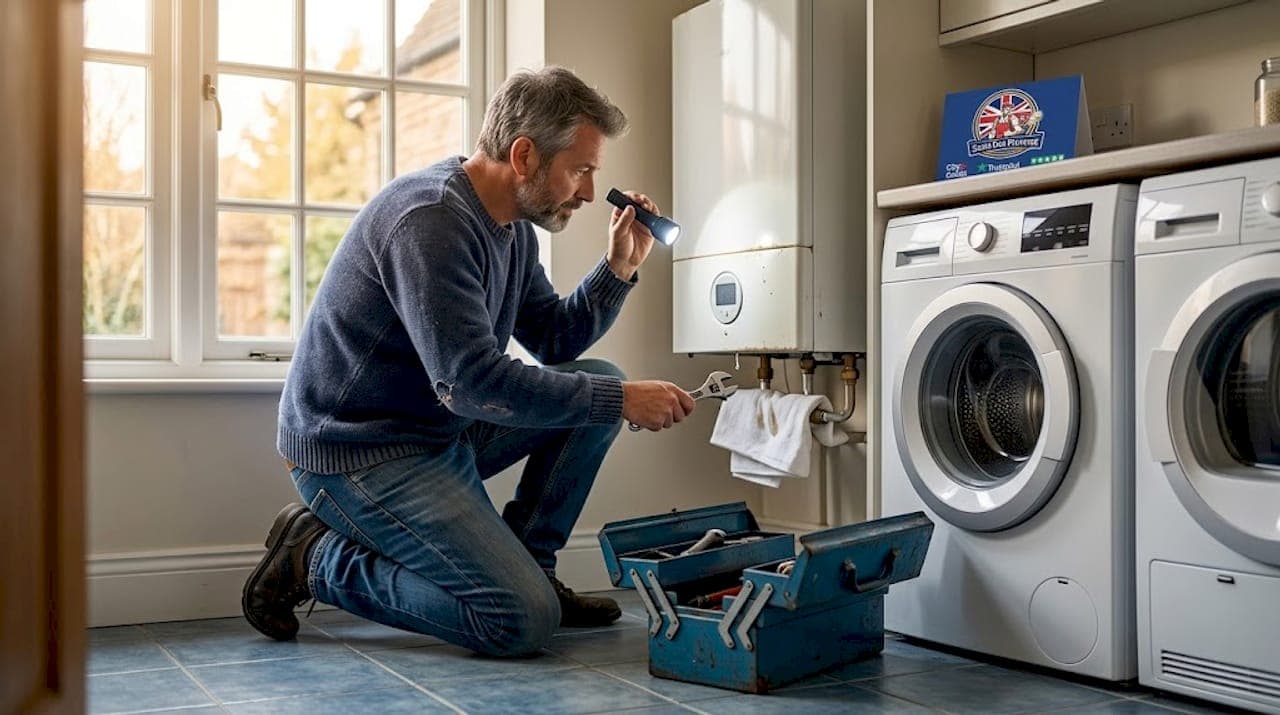
Waking up to a cold shower on a grey Reading morning is one of those genuinely miserable experiences. Your water heater has packed in, and you are standing there wondering whether to panic, grab the screwdriver, or call someone. The good news is that many water heater faults have surprisingly straightforward causes, and a calm, systematic check can either solve the problem outright or at least tell you exactly what to report to a professional. This guide walks you through safe, evidence-based troubleshooting steps, clear safety warnings, and honest advice on when gas and electric risks mean you should put the tools down immediately.
Table of Contents
- Essential safety and preparation before troubleshooting
- Initial checks: Common water heater issues
- Troubleshooting steps for gas and electric heaters
- When to call a professional plumber in Reading
- Our perspective: Why safe troubleshooting beats risky DIY
- Need emergency help? Trusted plumbers in Reading are available
- Frequently asked questions
Key Takeaways
| Point | Details |
|---|---|
| Safety first always | Prioritise safety precautions and stop troubleshooting if you smell gas, see burnt wires, or encounter persistent electrical problems. |
| Quick checks help | Simple inspection steps often identify the common causes of water heater breakdowns. |
| Know your limits | If repeated resets or pilot relights fail, call a professional to prevent injury or damage. |
| Local experts matter | Reading plumbers offer emergency repairs and are best equipped to handle urgent water heater issues safely. |
Essential safety and preparation before troubleshooting
Before getting hands-on, let us ensure your safety and readiness for troubleshooting.
Safety is not a formality here. Water heaters operate at high temperatures and, in the case of gas units, with flammable fuel. Burns from scalding water and injuries from gas exposure are real risks that catch homeowners off guard every year. Reviewing boiler safety tips before you start is time genuinely well spent.
"Homeowners should stop at basic checks and call a professional when breakers trip again, pilots won't stay lit repeatedly, or if gas odour is present."
Here is what to do before you touch anything:
- Switch off the electricity supply at your fuse board for electric heaters, or turn the gas control valve to the "pilot" or "off" position for gas units.
- Open a window or door in the utility area to ensure good ventilation.
- Allow the unit at least 20 minutes to cool before touching any pipework or the tank body itself.
- Never touch heating elements, burner assemblies, or wiring without confirming power is isolated.
- Keep a torch handy because water heater cupboards are often poorly lit.
- Have your phone within reach in case you need to call for emergency assistance quickly.
Basic tools to have ready: heat-resistant gloves, a flat-head and cross-head screwdriver, a torch, a clean towel, and your plumber's contact number.
| Safety step | Electric heater | Gas heater |
|---|---|---|
| Isolate energy supply | Switch off circuit breaker at fuse board | Turn gas valve to "pilot" or "off" |
| Ventilation required | Advisable | Essential |
| Risk of scalding | Yes, from hot water | Yes, from hot water |
| Risk of flammable gas | No | Yes |
| Proceed if smell detected | Check for burnt wiring | Stop immediately, leave the property |
| Allow cool-down period | Yes, 20 minutes minimum | Yes, 20 minutes minimum |
Understanding why boiler servicing matters also applies to water heaters. Regular professional checks catch deteriorating parts before they become dangerous faults.
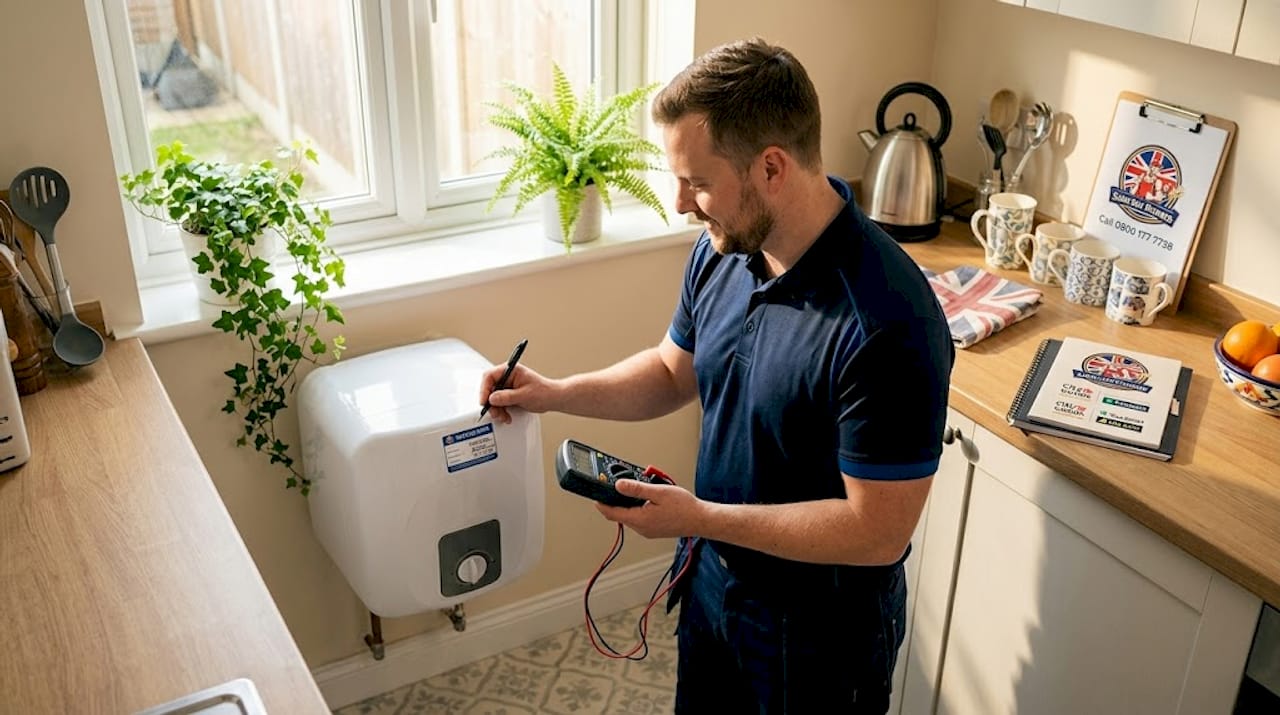
Pro Tip: Never continue troubleshooting if you smell gas or see scorched wires. Leave the property, avoid switching any lights on or off, and call a Gas Safe registered engineer or emergency plumber straight away.
Initial checks: Common water heater issues
With safety covered, let us proceed with straightforward checks most homeowners can perform.
These steps are designed to be methodical. Skipping ahead often means missing the simplest explanation. Work through them in order before drawing any conclusions.
- Check the cold water supply valve. Locate the valve on the pipe feeding your water heater. It should be fully open. A partially closed valve restricts flow and can cause lukewarm or no hot water at all.
- Inspect the thermostat setting. Most water heaters should be set between 60°C and 65°C. If someone has knocked the dial, or if it has slipped over time, the water may simply not be reaching temperature.
- Check your fuse board. For electric units, find the dedicated circuit breaker for your water heater. If it has tripped to the middle or off position, reset it once. If it trips again immediately, stop and call a professional.
- Check the pilot light (gas heaters). Look through the inspection window on the heater. The pilot flame should be a small, steady blue flame. If it is out, follow the relighting instructions printed on the unit carefully.
- Listen for unusual sounds. Rumbling, banging, or hissing from the tank often signals sediment build-up or a failing heating element.
| Symptom | Likely cause | DIY check possible | Call a pro if... |
|---|---|---|---|
| No hot water at all | Tripped breaker or failed pilot | Yes, reset once | Breaker trips again |
| Lukewarm water only | Low thermostat or failing element | Yes, check thermostat | No improvement after adjustment |
| Pilot light keeps going out | Faulty thermocouple or gas valve | Relight once or twice | Fails to stay lit |
| Rumbling or banging sounds | Sediment build-up | Flush tank annually | Noise continues after flush |
| Water pooling around tank | Leak from valve or tank body | Tighten pressure relief valve | Any crack or persistent drip |
| Burning electrical smell | Wiring or element fault | None | Immediately |
For more context on how these faults develop, our water heater repairs guide covers the most common causes in detail. You might also find our step-by-step boiler repairs guide useful for understanding how heating systems generally respond to faults. Recognising patterns of failure is also covered in our article on boiler breakdown causes.
Pro Tip: If the pilot light goes out and you relight it successfully but it extinguishes again within the hour, do not attempt a third relight. A thermocouple failure causes the gas valve to close as a safety measure. Continuing to relight without fixing the root cause serves no purpose and creates unnecessary risk.
Troubleshooting steps for gas and electric heaters
Now you have identified which heater type you own, tackle these specific checks and fixes.
Gas water heater troubleshooting steps:
- Relight the pilot light. Follow the manufacturer's instructions on the label. Turn the control knob to "pilot," press it in, and hold a long lighter to the pilot burner. Keep the knob pressed for 30 to 60 seconds after the flame catches, then release slowly.
- Examine the thermocouple. This small copper sensor sits in the pilot flame. If it looks bent away from the flame or shows signs of corrosion, it may not be detecting heat properly. A failing thermocouple is one of the most common gas heater faults and requires replacement by a qualified engineer.
- Reset the gas valve. Some gas valves have a reset button. Press it firmly and hold for the duration specified on your unit. This can restore operation after a safety shutdown.
- Inspect the burner assembly. With the gas supply safely off, look at the burner for debris, rust, or blockages. A blocked burner port produces uneven heating and can cause the unit to cycle off early.
- Check carefully for any gas smell. At any point, if you detect even a faint smell of gas, stop immediately. Do not switch anything on or off. Leave the building and call the National Gas Emergency number on 0800 111 999.
Electric water heater troubleshooting steps:
- Reset the circuit breaker. At your fuse board, switch the water heater breaker fully off, wait 30 seconds, then switch it back on. If it holds, power has been restored.
- Check the upper thermostat reset button. Most electric water heaters have a red reset button on the upper thermostat, accessible behind a removable panel. Press it firmly and listen for a click.
- Inspect the heating elements. With power isolated, you can remove the element panels and visually inspect for burn marks or corrosion. A discoloured or visibly damaged element needs professional replacement.
- Listen for humming or buzzing. A gentle hum is normal. Loud buzzing or crackling often points to a failing heating element drawing excessive current, which can explain repeated breaker trips.
- Check the anode rod. This sacrificial metal rod inside the tank prevents corrosion. After several years, it depletes and the tank starts to rust internally. If your hot water smells of sulphur or appears slightly rusty, the anode rod is likely exhausted.
Issues that require urgent professional attention:
- Any water pooling beneath the unit or visible cracks in the tank
- Electrical burning smells or visible scorching on wiring
- Breaker that trips repeatedly after a single reset
- Pilot light that extinguishes repeatedly despite following relighting instructions
- Any detectable gas smell at any point during checks
Following a boiler maintenance checklist approach for your water heater pays dividends. Understanding the essential types of boiler repairs also helps you communicate precisely what you have found when speaking to an engineer.
Pro Tip: Flush sediment from your water heater tank once a year by attaching a hose to the drain valve and allowing a few litres to run until the water runs clear. Sediment acts as an insulator, forcing the heater to work harder, increasing energy bills, and shortening the unit's lifespan considerably.
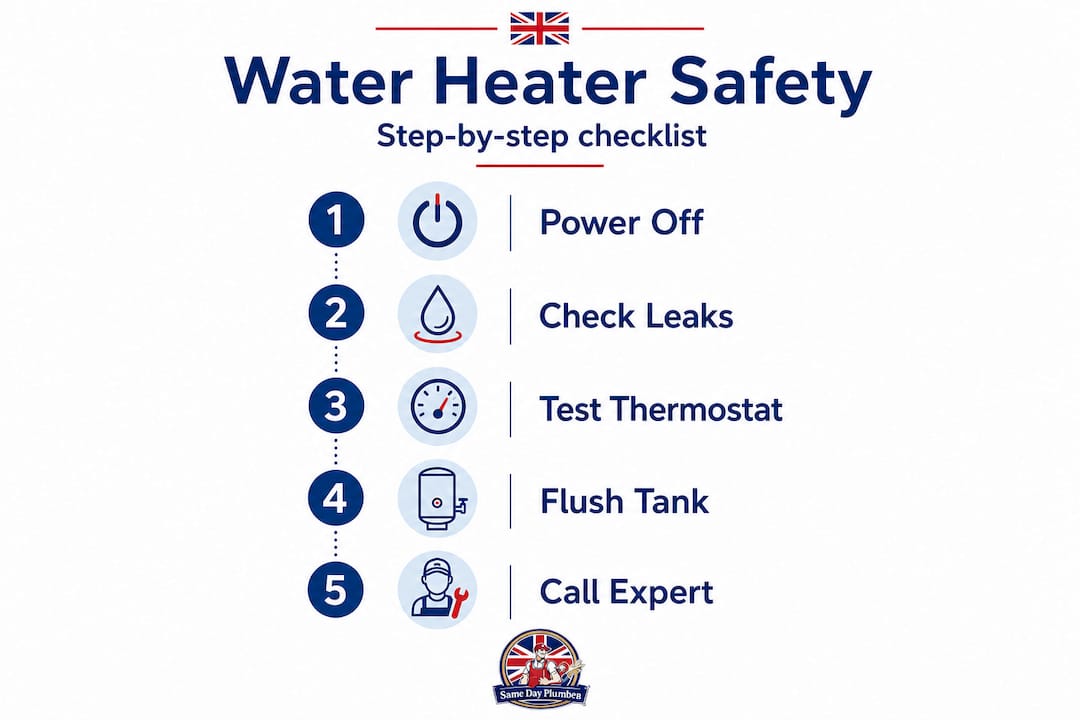
It is also worth recording what you find during each step. Note which checks passed, which failed, and any sounds, smells, or visual observations. This information allows an engineer to diagnose the fault far more quickly and may reduce both call-out time and repair costs significantly.
When to call a professional plumber in Reading
If your troubleshooting consistently hits safety or failure warning signs, here is when to call in experts.
Knowing when to stop is just as important as knowing where to begin. Some faults genuinely cannot and should not be handled without qualifications, specialist tools, and proper insurance cover.
Never ignore these warning signs:
- A persistent or intermittent gas smell anywhere near the unit or in the room
- Water pooling on the floor beneath the tank, indicating a tank body or valve failure
- Scorching or blackening on any wiring, the unit casing, or nearby surfaces
- An electrical burning smell, even a faint one
- A pilot light that fails to stay lit after two carefully attempted relights
- A circuit breaker that trips again after being reset, especially immediately
- Hot water that has turned discoloured or carries an unusual smell
"Homeowners should stop at basic checks and call a professional when breakers trip again, pilots won't stay lit repeatedly, or if gas odour is detected."
For Reading homeowners, having access to a local emergency plumber matters enormously in these situations. A rapid response reduces the risk of further water damage, eliminates the waiting anxiety, and ensures any gas-related fault is handled by someone who is Gas Safe registered and fully insured. Local engineers are also familiar with the types of water heaters common to Reading's housing stock, which speeds up diagnosis. Knowing the key signs your boiler needs repair also helps you articulate the problem clearly when you call.
Always share your written notes from the troubleshooting steps with the engineer. The more precise your description of what happened and when, the less time they spend diagnosing and the more time they spend fixing.
Our perspective: Why safe troubleshooting beats risky DIY
We have seen a consistent pattern over the years. A homeowner notices the pilot is out. They relight it. It goes out again. They relight it again. And again. And then they start looking up how to replace the thermocouple themselves, without gas qualifications, at 11 o'clock on a Sunday night.
The intent is admirable. The outcome is frequently an expensive mess, or worse, a safety incident that a simple call would have prevented entirely.
The troubleshooting steps in this guide are genuinely useful for identifying what is wrong. They are not a substitute for qualified repair work when safety boundaries are crossed. What we see time and again is that homeowners who push past those boundaries do not save money. They delay the proper fix, sometimes cause additional damage, and occasionally create a hazard that puts their household at risk.
One particularly common mistake is resetting a tripped breaker multiple times on an electric water heater without understanding why it tripped in the first place. A breaker trips because it is protecting you from an overcurrent fault. Repeatedly resetting it forces current through a potentially damaged circuit and can start a fire inside the unit or the wall cavity.
Similarly, ignoring a faint burning smell from the casing because the hot water seems to be working is a serious gamble. The smell signals something overheating internally. It will not resolve itself.
The genuinely smart move, and we say this as people who have seen both outcomes many times, is to do the basic checks described above, record what you find, and then call a reputable local plumber the moment warning signs appear. A well-documented fault call turns a stressful situation into a straightforward job. Understanding the long-term value of quality plumbing is part of that mindset shift.
Pro Tip: Document your troubleshooting attempts in a note on your phone. Include time, symptom, and what you tried. This record transforms a vague description into a precise diagnostic brief for the engineer, often cutting repair time in half.
Need emergency help? Trusted plumbers in Reading are available
If you have reached a point where expert help is needed, here is your next step.
Working through this guide should give you a clear picture of what is happening with your water heater. If the issue is beyond a basic reset or a thermostat adjustment, you need someone qualified to take over. Attempting more advanced repairs without the right skills creates fresh risk on top of an existing fault.

At Same Day Plumber, we provide emergency water heater and plumbing repairs across Reading with no call-out charge and a no fix, no fee policy. We are available 24 hours a day, seven days a week, so a Sunday night breakdown or an early morning cold shower does not mean waiting until Monday. Our local emergency plumber in Reading team responds quickly, arrives prepared, and works to resolve the fault on the first visit. Whether you need same-day assistance or a planned repair, our Reading plumbing team is ready to help you get your hot water back safely and swiftly.
Frequently asked questions
What are the warning signs of water heater failure?
Warning signs include loss of hot water, persistent leaks, pilot light problems, strange noises, repeated breaker trips, or a gas odour near the unit. Any of these warrant immediate attention.
Is it safe to fix a water heater myself?
Basic checks are safe for most homeowners, but you must stop if safety risks appear. Call a professional for gas odour, burnt wires, or a breaker that trips repeatedly after resetting.
Why does the pilot light keep going out on my gas water heater?
A pilot light that repeatedly goes out is usually caused by a faulty thermocouple, which fails to signal the gas valve correctly, causing it to close as a protective measure. This requires a qualified engineer to replace the component.
How can I prevent future water heater problems?
Flushing sediment from the tank annually, checking the anode rod every few years, and having the unit professionally serviced regularly are the most effective ways to prevent common faults and extend the heater's working life.